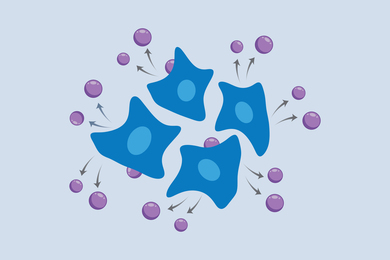
New method allows scientists to follow gene activity over time in the same cells
In the new method, cells package and export their RNA, enabling researchers to sequence and analyze the RNA without killing the cells.
In the new method, cells package and export their RNA, enabling researchers to sequence and analyze the RNA without killing the cells.

Led by Andee Wallace PhD ’20, Robigo uses cutting-edge biotechnology to engineer microbes to fight pests, reducing the need for harmful chemical pesticides.
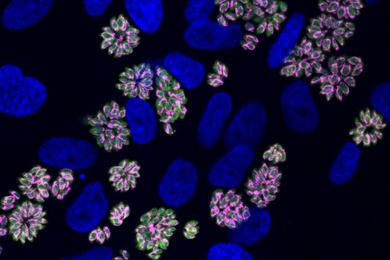
A new study by Whitehead Institute researchers identifies how the widespread parasite Toxoplasma gondii survives in crowded environments in infected cells, which helps it persist in long-lasting brain cysts.
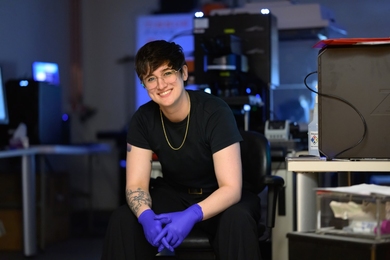
Shannon Knight, a brain and cognitive sciences PhD candidate and McGovern Institute researcher, focuses on developing a novel gene therapy.
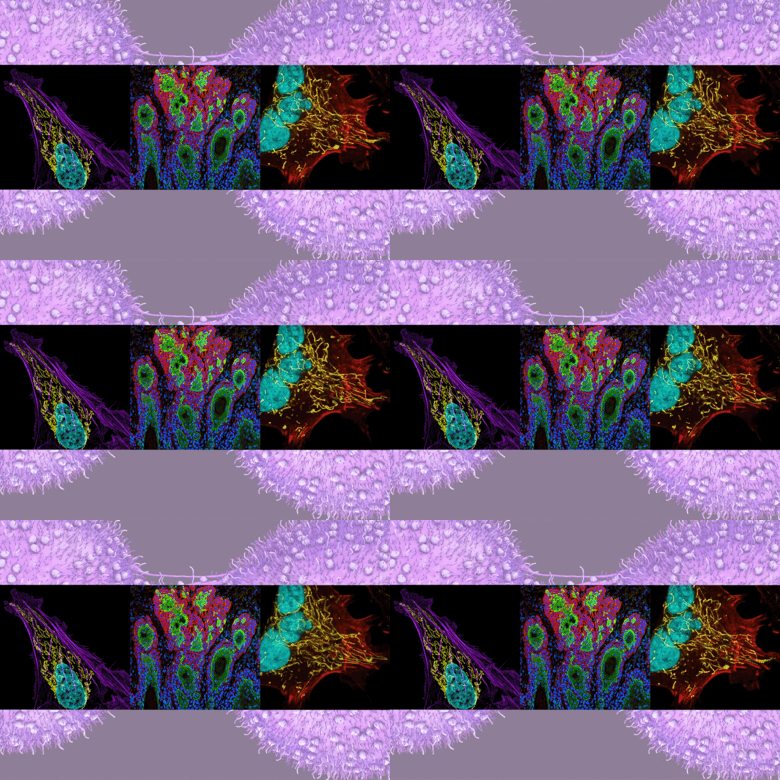
Derived from patient tumor samples and available to researchers around the world, the cells will aid the development of new cancer treatments.
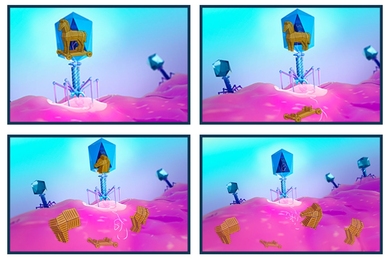
SNIPE, a newly characterized biological defense system, directly protects bacteria by chopping up invading viral DNA.
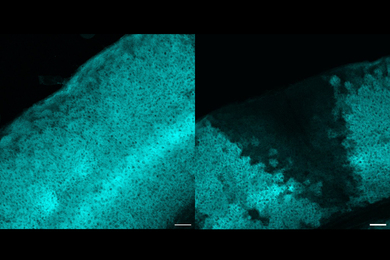
MIT researchers employed a novel application of tools and analysis to show that astrocytes ensure neural information processing by maintaining ambient levels of the neurotransmitter chemical GABA.

MIT researchers have dramatically lowered the error rate of prime editing, a technique that holds potential for treating many genetic disorders.

Professor Caroline Uhler discusses her work at the Schmidt Center, thorny problems in math, and the ongoing quest to understand some of the most complex interactions in biology.

Researchers develop a fast-acting, cell-permeable protein system to control CRISPR-Cas9, reducing off-target effects and advancing gene therapy.
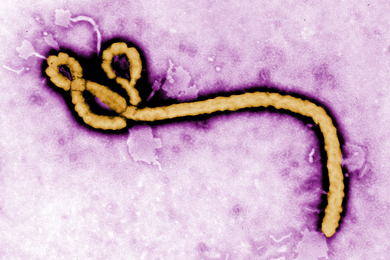
Combining powerful imaging, perturbational screening, and machine learning, researchers uncover new human host factors that alter Ebola’s ability to infect.
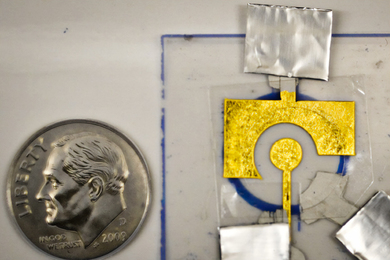
Electrodes coated with DNA could enable inexpensive tests with a long shelf-life, which could detect many diseases and be deployed in the doctor’s office or at home.

Researchers redesign a compact RNA-guided enzyme from bacteria, making it an efficient editor of human DNA.
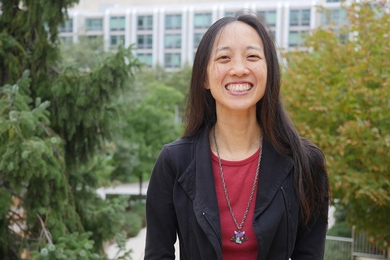
Senior Technical Instructor Vanessa Cheung ’02 brings the energy, experience, and excitement needed to educate students in the biology teaching lab.
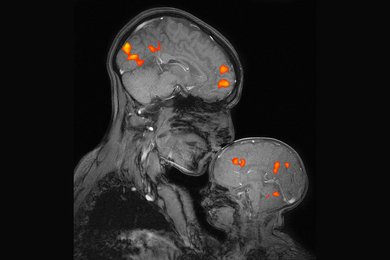
A quarter century after its founding, the McGovern Institute reflects on its discoveries in the areas of neuroscience, neurotechnology, artificial intelligence, brain-body connections, and therapeutics.