
Deep cuts in greenhouse emissions are tough but doable, experts say
Speakers at MIT climate symposium outline the steps needed to achieve global carbon neutrality by midcentury.
Speakers at MIT climate symposium outline the steps needed to achieve global carbon neutrality by midcentury.

High-scoring 100&Change applications featured in Bold Solutions Network.
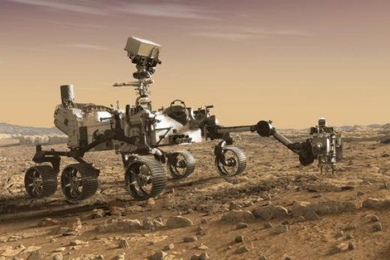
Researchers in the Department of Earth, Atmospheric and Planetary Sciences will help direct Mars 2020 rover sample acquisition.

Study finds Earth’s oceans contain just the right amount of iron; adding more may not improve their ability to absorb carbon dioxide.

Workshop highlights how MIT research can guide adaptation at local, regional, and national scales.

A new study looks at how the global energy mix could change over the next 20 years.

Substituting lumber for materials such as cement and steel could cut building emissions and costs.
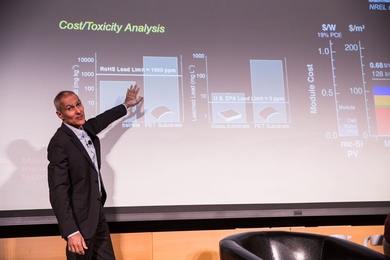
MIT symposium looks at the role of advances in storage, solar, nuclear, EVs and more in cutting greenhouse gas emissions.

Scientists reveal the genes and proteins controlling the chemical structures underpinning paleoclimate proxies.
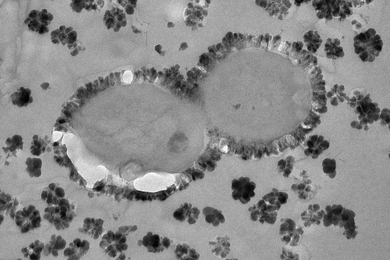
EAPS scientists find an alternative explanation for mineral evidence thought to signal the presence of oxygen prior to the Great Oxidation Event.
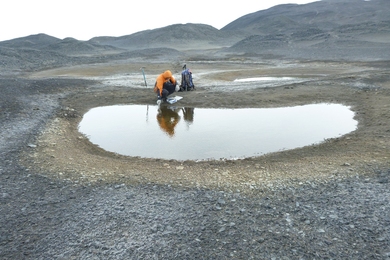
The Summons Lab compares lipids from Antarctic microbial communities to century-old samples.

Recommendations could help companies deliver more useful disclosures to investors on risks they face due to climate change.
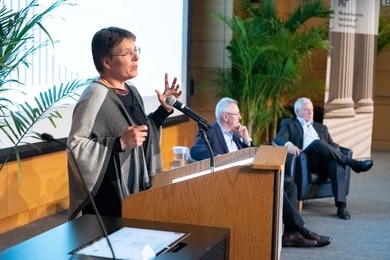
“Uncertainty is a reason to act, not to wait,” panelists agree.

MIT geologists use paleomagnetism to determine the chain of events that resulted in the Himalayan mountains, with the support of MISTI-India.

Study finds even the tallest ice cliffs should support their own weight rather than collapsing catastrophically.