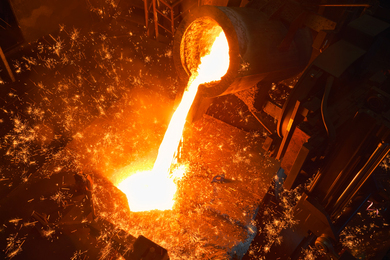
Making steel with electricity
MIT spinout Boston Metal is commercializing a new method for making steel and other metals, to help clean up the emissions-intensive industry.
MIT spinout Boston Metal is commercializing a new method for making steel and other metals, to help clean up the emissions-intensive industry.
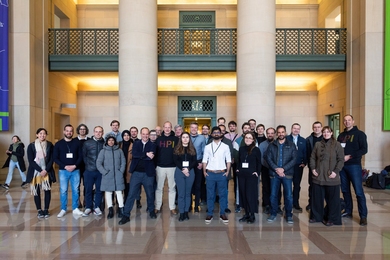
Together, the Hasso Plattner Institute and MIT are working toward novel solutions to the world’s problems as part of the Designing for Sustainability research program.
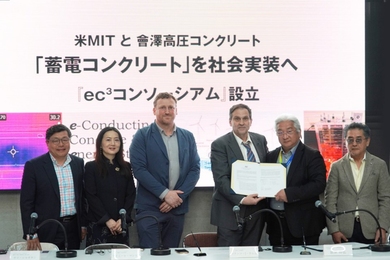
The MIT EC^3 Hub, an outgrowth of the MIT Concrete Sustainability Hub, will develop multifunctional concrete applications for infrastructure.

The MIT-led projects will investigate novel high-performance designs, materials, processes, and assessment methods for an environmentally sustainable microchip industry.
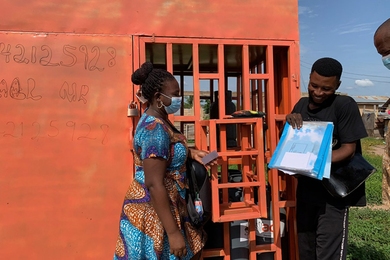
Since 2020, K-CAI has innovated and tested climate policies in more than 35 countries and supported scale-ups that have reached over 15 million people.

Amplified Industries, founded by Sebastien Mannai SM ’14, PhD ’18, helps oil field operators eliminate spills and stop methane leaks.

In order to recycle construction materials, keep them close to home, a new study of Amsterdam suggests.
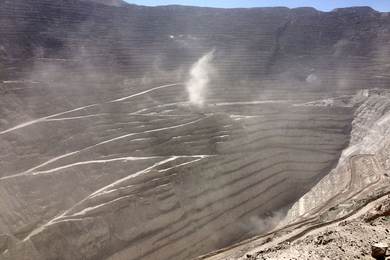
Extractive industries threaten water, glaciers, and livelihoods, but new research offers hope.

In field tests, MIT spinoff AgZen demonstrated that its feedback-optimized spraying system could halve the pesticide needs of farms and improve crop yields.
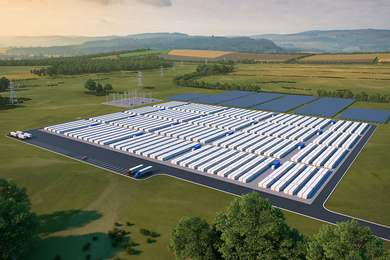
With batteries based on iron and air, Form Energy leverages MIT research to incorporate renewables into the grid.

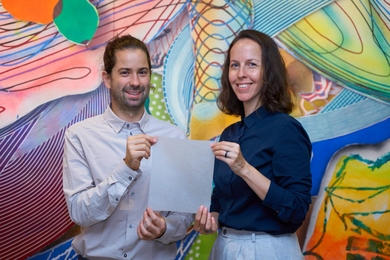
Atacama Biomaterials, co-founded by Paloma Gonzalez-Rojas SM ’15, PhD ’21, combines architecture, machine learning, and chemical engineering to create eco-friendly materials.
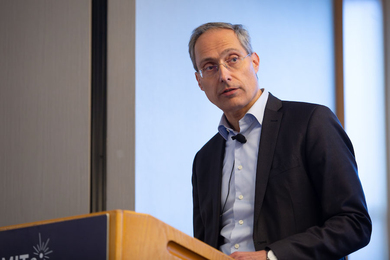
At the MIT Energy Initiative Fall Colloquium, Shell’s chief technology officer laid out two very different potential paths for the decades ahead.

MIT chemists developed a battery cathode based on organic materials, which could reduce the EV industry’s reliance on scarce metals.
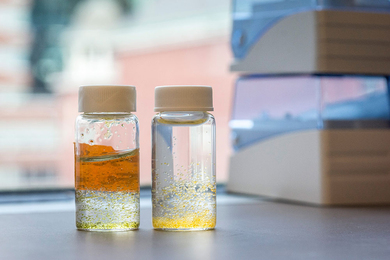
MIT chemical engineers create a zwitterionic hydrogel system for single-step water treatment with minimal environmental footprint.