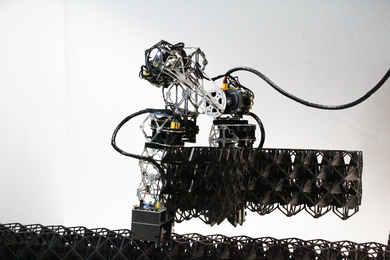
Robotically assembled building blocks could make construction more efficient and sustainable
New research suggests constructing a simple building from interlocking subunits should be mechanically feasible and have a much smaller carbon footprint.
New research suggests constructing a simple building from interlocking subunits should be mechanically feasible and have a much smaller carbon footprint.
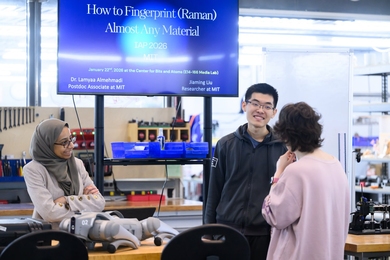
Participants learn how laser “fingerprinting” can help identify materials in fields ranging from law enforcement to art restoration.
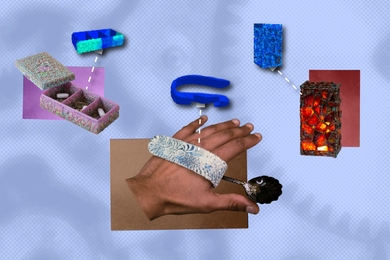
“MechStyle” allows users to personalize 3D models, while ensuring they’re physically viable after fabrication, producing unique personal items and assistive technology.

The speech-to-reality system combines 3D generative AI and robotic assembly to create objects on demand.
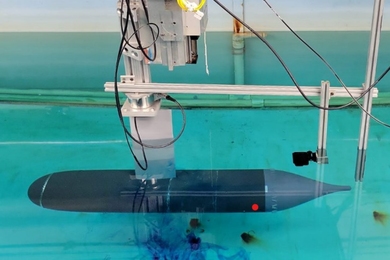
Wedge-shaped vortex generators reduce drag in ship hulls, which could advance decarbonization for the shipping industry.

MAD Fellow Alexander Htet Kyaw connects humans, machines, and the physical world using AI and augmented reality.

A collaborative network of makerspaces has spread from MIT across the country, helping communities make their own products.

Researchers analyzed the full lifecycle of several fuel options and found this approach has a comparable environmental impact, overall, to burning low-sulfur fuels.

The system uses reconfigurable electromechanical building blocks to create structural electronics.

A filter made from yeast encapsulated in hydrogels can quickly absorb lead as water flows through it.
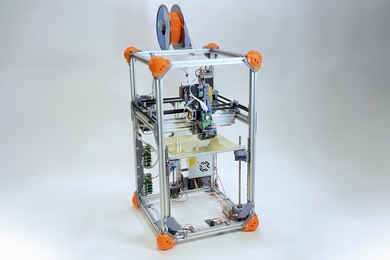
The advance could help make 3D printing more sustainable, enabling printing with renewable or recyclable materials that are difficult to characterize.

An interactive architectural installation combined textile arts and engineering on a desert landscape.
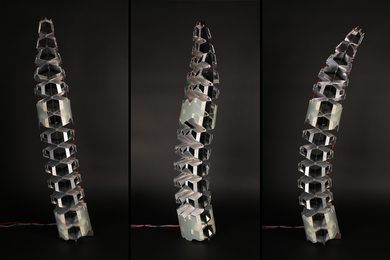
Produced with techniques borrowed from Japanese paper-cutting, the strong metal lattices are lighter than cork and have customizable mechanical properties.
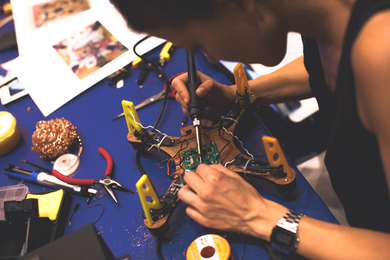
Now a global community of builders of all skill levels and backgrounds, the fab lab network grew from a single maker facility at MIT.
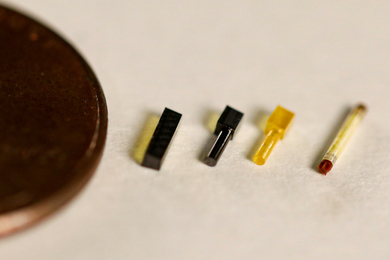
A new way of machining microscale rotors from diamond crystal can enable ultrasensitive NMR devices for probing proteins and other materials.