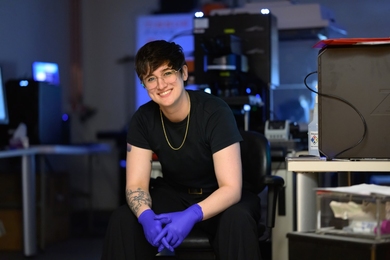
Tackling rare genetic disorders with patient-focused science
Shannon Knight, a brain and cognitive sciences PhD candidate and McGovern Institute researcher, focuses on developing a novel gene therapy.
Shannon Knight, a brain and cognitive sciences PhD candidate and McGovern Institute researcher, focuses on developing a novel gene therapy.
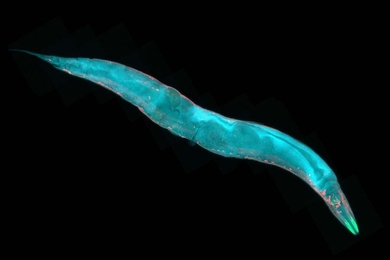
A study of worms finds a protein that helps shape the structure of the genome is critical for establishing the identity of some neurons.
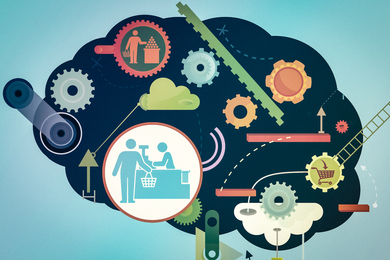
Neuroscientists have discovered circuits in the prefrontal cortex that can be repurposed to store different types of information.
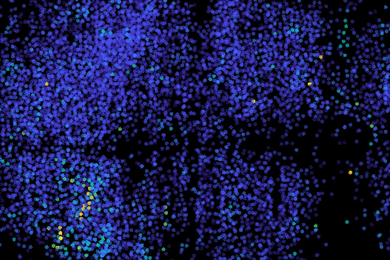
The new technique could help scientists learn how the entire brain works to generate decisions and emotions.
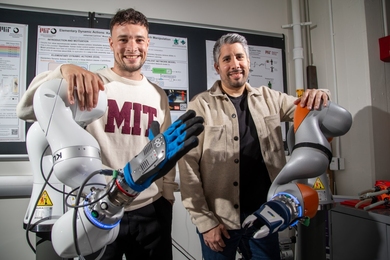
MIT engineers introduce an adaptive physical therapy system that uses generative AI to learn from physical therapists and interactively support stroke patients.
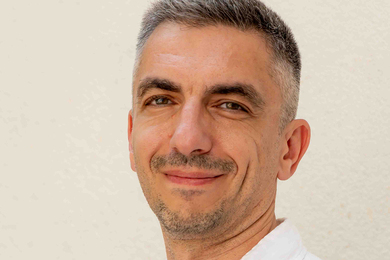
An expert in machine learning, statistics, and computation, Rakhlin succeeds Professor Ankur Moitra.
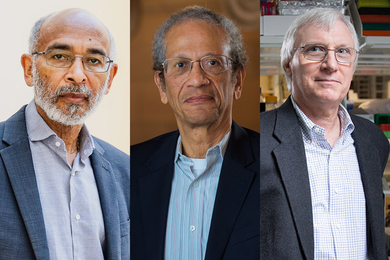
Longtime professors and experts in the fields of anesthesiology, aerospace engineering, and biological engineering, respectively, receive MIT’s highest faculty honor.
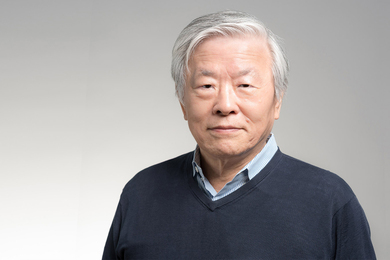
Tonegawa made landmark discoveries about how the immune system generates antibody diversity and how the brain forms memories.

A new study adds evidence that electric fields in the brain help to organize and shape underlying neural activity via “ephaptic coupling.”
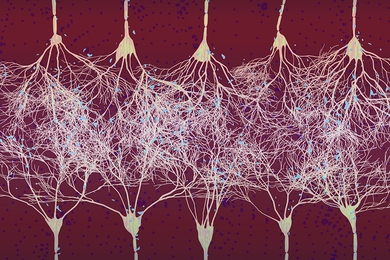
Scientists find that learning to identify a new object subtly reshapes visual processing in the brain.
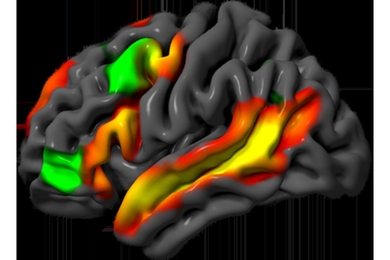
Neuroscientists find logical reasoning does not involve language-processing parts of the brain.
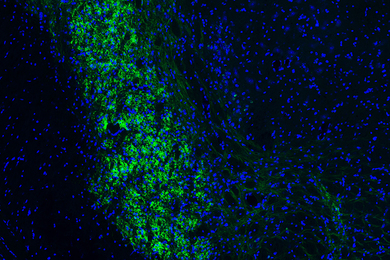
A simple brain circuit measures objects’ distance from the body using touch signals from a rodent’s whiskers, MIT scientists find.
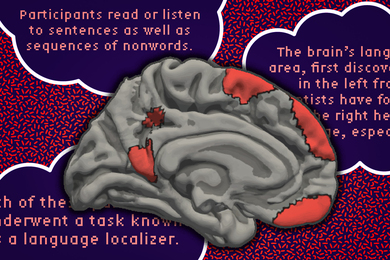
A new study reveals that parts of the brain located far from the canonical language-processing centers are also involved in language comprehension.
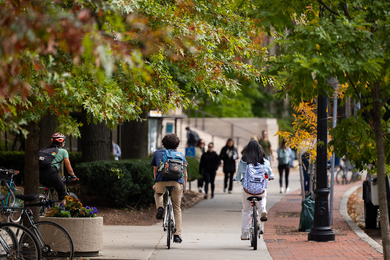
“Scientific American” showcases the history and future of America’s scientific engine, highlighting promising young scientists and icons at MIT and beyond.
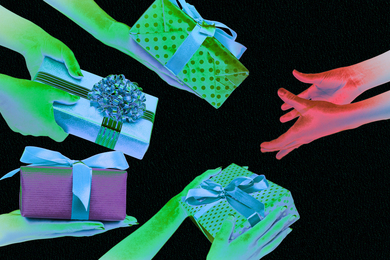
A new study shows people expect reciprocal generosity only in interactions with friends or others of equal social status.