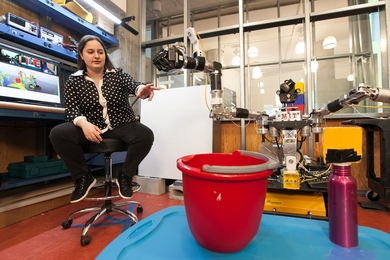
Teaching robots to teach other robots
CSAIL approach allows robots to learn a wider range of tasks using some basic knowledge and a single demo.
CSAIL approach allows robots to learn a wider range of tasks using some basic knowledge and a single demo.
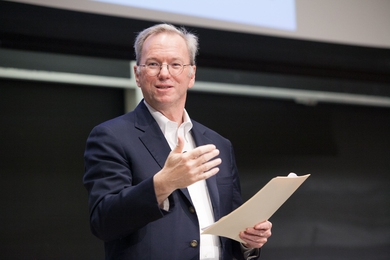
Former Google CEO, now chairman of parent company Alphabet, speaks to students as part of fireside chat with CSAIL Director Daniela Rus.
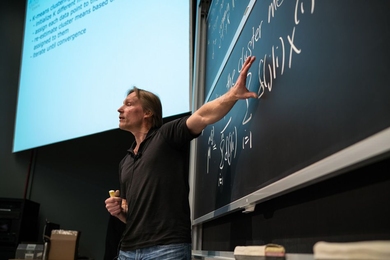
Ballyhooed artificial-intelligence technique known as “deep learning” revives 70-year-old idea.

Amnon Shashua PhD ’93, co-founder of Mobileye, discusses challenges associated with autonomous vehicles in MIT visit.
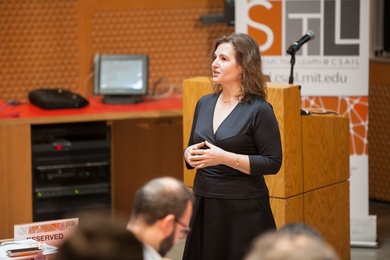
SystemsThatLearn@CSAIL aims to develop new “human-like systems” for data science and other fields.
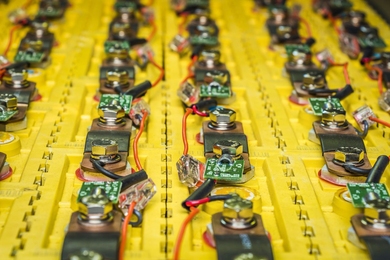
With support from the Toyota Research Institute, MIT faculty will focus on next-generation energy storage.

A simple statistical trick could help make a ubiquitous model of decision processes more accurate.
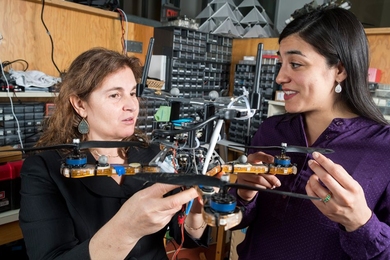
New technique could protect robot teams’ communication networks from malicious hackers.
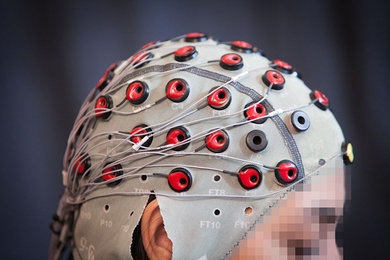
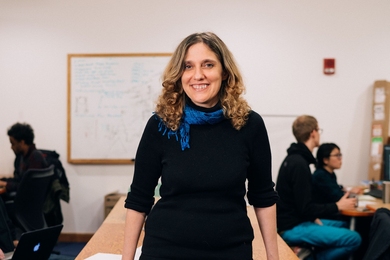
Computer scientist Regina Barzilay empowers cancer treatment with machine learning.

Low-power special-purpose chip could make speech recognition ubiquitous in electronics.

Incorporating strategies from skilled human planners improves automatic planners’ performance.
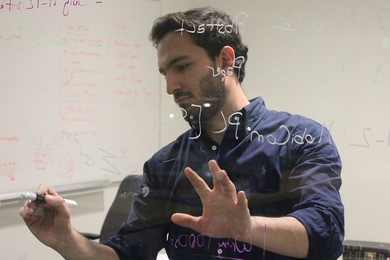
Adib is directing a new research group at the Media Lab, aiming to uncover, analyze, and engineer natural and human-made networks.
MIT Game Lab, Bayview Labs, and Seraph Group announce funding, facilities, and mentorship for startups focusing on virtual, augmented, and mixed reality.