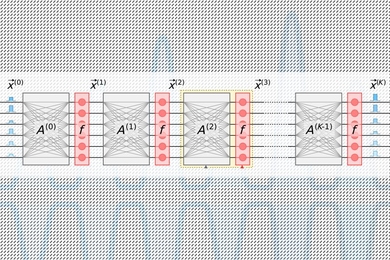
Chip design drastically reduces energy needed to compute with light
Simulations suggest photonic chip could run optical neural networks 10 million times more efficiently than its electrical counterparts.
Simulations suggest photonic chip could run optical neural networks 10 million times more efficiently than its electrical counterparts.
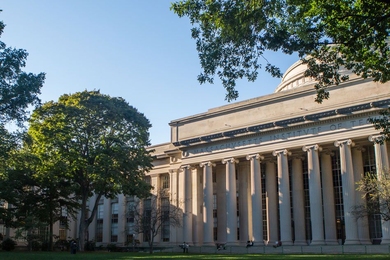
Working groups identify key ideas for new college; period of community feedback continues.

Interactive tool lets users see and control how automated model searches work.

Image-translation pioneer discusses the past, present, and future of generative adversarial networks, or GANs.
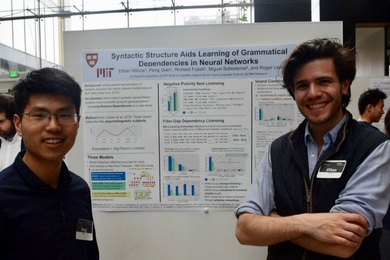
Researchers submit deep learning models to a set of psychology tests to see which ones grasp key linguistic rules.

In helping envision the MIT Schwarzman College of Computing, working group is focusing on ethical and societal questions.

Working group studies options for creating a new set of faculty hires for MIT’s new college.
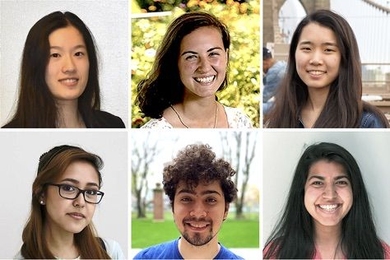
MIT Quest for Intelligence-sponsored undergraduate research projects demystify AI.

Autonomous control system “learns” to use simple maps and image data to navigate new, complex routes.
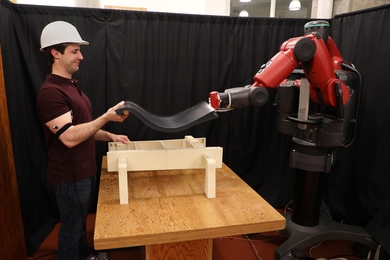
CSAIL system can mirror a user's motions and follow nonverbal commands by monitoring arm muscles.

Interdisciplinary teams propose creative policy solutions addressing societal challenges at the Institute for Data, Systems, and Society student-organized event.

New method quickly detects instances when neural networks make mistakes they shouldn’t.

Machine learning reveals metabolic pathways disrupted by the drugs, offering new targets to combat resistance.
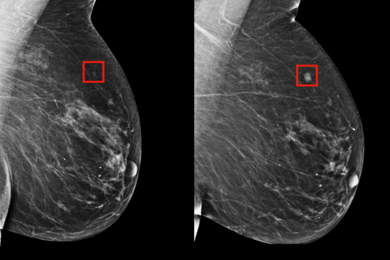
MIT/MGH's image-based deep learning model can predict breast cancer up to five years in advance.
MIT CSAIL project shows the neural nets we typically train contain smaller “subnetworks” that can learn just as well, and often faster.