
Evaluating the ethics of autonomous systems
MIT researchers developed a testing framework that pinpoints situations where AI decision-support systems are not treating people and communities fairly.
MIT researchers developed a testing framework that pinpoints situations where AI decision-support systems are not treating people and communities fairly.
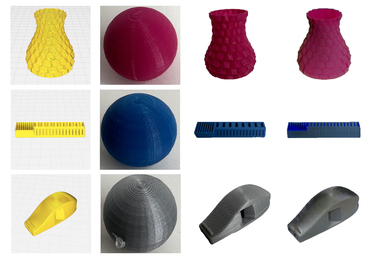
By quickly generating aesthetically accurate previews of fabricated objects, the VisiPrint system could make prototyping faster and less wasteful.

A new model measures defects that can be leveraged to improve materials’ mechanical strength, heat transfer, and energy-conversion efficiency.
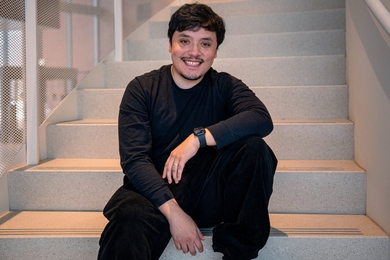
Mariano Salcedo ’25, a master’s student in the new Music Technology and Computation Graduate Program, is designing an AI to visualize and express music and other sounds.
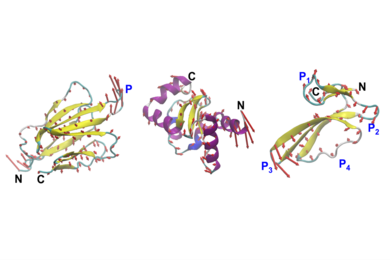
An AI model generates novel proteins based on how they vibrate and move, opening new possibilities for dynamic biomaterials and adaptive therapeutics.
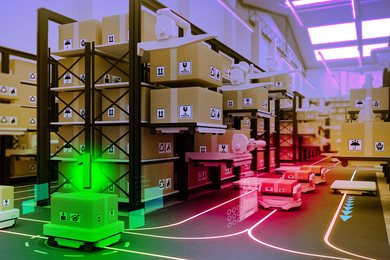
This new approach adapts to decide which robots should get the right of way at every moment, avoiding congestion and increasing throughput.

MIT Sea Grant works with the Woodwell Climate Research Center and other collaborators to demonstrate a deep learning-based system for fish monitoring.
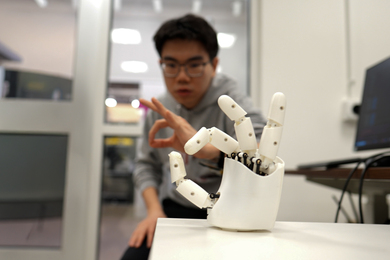
By moving their hands and fingers, users can direct a robot to play piano or shoot a basketball, or they can manipulate objects in a virtual environment.

An MIT-led team is designing artificial intelligence systems for medical diagnosis that are more collaborative and forthcoming about uncertainty.
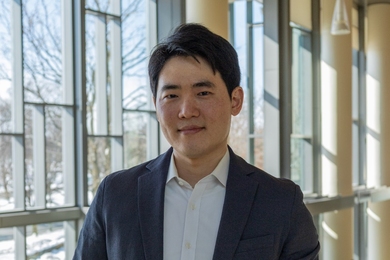
Sojun Park, a postdoc at the Center for International Studies, has learned much from his research on intellectual property as well as his interactions with students and mentors at MIT.

Operations research expert Dimitris Bertsimas delivered the annual Killian Lecture, providing a look at the past and future of his work.
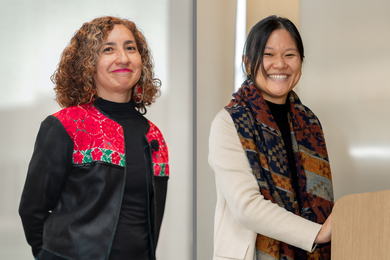
Conference speakers discussed the unfolding trajectory of AI and the benefits of shaping technology to meet people’s needs.
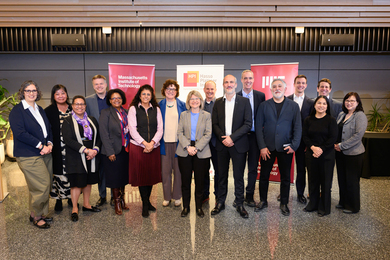
Jointly led by the MIT Morningside Academy for Design, MIT Schwarzman College of Computing, and the Hasso Plattner Institute in Potsdam, the hub will foster a dynamic community where computing, creativity, and human-centered innovation meet.
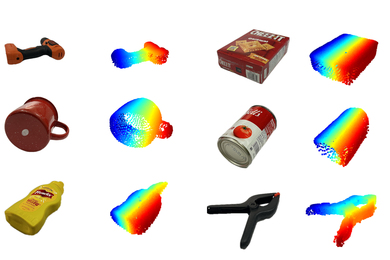
With this new technique, a robot could more accurately detect hidden objects or understand an indoor scene using reflected Wi-Fi signals.
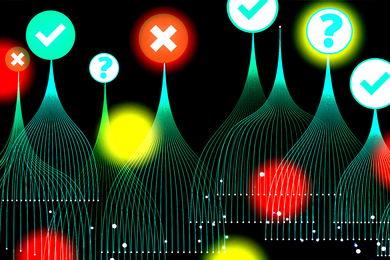
This new metric for measuring uncertainty could flag hallucinations and help users know whether to trust an AI model.