
Rationale engineering generates a compact new tool for gene therapy
Researchers redesign a compact RNA-guided enzyme from bacteria, making it an efficient editor of human DNA.
Researchers redesign a compact RNA-guided enzyme from bacteria, making it an efficient editor of human DNA.

PhD student Sarah Alnegheimish wants to make machine learning systems accessible.

Through collaborations with organizations like BREIT in Peru, the MIT Institute for Data, Systems, and Society is upskilling hundreds of learners around the world in data science and machine learning.

The Institute-wide effort aims to bolster industry and create jobs by driving innovation across vital manufacturing sectors.

This new machine-learning model can match corresponding audio and visual data, which could someday help robots interact in the real world.

Researchers are developing algorithms to predict failures when automation meets the real world in areas like air traffic scheduling or autonomous vehicles.

Sendhil Mullainathan brings a lifetime of unique perspectives to research in behavioral economics and machine learning.

Trained with a joint understanding of protein and cell behavior, the model could help with diagnosing disease and developing new drugs.
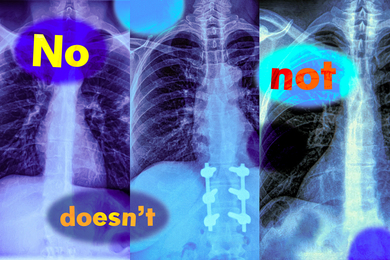
Words like “no” and “not” can cause this popular class of AI models to fail unexpectedly in high-stakes settings, such as medical diagnosis.

With support from the Stone Foundation, the center will advance cutting-edge research and inform policy.

The CausVid generative AI tool uses a diffusion model to teach an autoregressive (frame-by-frame) system to rapidly produce stable, high-resolution videos.
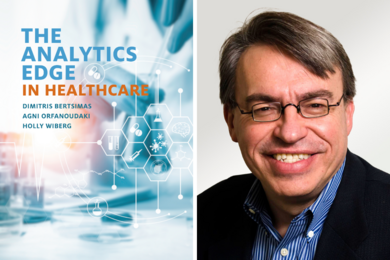
A new book coauthored by MIT’s Dimitris Bertsimas explores how analytics is driving decisions and outcomes in health care.

“IntersectionZoo,” a benchmarking tool, uses a real-world traffic problem to test progress in deep reinforcement learning algorithms.

New type of “state-space model” leverages principles of harmonic oscillators.
A new method helps convey uncertainty more precisely, which could give researchers and medical clinicians better information to make decisions.