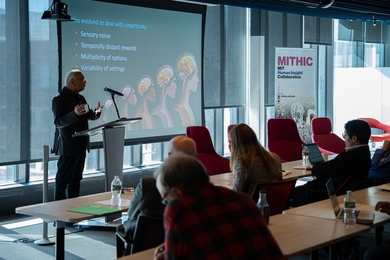
Putting a spotlight on AI, society, and humanity
Supported by the MIT Human Insight Collaborative, scholars are exploring how AI is impacting the human experience and reshaping higher education.
Supported by the MIT Human Insight Collaborative, scholars are exploring how AI is impacting the human experience and reshaping higher education.
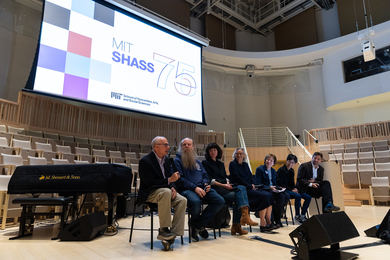
During the School of Humanities, Arts, and Social Sciences’ 75th Anniversary Symposium, President Sally Kornbluth said “MIT has never needed your particular insight and guidance more than we do now.”
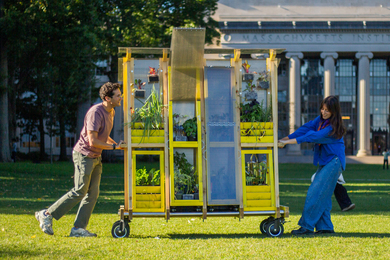
Co-founders Aleks Banaś and Zachary Rapaport see architecture and farming as deeply complementary disciplines. Their nascent club is having a sizeable impact at the Institute.
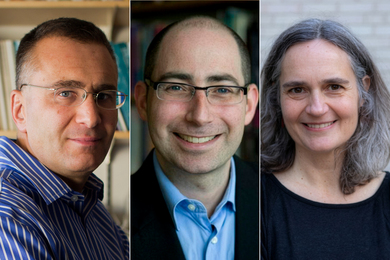
Established after World War II, the School of the Humanities, Arts, and Social Sciences is an integral part of the MIT experience. Three faculty reflect on the school’s ongoing impact.
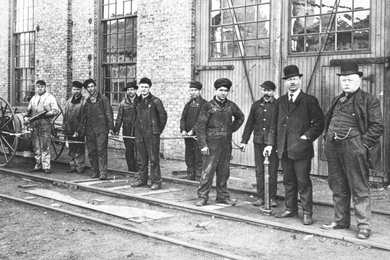
MIT anthropologist Chris Walley developed a project for people in Southeast Chicago to tell their histories — an approach any community can adopt.
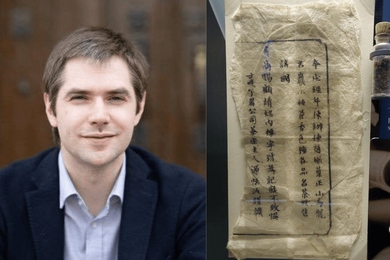
MIT historian Tristan Brown uncovers the true origins of an artifact once thought to be a relic of the Boston Tea Party.
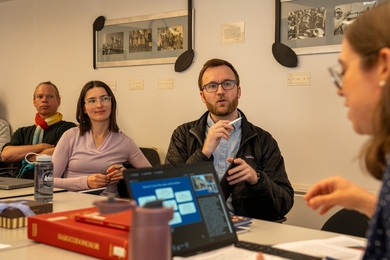
The SHASS Faculty Fellows Program, administered by the MIT Human Insight Collaborative, is fostering new research projects and creating space for supportive and interdisciplinary discussion.
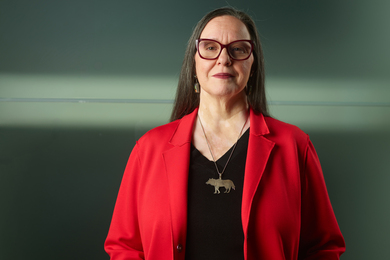
A leading innovator in community-based archaeology, Professor Sonya Atalay works to link local know-how with academic inquiry across the globe.
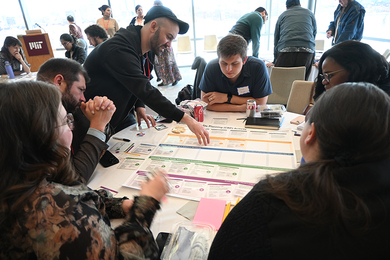
Living Climate Futures Symposium explores climate challenges and solutions at the community level.

Anthropologist Amy Moran-Thomas studies overlooked insights from people health care is meant to reach.
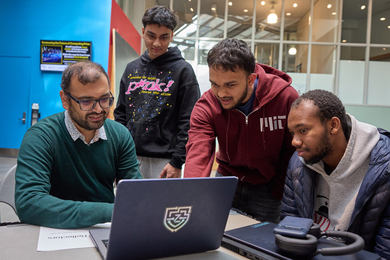
MIT computer science students design AI chatbots to help young users become more social, and socially confident.

Leslie Tilley combines deep experience as a musician with cultural and formal analysis, to see how people refashion music anew.
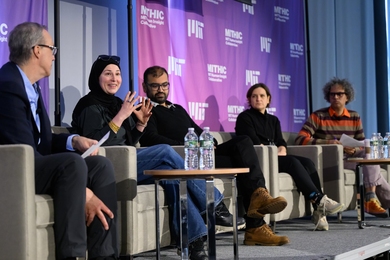
The inaugural MIT Human Insight Collaborative (MITHIC) Annual Event showcased the breadth of projects supported in the first year of the presidential initiative.

A volunteer-driven pilot program brings low-cost organic produce to the MIT community.
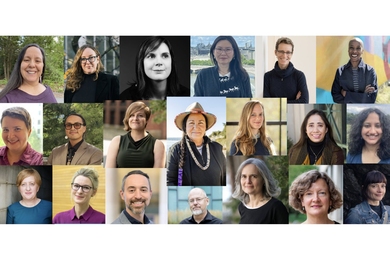
MIT’s Living Climate Futures Lab takes a human-centered approach to investigating a global challenge.