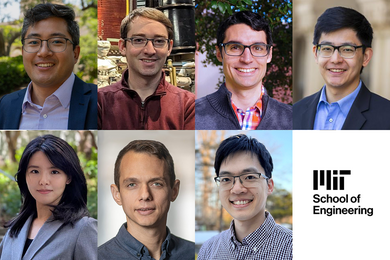
School of Engineering welcomes new faculty in 2026
The newest MIT engineering faculty are conducting research across a diverse range of subject areas.
Download RSS feed: News Articles / In the Media / Audio
The newest MIT engineering faculty are conducting research across a diverse range of subject areas.
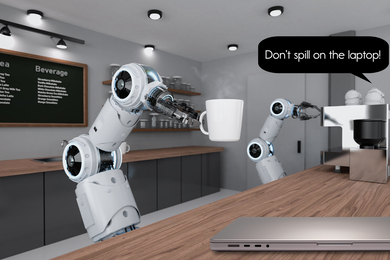
The new approach, known as FLEX, could lead to more intuitive, interactive household and assistive robots.

A new system identifies and corrects unreliable object descriptions stored in a robot’s memory, improving the robot’s ability to interact with its environment.

Elsa Olivetti, co-director of the MIT Minerals Stewardship Consortium, discusses how research and collaborations can strengthen mineral supply chains.
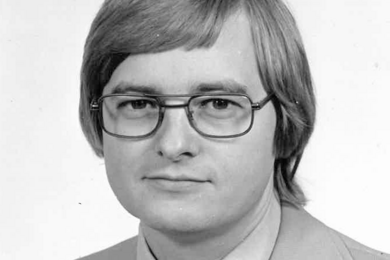
Longtime EECS adjunct professor and LIDS researcher was known for an influential essay on the need for engineers to “respect the unstable.”
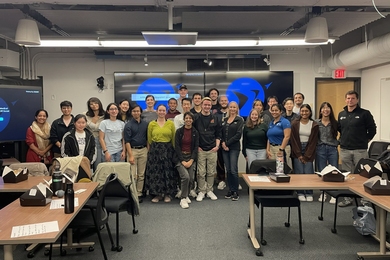
MIT’s Doctors Without Gravity club connects health and space science enthusiasts.
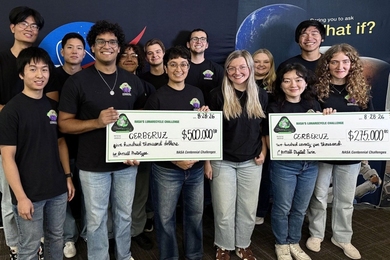
The team took first prize in both the Prototype and Digital Twin tracks for its lunar waste recycling system.

Over two decades at MIT, Hamilton forged new paths in computer science and engineering. Her groundbreaking work included leading the team that programmed the first computers that took humans to the moon.
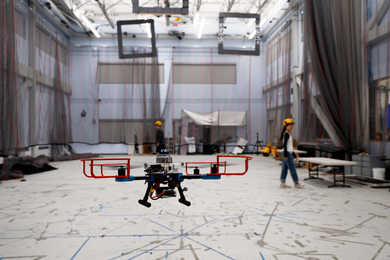
This new method, called “SANDO,” could help disaster-response robots navigate dangerous, unknown environments.
An industry report published by students in an MIT aerospace entrepreneurship class lays out guidance for aspiring space leaders and investors.
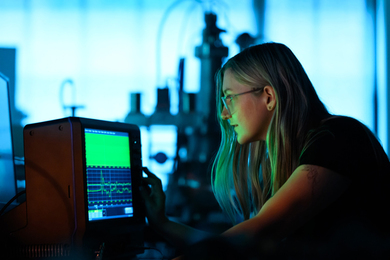
PhD candidate Lanie McKinney is building technology to convert the Red Planet’s atmosphere into propellant for bringing astronauts home.
Faculty members and researchers were honored in recognition of their scholarship, service, and overall excellence.

Inaugural artist Amy Karle will join astrophysicists at MIT’s Kavli Institute to explore questions about the universe and translate them into an immersive multimedia experience.
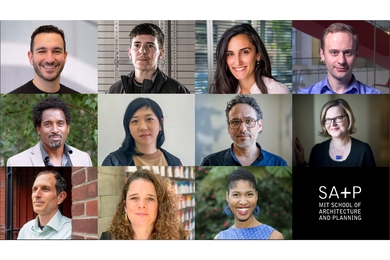
The range of faculty disciplines showcases the breadth of research and scholarship across the school.
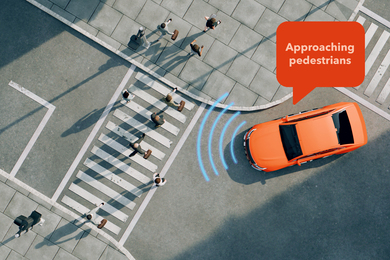
A new method, called CW-Net, translates the reasoning process of an autonomous vehicle’s AI system into understandable concepts that explain its behavior.