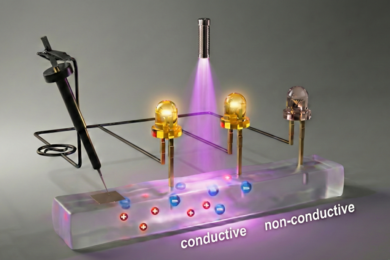
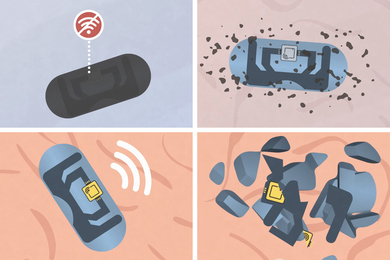
New MIT work advances the growing field of ionotronics, in which data are transferred through ions, potentially providing a bridge between electronics and biological tissue.
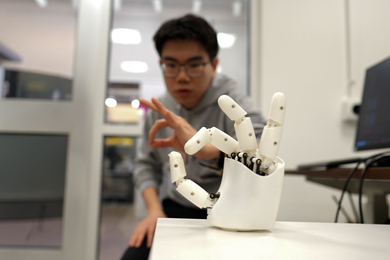
By moving their hands and fingers, users can direct a robot to play piano or shoot a basketball, or they can manipulate objects in a virtual environment.
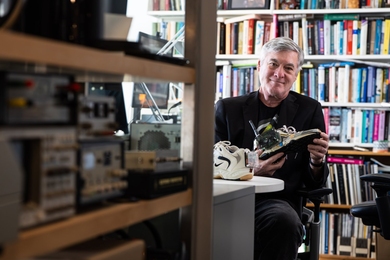
From early motion-sensing platforms to environmental monitoring, the professor and head of the Program in Media Arts and Sciences has turned decades of cross-disciplinary research into real-world impact.
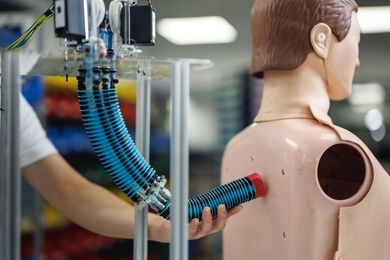
An AI control system co-developed by SMART researchers enables soft robotic arms to learn a broad set of motions once and adapt instantly to changing conditions without retraining.
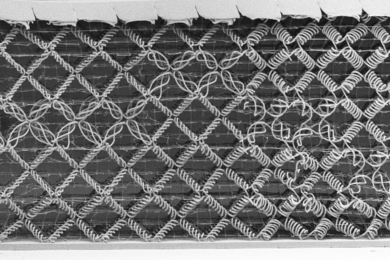
New framework supports design and fabrication of compliant materials such as printable textiles and functional foams, letting users predict deformation and material failure.
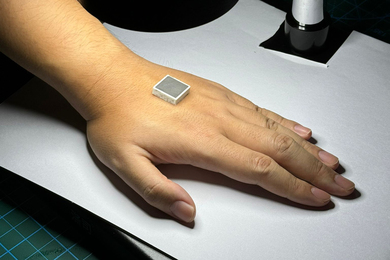
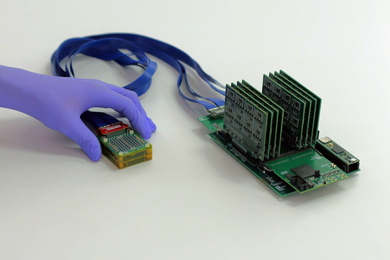
WITEC is working to develop the first wearable ultrasound imaging system to monitor chronic conditions in real-time, with the goal of enabling earlier detection and timely intervention.
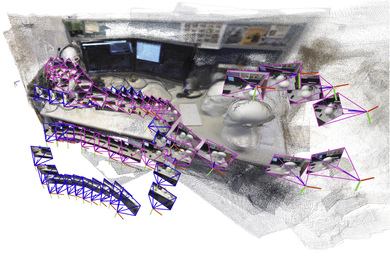
A new approach developed at MIT could help a search-and-rescue robot navigate an unpredictable environment by rapidly generating an accurate map of its surroundings.