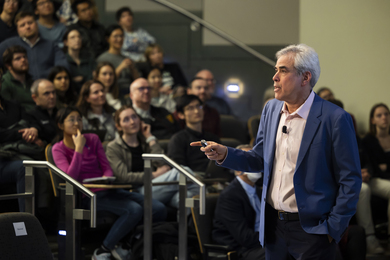
In Compton Lecture at MIT, social psychologist Jonathan Haidt warns of dramatic global decay in cognition, attention spans, and civic life, and urges curbs to tech use.
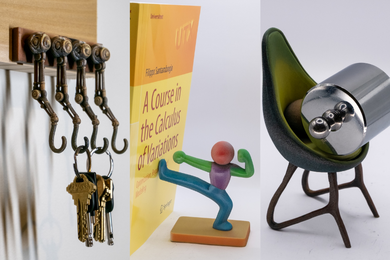
To help generative AI models create durable, real-world accessories and decor, the PhysiOpt system runs physics simulations and makes subtle tweaks to its 3D blueprints.
Strahinja Janjusevic brings an international perspective and US Naval Academy education to his graduate research in the MIT Technology and Policy Program.
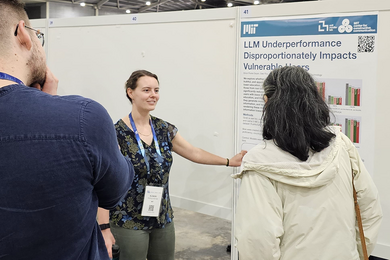
Research from the MIT Center for Constructive Communication finds leading AI models perform worse for users with lower English proficiency, less formal education, and non-US origins.
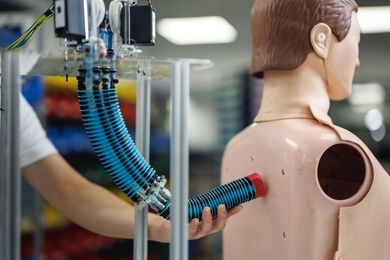
An AI control system co-developed by SMART researchers enables soft robotic arms to learn a broad set of motions once and adapt instantly to changing conditions without retraining.
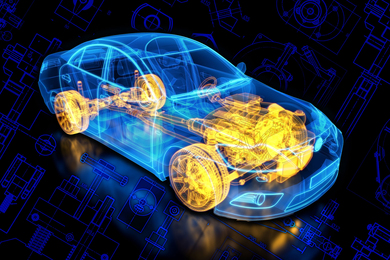
By minimizing the need to drive around looking for a parking spot, this technique can save drivers up to 35 minutes — and give them a realistic estimate of total travel time.