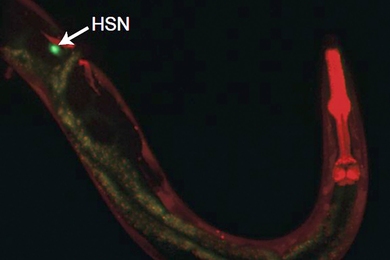
Study finds that in worms, the HSN neuron uses multiple chemicals and connections to orchestrate egg-laying and locomotion over the course of several minutes.
By focusing on causal relationships in genome regulation, a new AI method could help scientists identify new immunotherapy techniques or regenerative therapies.
MIT spinout Kronos Bio, founded by Associate Professor Angela Koehler, studies the complex signaling networks of cancer cells to find new drug targets.
By analyzing epigenomic and gene expression changes that occur in Alzheimer’s disease, researchers identify cellular pathways that could become new drug targets.
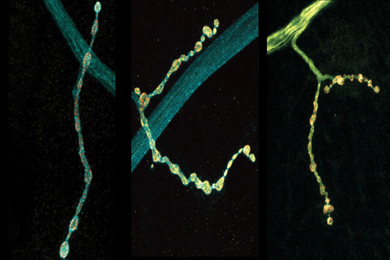
Neurons stochastically generated up to eight different versions of a protein-regulating neurotransmitter release, which could vary how they communicate with other cells.
Professor and two additional MIT affiliates honored for influential work on optical coherence tomography, which allows rapid detection of retinal disease, among other applications.
Researchers can use the model to predict how engineered forms of insulin would perform in human patients, making it easier to bring these drugs to clinical trials.