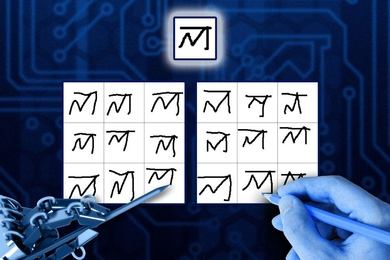
Search Stories

Data, drones, and 3-D-printed hearts
Looking back on the year that was: Highlights from the Computer Science and Artificial Intelligence Lab in 2015.

Untraceable communication — guaranteed
New untraceable text-messaging system comes with statistical guarantees.
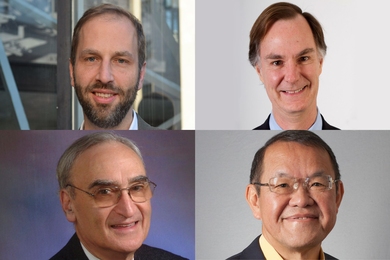
Four MIT faculty elected 2015 AAAS Fellows
Berggren, Bertschinger, Fink, and Zue are among those recognized for efforts toward advancing science.

What are your apps hiding?
Half of the communication connections established by the top 500 Android apps have no effect on user experience.

Designing virtual identities for empowerment and social change
D. Fox Harrell receives $1.35 million in grant funding to advance research at the intersection of social science and digital technology.
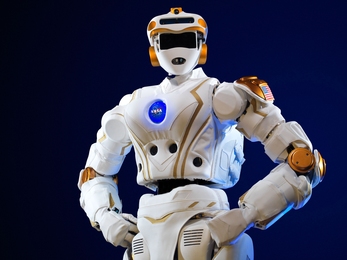
NASA gives MIT a humanoid robot to develop software for future space missions
Team led by Professor Russ Tedrake of CSAIL to develop algorithms for 6-foot-tall “Valkyrie” robot to travel to Mars and beyond.

Amplifying — or removing — visual variation
Algorithms could offer new tools for graphics software or reveal structural defects.

How to make better visualizations
Eye-tracking research reveals which types of visuals actually get the message across.

System automatically converts 2-D video to 3-D
Exploiting video game software yields broadcast-quality 3-D video of soccer games in real time.
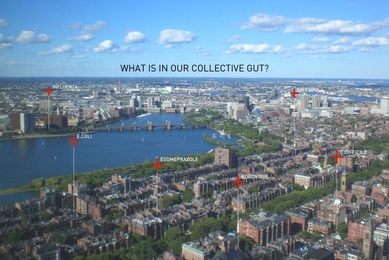
Real-time epidemiology from urban wastewater
MIT and Kuwait researchers have been awarded $4 million to fund Underworlds, a study of real-time epidemiology using biomarkers in urban sewage.
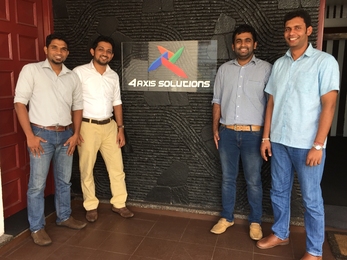
Empowering students in Sri Lanka to form mobile-app startups
MIT Global Startup Labs program leads to student-founded startups 4Axis Solutions and PayMedia.
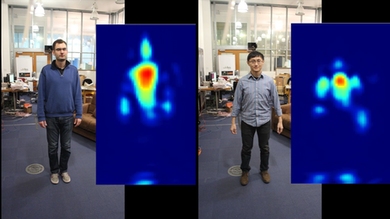
How wireless “X-ray vision” could power virtual reality, smart homes, and Hollywood
By seeing silhouettes through a wall, CSAIL device could help with motion capture, fall prevention and even your heating bill.

A basis for all cryptography
A tool that would provide a secure foundation for any cryptographic system may be close at hand.
Faster optimization
New general-purpose optimization algorithm promises order-of-magnitude speedups on some problems.