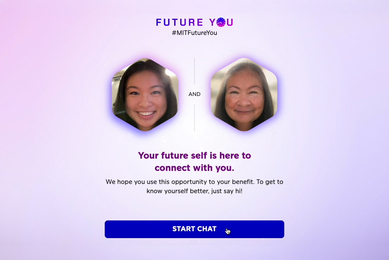
By enabling users to chat with an older version of themselves, Future You is aimed at reducing anxiety and guiding young people to make better choices.
New dataset of “illusory” faces reveals differences between human and algorithmic face detection, links to animal face recognition, and a formula predicting where people most often perceive faces.
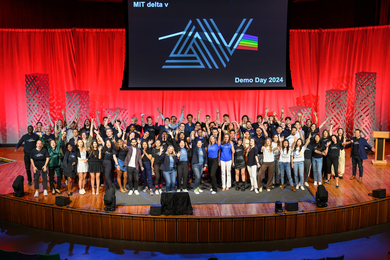
The innovations map the ocean floor and the brain, prevent heat stroke and cognitive injury, expand AI processing and quantum system capabilities, and introduce new fabrication approaches.
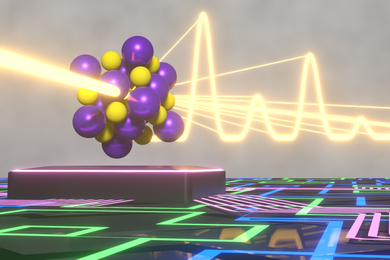
By analyzing X-ray crystallography data, the model could help researchers develop new materials for many applications, including batteries and magnets.
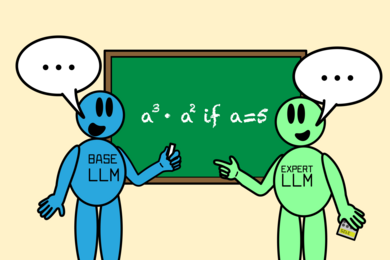
“Co-LLM” algorithm helps a general-purpose AI model collaborate with an expert large language model by combining the best parts of both answers, leading to more factual responses.
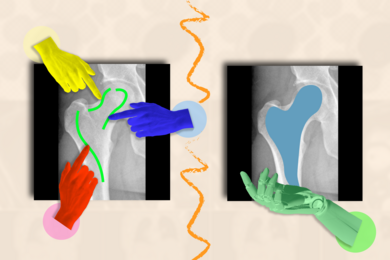
“ScribblePrompt” is an interactive AI framework that can efficiently highlight anatomical structures across different medical scans, assisting medical workers to delineate regions of interest and abnormalities.
Computer scientist who specializes in database management systems joins the leadership of the Department of Electrical Engineering and Computer Science.