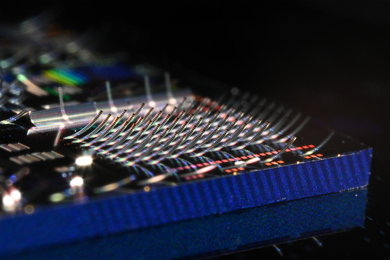
Light-emitting structures that curl off the chip surface could enable advanced displays, high-speed optical communications, and larger-scale quantum computers.
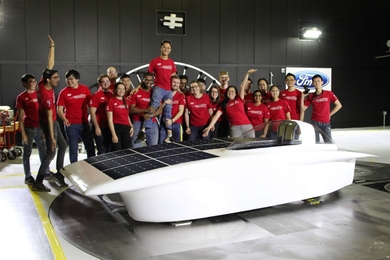
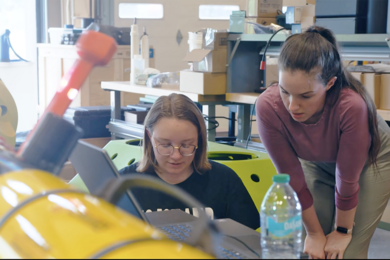
The teamwork, leadership, and communication skills developed in the Gordon Engineering Leadership (GEL) Program drive success of Edgerton Center project teams.
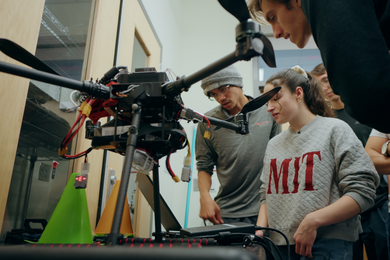
In 16.85 (Design and Testing of Autonomous Vehicles), AeroAstro students build software that allows autonomous flight vehicles to navigate unknown environments.
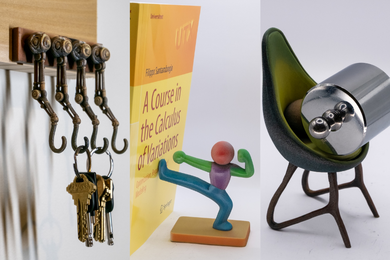
To help generative AI models create durable, real-world accessories and decor, the PhysiOpt system runs physics simulations and makes subtle tweaks to its 3D blueprints.
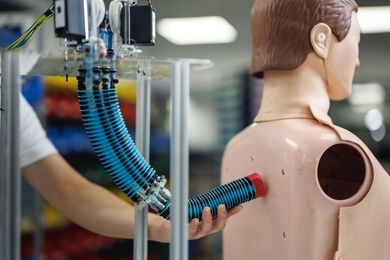
An AI control system co-developed by SMART researchers enables soft robotic arms to learn a broad set of motions once and adapt instantly to changing conditions without retraining.
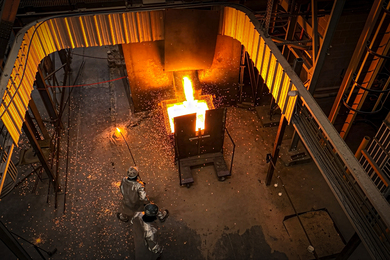
Hertha Metals, founded by Laureen Meroueh SM ’18, PhD ’20, uses an electric arc furnace, powered by natural gas and electricity, to melt and reduce low-grade iron ore in a single step.
Associate Professor Rafael Gómez-Bombarelli has spent his career applying AI to improve scientific discovery. Now he believes we are at an inflection point.
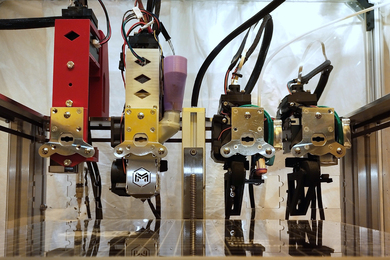
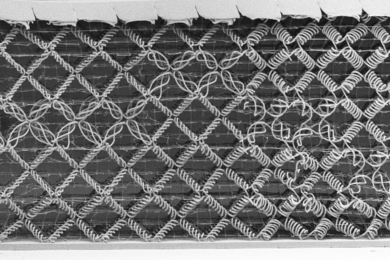
New framework supports design and fabrication of compliant materials such as printable textiles and functional foams, letting users predict deformation and material failure.