
MIT affiliates elected to the American Academy of Arts and Sciences for 2026
The prestigious honor society honors four MIT faculty and 13 additional MIT alumni among more than 250 new members.
The prestigious honor society honors four MIT faculty and 13 additional MIT alumni among more than 250 new members.

Mitali Chowdhury ’24 and Christina Kim ’24 will pursue graduate studies at Cambridge University in the UK.

The American Association for the Advancement of Science recognized Laub and 21 alumni for their efforts to advance science and related fields.

The associate professors of EECS and chemistry, respectively, are honored for exceptional contributions to teaching, research, and service at MIT.
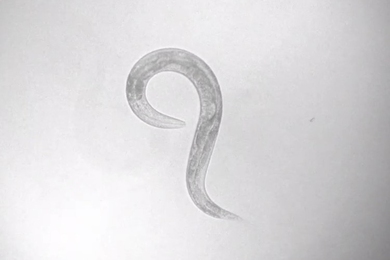
MIT scientists create a detailed map of exactly what happens in the brains of C. elegans worms when they “follow their nose” to savor attractive odors or avoid unappealing ones.

Scientists say an exception in the Montreal Protocol for the use of ozone-depleting feedstocks could set the ozone recovery back seven years.

Long thought to be mainly a structural support, the cell membrane also influences how cells respond to signals and may contribute to the growth of cancer cells.

From lazy ripples to towering breakers, waves should vary widely from one planet to another, according to a new model.

MIT Energy Initiative symposium maps a path to tap the planet’s heat-rich rocks for clean power at scale.

Two faculty and six additional alumni win top APS awards and prizes; four faculty and 12 additional alumni named APS Fellows.

A new study finds that audiobooks help students learn new words — especially when paired with one-on-one instruction.
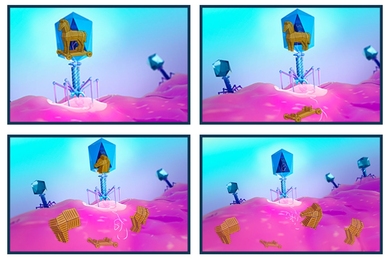
SNIPE, a newly characterized biological defense system, directly protects bacteria by chopping up invading viral DNA.

The team’s ultra-precise measurement confirms the Standard Model’s predictions.
Startup accelerator program grows to over 30 companies, almost half of them with MIT pedigrees.
This new technique will allow chemists to efficiently fine-tune the chemical structure of an organic molecule.