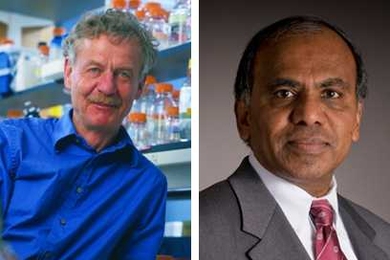
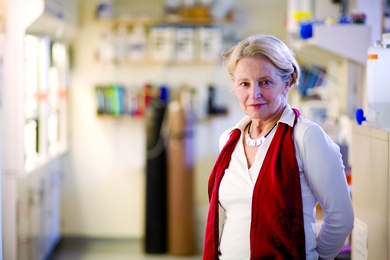
Belfer gift creates consortium targeting neurodegenerative diseases
Collaboration unites Picower Institute at MIT with MD Anderson Cancer Center and Baylor College of Medicine.
Collaboration unites Picower Institute at MIT with MD Anderson Cancer Center and Baylor College of Medicine.
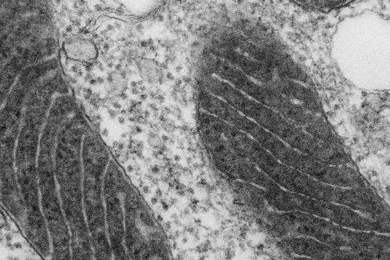
Protein-labeling technique allows high-resolution visualization of molecules inside cells.
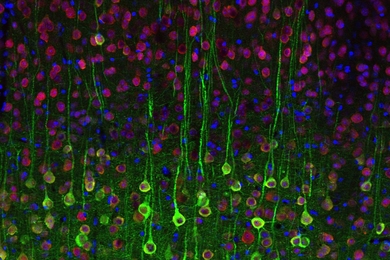
New way to image brain-cell activity could shed light on autism and other psychiatric disorders.
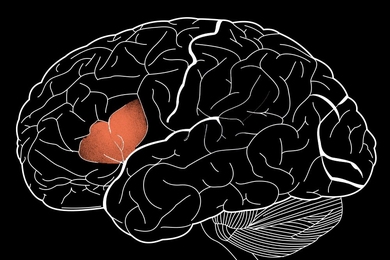
Neuroscientists find Broca’s area is really two subunits, each with its own function.

A meteorite found in Antarctica holds evidence of a once-active dynamo on Vesta.

Researchers believe that information theory — the discipline that gave us digital communication — can explain differences between human languages.
Bertschinger to receive honor from MAES-Latinos in Engineering and Science
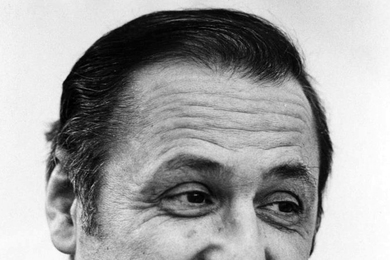
Longtime faculty member guided MIT’s Bates Linear Accelerator from a groundbreaking idea to a globally renowned center for the study of nuclear structure and reactions.
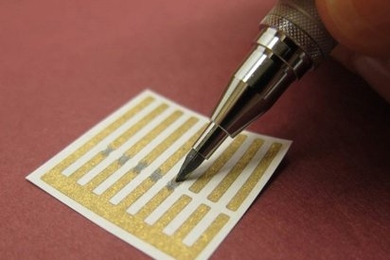
New low-cost, durable carbon nanotube sensors can be etched with mechanical pencils.
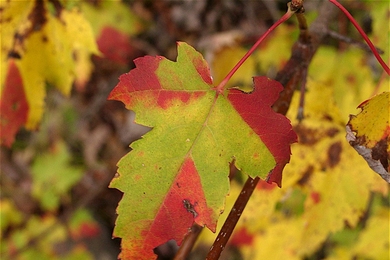
A mathematical model reveals commonality within the diversity of leaf decay.
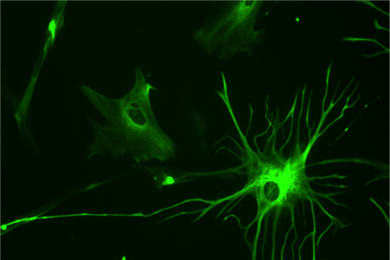
New study finds long-overlooked cells help the brain respond to visual stimuli.