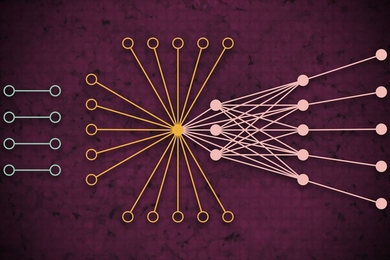
Supercomputer analyzes web traffic across entire internet
Modeling web traffic could aid cybersecurity, computing infrastructure design, Internet policy, and more.
Modeling web traffic could aid cybersecurity, computing infrastructure design, Internet policy, and more.
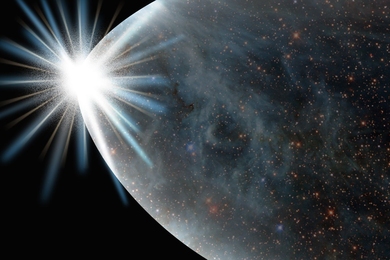
Physicists simulate critical “reheating” period that kickstarted the Big Bang in the universe’s first fractions of a second.
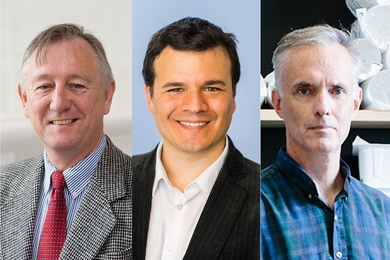
James Collins, Pablo Jarillo-Herrero, and Richard Milner have won top prizes for their work.
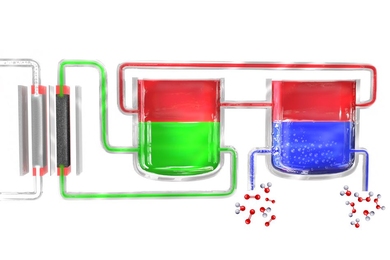
MIT-developed method may lead to portable devices for making the disinfectant on-site where it’s needed.
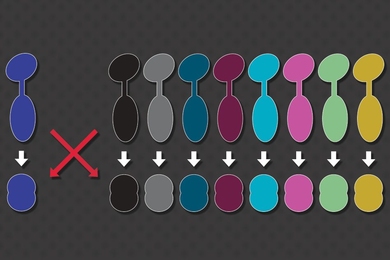
Engineered signaling pathways could offer a new way to build synthetic biology circuits.
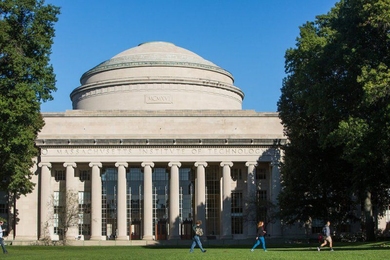
Principle-based framework aims to support the needs of scholars, reflect MIT principles, and advance science.
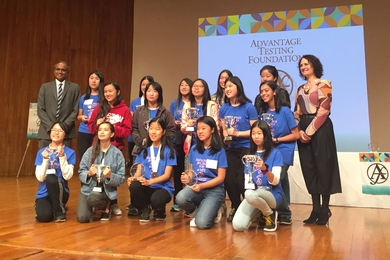
Now in its 11th year, the Math Prize for Girls has been hosted by MIT nine times.
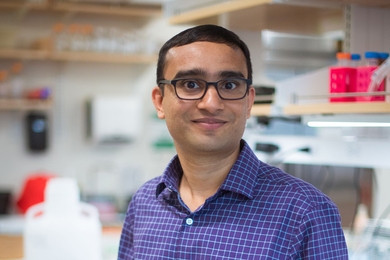
Whitehead Institute member and assistant professor of biology receives one of the most prestigious non-governmental awards for early-career scientists.

Findings in mice suggest targeting certain brain circuits could offer new ways to treat some neurological disorders.
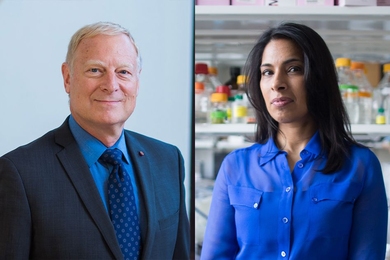
Sangeeta Bhatia and Richard Young recognized for their contributions to “advancement of the medical sciences, health care, and public health.”

Study finds even the tallest ice cliffs should support their own weight rather than collapsing catastrophically.
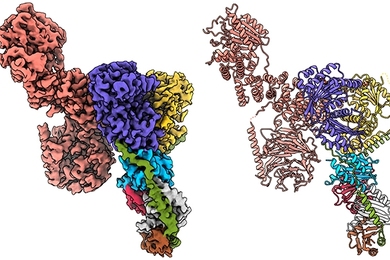
New research reveals how mTORC1 docks at lysosomal surface.
Report urges MIT community to openly share the products of its research and teaching.
Edelman's Julia programming language was recognized for solving large computational problems for high-performance computers.

The X-ray-focusing lens used in the experiment is based on a design used in lighthouses for centuries.