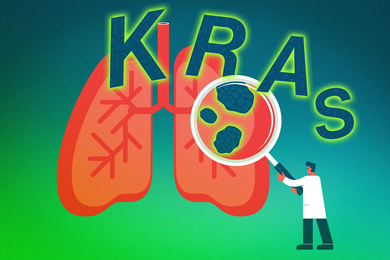
Lung cancers can use two different mechanisms to evade KRAS-inhibiting drugs
Some tumor cells develop resistance by amplifying the KRAS gene, while others change their tumor type, MIT researchers have found.
Some tumor cells develop resistance by amplifying the KRAS gene, while others change their tumor type, MIT researchers have found.
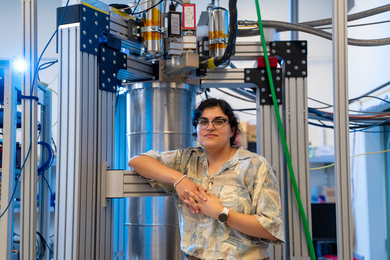
As she became integral to an international particle physics experiment, PhD student Faith Reyes found confidence in herself as a scientist.

A new language-processing tool could help identify the highest-risk individuals from natural language, enabling swifter interventions.

They also found that obesity may put patients at higher risk for activation of the pathway. Drugs that block the pathway may help prevent metastasis.

Making a decision requires juggling a set of options without getting them confused or losing track of them. A new MIT study shows how neurons encode information to maximize clarity throughout the process.

Patricia and James Poitras ’63 provide fellowships for graduate students and postdocs who will shape the future of mental health research.

This summer, BSG-MSRP-Bio student Marina Milea investigated how lung cancers become resistant to targeted therapies, gaining hands-on research experience in the Jacks Lab at the Koch Institute.

The Climate Grand Challenges “New World of Weather” project shows how modeling, planning tools, and infrastructure analysis are translating research into real-world resilience.
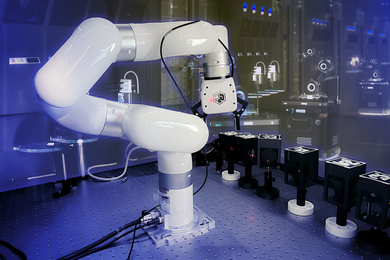
The autonomous system could speed up testing of high-tech materials for applications such as solar cells, sensors, video displays, and quantum technologies.

Inaugural artist Amy Karle will join astrophysicists at MIT’s Kavli Institute to explore questions about the universe and translate them into an immersive multimedia experience.

A new device uses reconfigurable motion to mimic the firing behavior of a neuron, which could lead to more efficient computing.

Innovative strategies, technologies, and collaborations are helping MIT advance solutions on campus and beyond.
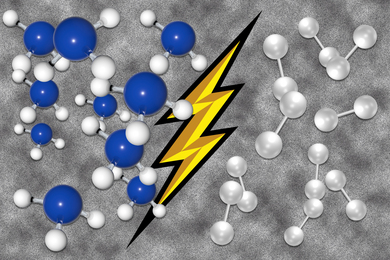
An MIT team has demonstrated a more efficient way to extract pure hydrogen gas from hydrogen carrier molecules.

Due to physical and fundamental limitations, an earlier proposal for producing laserlike beams of neutrinos cannot be achieved, scientists report.

The brain's ability to generate quick, nimble volitional thought — and a unified awareness of thought and experience — arises from analog computations, MIT neuroscientists argue in a new review.