
Making quantum circuits more robust
Researchers have developed a technique for making quantum computing more resilient to noise, which boosts performance.
Researchers have developed a technique for making quantum computing more resilient to noise, which boosts performance.

Virtual conference gathered students, faculty, and industry partners to explore the future of microsystems and nanotechnology.
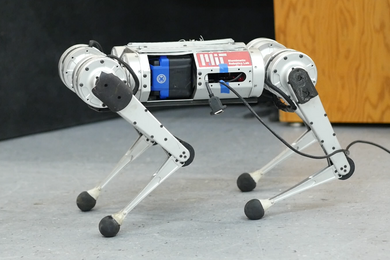
CSAIL scientists came up with a learning pipeline for the four-legged robot that learns to run entirely by trial and error in simulation.

Faculty leaders describe their efforts to develop potentially game-changing tools.
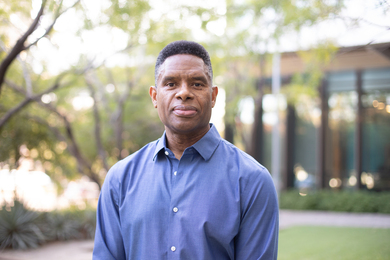
MLK Visiting Professor S. Craig Watkins looks beyond algorithm bias to an AI future where models more effectively deal with systemic inequality.

A machine-learning model for image classification that’s trained using synthetic data can rival one trained on the real thing, a study shows.

Supported by a $100 million founding gift, the academy will deepen the integration of design across the Institute and beyond.

In collaboration with industry representatives, Momentum students tackle wildfire suppression and search-and-rescue missions while building soft skills.

Faculty leaders discuss the opportunities and obstacles in developing, scaling, and implementing their work rapidly.
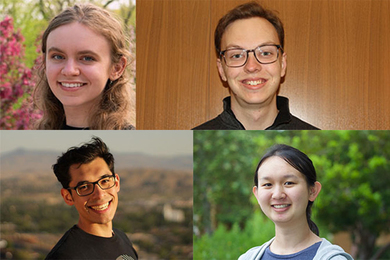
MEng graduate students engage with IBM to develop their research skills and solutions to real-world problems.

A new MIT-wide effort launched by the Institute for Data, Systems, and Society uses social science and computation to address systemic racism.
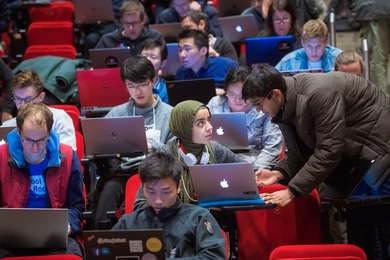
The Social and Ethical Responsibilities of Computing publishes a collection of original pedagogical materials developed for instructional use on MIT OpenCourseWare.

Theories from cognitive science and psychology could help humans learn to collaborate with robots faster and more effectively, scientists find.

Researchers find similarities between how some computer-vision systems process images and how humans see out of the corners of our eyes.
A new technique boosts models’ ability to reduce bias, even if the dataset used to train the model is unbalanced.