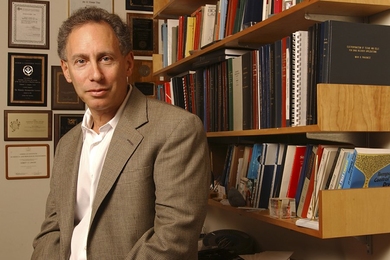

‘Trade is not a four-letter word’
UPS chairman and CEO Scott Davis explores free trade, the U.S. economy — and the truth behind those whiteboard ads.
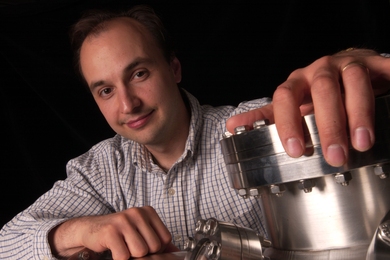
Bulović named director of the Microsystems Technology Laboratories
Assumes role previously held by Chandrakasan.
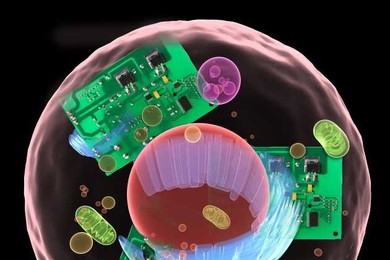
Mimicking cells with transistors
Analog — rather than digital — circuits could enable models of biological systems that are more efficient, more accurate and easier to build.
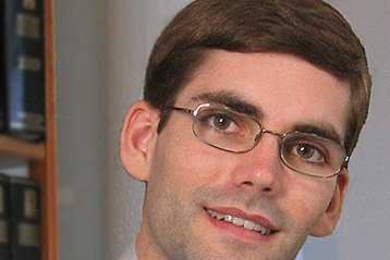

Schuh appointed head of the Department of Materials Science and Engineering
Replaces interim department head Carl Thompson.
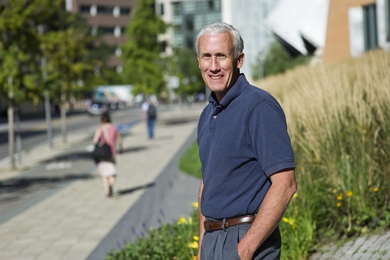
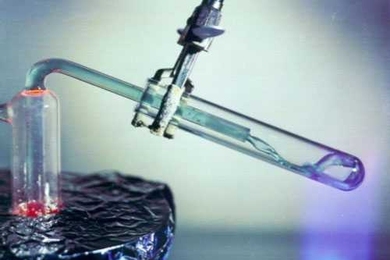
Sir William R. Hawthorne, former professor of mechanical engineering, dies at 98
Pioneer of jet-engine technology fostered trans-Atlantic, Cambridge-to-Cambridge collaboration.

LGBT content and video games: MIT lab tackles the issue
Popular games still haven’t shown they can handle lesbian, gay, bisexual and transgender representations. Research at the Singapore-MIT GAMBIT Game Lab wants to change that.
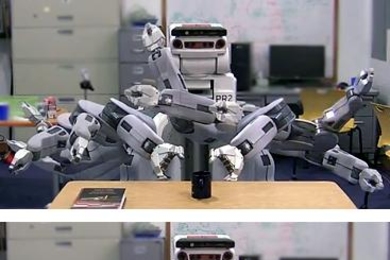
Smarter robot arms
A combination of two algorithms developed at MIT allows autonomous robots to execute tasks much more efficiently — and move more predictably.

Department of Nuclear Science and Engineering collaborates in developing nuclear security curriculum for graduate education
Department of Energy names MIT as one of three universities awarded grants for the program.
Five from MIT win NIH grants
Grants support biomedical research that will ‘challenge the status quo’ with risk-taking, innovative ideas.