J-WAFS: Supporting food and water research across MIT
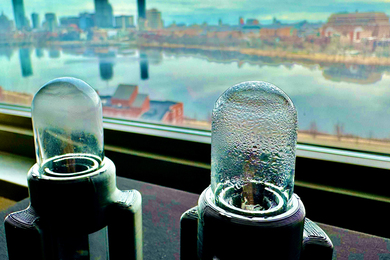
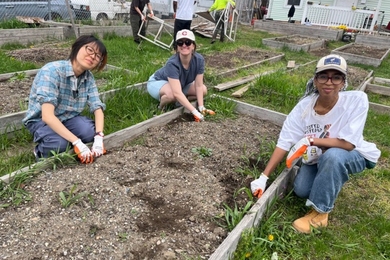
For the past decade, the Abdul Latif Jameel Water and Food Systems Lab has strengthened MIT faculty efforts in water and food research and innovation.
A new low-power system using radio frequency waves takes a major step toward autonomous, indoor drone navigation.
Butlr, founded by former Media Lab researchers, uses insights from thermal sensors to make buildings safe and efficient.
“We need to both ensure humans reap AI’s benefits and that we don’t lose control of the technology,” says senior Audrey Lorvo.
The consortium will bring researchers and industry together to focus on impact.
Longtime AeroAstro professor brings deep experience with academic and student life.
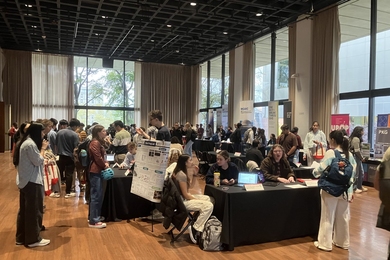
Projects from MIT course 4.043/4.044 (Interaction Intelligence) were presented at NeurIPS, showing how AI transforms creativity, education, and interaction in unexpected ways.
Sometimes, it might be better to train a robot in an environment that’s different from the one where it will be deployed.
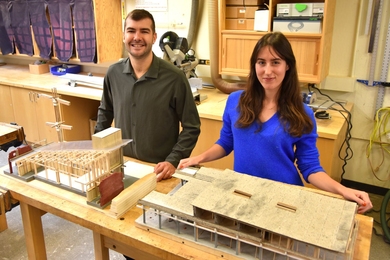
Builders pour concrete into temporary molds called formwork. MIT researchers invented a way to make these structures out of on-site soil.
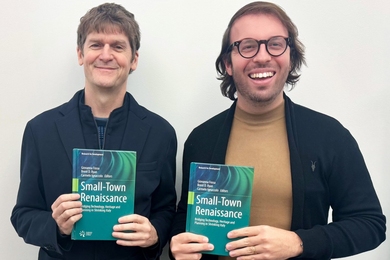
In a new book, Lawrence Vale spotlights projects from around the globe that help insulate communities from climate shocks.
Station A, founded by MIT alumni, makes the process of buying clean energy simple for property owners.
An experiment in Amsterdam suggests providing better information to people can help move them out of “energy poverty.”
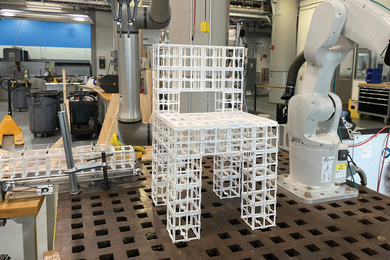
MAD Design Fellow Zane Schemmer writes algorithms that optimize overall function, minimize carbon footprint, and produce a manufacturable design.
AeroAstro PhD student Sydney Dolan uses an interdisciplinary approach to develop collision-avoidance algorithms for satellites.