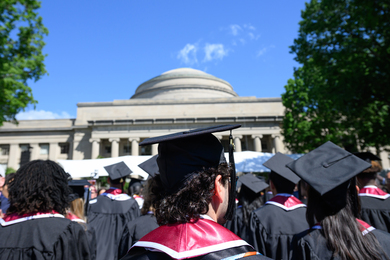
QS ranks MIT the world’s No. 1 university for 2026-27
Ranking at the top for the 15th year in a row, the Institute also places first in 12 subject areas.
Ranking at the top for the 15th year in a row, the Institute also places first in 12 subject areas.
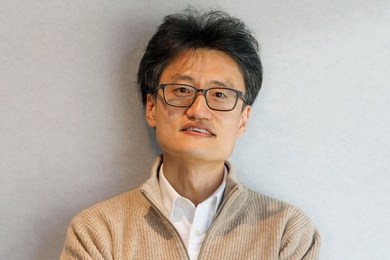
An expert in behavioral science and transportation, Zhao combines these studies with AI and public policy to address some of the most urgent challenges facing cities.

MIT researchers have designed an ultrasound system that creates a real-time 3D representation of the object being imaged.

A Media Lab study shows that, much like how GPS has weakened our navigation skills, AI can make us worse at detecting fake news.
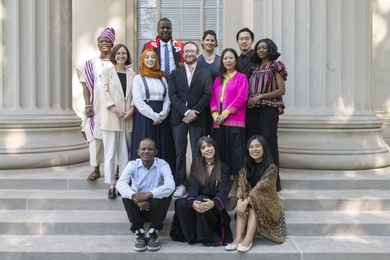
As the international program approaches its 60th year, leaders are reshaping its curriculum to address emerging technologies and the policies shaping their use in urban planning.
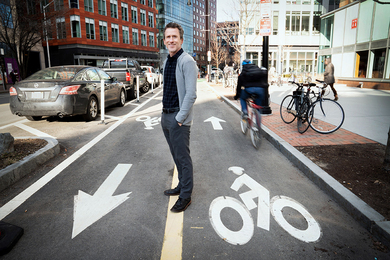
The professor of mobility and urban planning will lead MIT’s research enterprise in Singapore.

Low-cost personal cooling and emissions-free air conditioning among ideas studied with MIT’s Climate Project seed funding.
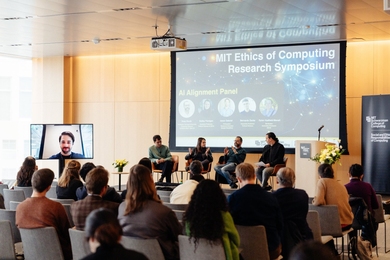
The MIT Ethics of Computing Research Symposium brought together experts and researchers working at the heart of ethical and social impact in technology.
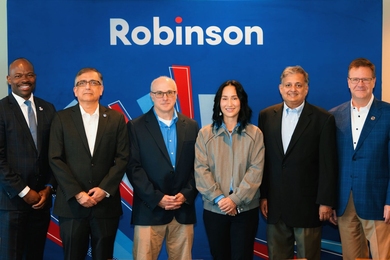
MIT RAISE and Georgia State University announce an initiative to connect universities, community colleges, industry, and government to expand industry-aligned AI training and career pathways.

The George Peabody Medal is the highest honor bestowed by the Peabody Institute of the Johns Hopkins University.
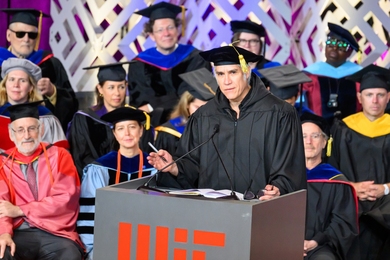
“All of us need to feel we are valuable,” says the SA+P Commencement speaker, a Chilean architect and Pritzker Prize winner.
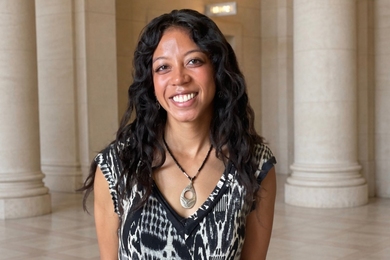
Senior Krystal Montgomery explored design courses to shape a career in web development. As a national champion in track, learning to balance athletics and academics was key to her success.
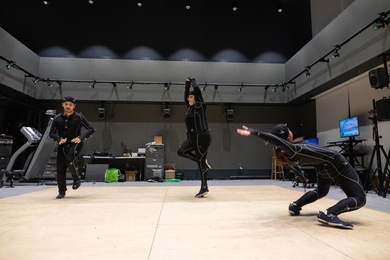
MIT.nano Immersion Lab collaborates with Emerson College students to advance the art of virtual production.

The initiative plans to engage industry leaders and MIT alumni with hubs in Tokyo, Dubai, and Hong Kong.
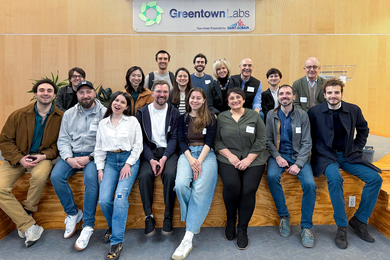
Students in a Department of Urban Studies and Planning course work with leaders from Vinnytsia, Ukraine, exploring innovation ecosystems, infrastructure, and workforce development amid constraints of war.