Introduction
Quantum computing has the potential to transform everything from medicine to materials science — but what exactly is it, and why has building one proven so difficult?
MIT President Sally Kornbluth sits down with quantum engineering expert Professor William D. Oliver to explore how quantum computers work, what are the challenges in scaling this technology, why they could solve problems beyond the reach of today's machines, and what everyday life might look like in a world where quantum computing becomes a widespread reality.
Links
Timestamps
Transcript
Sally Kornbluth: There's a lot of hype around this. And, you know, I, I think many of us maybe even personally engage in this 'cause we all get so excited about the possibilities. But what's the reality here, both in terms of the timeframe and the promise? Is a quantum computer gonna help us, you know, solve climate change, (laughs) you know, uh, all of the things that we are hoping that this will give us some huge leap in capability. What's hype? What's reality?
William Oliver: Yeah. I... You know, I... You- you're absolutely right. We all are a bit guilty of this. But to my mind, the reason that there's hype is because there is absolutely bonafide promise.
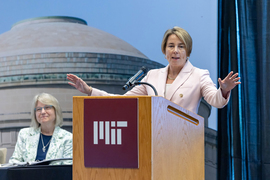
Sally Kornbluth: Hello, I'm Sally Kornbluth, president of MIT. And I'm thrilled to welcome you to my podcast, Curiosity Unbounded. Here at MIT, our endless curiosity fuels a steady stream of inspiring discoveries and innovations. This podcast is your chance to join me as I talk with pioneers who are pushing the frontiers of knowledge and inventing real world solutions for a better future.
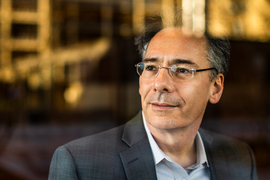
Today, we are talking about one of the most exciting, yet least understood technologies on the horizon, quantum computing. If you've heard the phrase before, you've probably heard terms like qubits, superposition, or entanglement, and maybe wondered whether quantum computing is science fiction or something that's actually becoming real. At MIT, researchers are helping turn quantum computing's promise into reality. My guest today is Professor Will Oliver, widely regarded as one of the leading figures in quantum engineering. His work focuses on building the hardware that can one day enable quantum computers to solve problems that today's fastest computers simply can't.
So maybe you've wondered what exactly is a quantum computer? Why has it proven so difficult to build? And what kinds of discoveries might become possible if we succeed? Will, welcome to the show.
William Oliver: Thank you, Sally. Really glad to be here and very much looking forward to this conversation.
Sally Kornbluth: Fantastic. So let's start at the very beginning here. What is a quantum computer? Can you explain it like you'd explained it to someone over dinner? Because, you know, I bought my new grandson's quantum for babies, and it just didn't hit on quantum computers. (laughs)
William Oliver: Sure. I often talk about quantum over dinner. And, uh, let me try and reproduce that here. Before I talk about quantum though, I think it's useful to go back and think about classical computers-
Sally Kornbluth: Yeah.
William Oliver: ... 'cause we all use them, and we're familiar with them.
Sally Kornbluth: Yes.
William Oliver: A classical computer, a conventional computer, like a desktop or a laptop, they run on small devices called transistors. I think we know that based on semiconductors. And a transistor is basically a faucet for current.
Sally Kornbluth: Mm-hmm.
William Oliver: It turns a current on, turns the current off. Those are only two states that it can be in, on or off. And digitally, we'll call those zero and one. The way that I think about that is in the context of the planet earth, that the North Pole is zero and the South Pole is one. And if you're a transistor, it's a pretty boring life.
Sally Kornbluth: Yeah. Yeah. Yeah. You're... Right. Right.
William Oliver: You can only live at the North Pole or the South Pole. That's it.
Sally Kornbluth: Right.
William Oliver: Okay. Quantum computers also run on small logic elements, but we call them quantum bits or qubits. And, of course, a quantum bit can be classical. It can be at the North Pole or the South Pole. But the main difference is that like people, qubits can be anywhere on the surface of the planet earth. And when they're anywhere other than the north or South Pole, they're in what we call a quantum superposition of north and South Pole at the same time, or zero and one-
Sally Kornbluth: Mm-hmm.
William Oliver: ... at the same time. So if they're on the equator, let's say we're standing on the equator, we're in an equal superposition of zero and one simultaneously. Now, you're standing in one spot. So it's actually a single state. It's not two states. It's not classical superposition. You're standing in one spot, but you're carrying aspects of zero and one simultaneously. And this is, this is uniquely quantum mechanical.
Sally Kornbluth: Okay.
William Oliver: And it's called quantum superposition. And we can use that to effect to dramatically speed up computations.
Sally Kornbluth: Now, what if you were north of the equator or south of the equator, but not at either pole? Does that give you a different superposition or is there just some state that integrates both that doesn't matter?
William Oliver: Oh, it certainly matters.
Sally Kornbluth: Okay.
William Oliver: And, and you're absolutely right. That's the right intuition, which is, you know, we have latitude.
Sally Kornbluth: Exactly.
William Oliver: We have longitude on the earth. Exactly. So you can position yourself anywhere you want on the earth.
Sally Kornbluth: Yes.
William Oliver: Right? And so superposition states which are a little closer to the North Pole, their, their aspect is a little bit more heavily weighted towards North Pole.
Sally Kornbluth: Okay.
William Oliver: But they still have some South Pole involved.
Sally Kornbluth: Got it.
William Oliver: You could be on the other side, you have a little more South Pole involved. Where it starts to matter is when you make measurements. And the idea is that when we make a measurement as human beings living in a classical world, we're only going to get out classical information. So we're only gonna get out North or South Pole.
Sally Kornbluth: Right.
William Oliver: So if you're a qubit on the equator and, and Sally, you say, "Qubit, what state are you in?" It's gonna either instantly snap to the North Pole and say, "I'm at the North Pole-"
Sally Kornbluth: Uh-huh.
William Oliver: ... or instantly snap to the South Pole and say, "I'm the South Pole." Because it started at the equator, its aspects are equally weighted. And so it's like flipping a coin 50/50.
Sally Kornbluth: I... Yeah.
William Oliver: It's completely random.
Sally Kornbluth: Yeah.
William Oliver: It's, in fact, one of the purest forms of randomness that we are aware of in nature.
Sally Kornbluth: Right. Interesting. So we hear that quantum computers don't replace classical computers. They compliment them.
William Oliver: That's right.
Sally Kornbluth: So tell me a little bit more about how a quantum computer uses the... these properties of qubits to come to some sort of calculation or solution to a problem and how that would differ from what we see in a transistor based situation.
William Oliver: Yeah. Let me start with the latter part first, which is that if you have a qubit which can have aspects of both zero and one at the same time, we can use that because if you have a large number of qubits, you can actually represent all aspects of the state space at the same time.
Sally Kornbluth: Got it.
William Oliver: So for example, if you have three qubits, you can actually represent eight different states. All three qubits are zero. All three are one, and every permutation in between, zero, zero, one, zero, one, zero, et cetera. So there are eight those-
Sally Kornbluth: Yeah.
William Oliver: ... two to the end. Yeah. Point is it's exponentially large.
Sally Kornbluth: Got it.
William Oliver: Okay. Now-
Sally Kornbluth: Ah, so building a larger qubit computer gives you a huge number of possibilities.
William Oliver: A huge number.
Sally Kornbluth: Got it.
William Oliver: Exponential scaling is not something we experience in everyday life, right?
Sally Kornbluth: Yes. Yes. Got it.
William Oliver: And, uh... But if you're a transistor, you can also represent an exponentially large number of states. So if you have three transistors, you could represent all eight of those states-
Sally Kornbluth: Yeah.
William Oliver: But you can only represent one at a time. That's the difference.
Sally Kornbluth: Yes.
William Oliver: Whereas in a quantum computer, we can essentially fan out and span-
Sally Kornbluth: Got it.
William Oliver: ... all of those at the same time, right? And the way a quantum computer then takes advantage of that is to say, "I'm gonna start with that equally weighted all possible states."
Sally Kornbluth: Yeah.
William Oliver: And one of them is the answer. It encodes the answer-
Sally Kornbluth: Yes.
William Oliver: ... to the problem I'm answering.
Sally Kornbluth: Yes.
William Oliver: So basically, my input is equally weighted answers to the problem.
Sally Kornbluth: I see.
William Oliver: And then the role of the algorithm designer is to perform operations on the qubits so that all of the wrong answers are suppressed to zero-
Sally Kornbluth: I see.
William Oliver: ... and the one that's the right answer gets-
Sally Kornbluth: I see.
William Oliver: ... enhanced so that at the end of the day, when you make your measurement, you get the answer with 100% probability.
Sally Kornbluth: So if you could... And maybe this is a silly question. But if one had the capability to have infinitely parallel processing from a classical computer-
William Oliver: Yes.
Sally Kornbluth: ... you could, which we can't do-
William Oliver: Right.
Sally Kornbluth: ... but this would be sort of the equivalent, right? Like cover every possible state you can think of-
William Oliver: That's right.
Sally Kornbluth: ... but a quantum computer does it all simultaneously.
William Oliver: That's right.
Sally Kornbluth: Got it.
William Oliver: I think that's the right intuition. And it's not that quantum computers can do things that are, in principle, impossible on a classical computer.
Sally Kornbluth: Right.
William Oliver: That's... Of course, we can program the classical computer.
Sally Kornbluth: But everything is time.
William Oliver: But it might take the age of the universe-
Sally Kornbluth: Yeah. Got it.
William Oliver: ... or an infinite amount of energy or-
Sally Kornbluth: Got it. Yeah. Yeah. Yeah.
William Oliver: ... you know, really, really hard. Yeah.
Sally Kornbluth: Got it.
William Oliver: That's right.
Sally Kornbluth: Very interesting. So, you know, what kind of problems are we talking about that can't be solved by today's computers, but could be solved by a quantum computer?
William Oliver: Well, first off, it, it's important to mention again that quantum computers do not solve every problem efficiently. They can do the same types of problems that conventional computers do, but they often do them no better.
Sally Kornbluth: Right.
William Oliver: In fact, they're pretty slow these days.
Sally Kornbluth: Yeah.
William Oliver: You know, we've been optimizing conventional computers for so long that quantum computer would lose against many problems.
Sally Kornbluth: Got it.
William Oliver: But there are certain problems, as you asked about, where a quantum computer vastly outperforms-
Sally Kornbluth: Yeah.
William Oliver: ... conventional computer. These types of problems today, as we understand it, center around, I would say, scientific computing.
Sally Kornbluth: Yeah.
William Oliver: So for example, I want to simulate exactly a complicated material-
Sally Kornbluth: Yeah.
William Oliver: ... that has a lot of atoms, has, you know, compounds.
Sally Kornbluth: Mm-hmm.
William Oliver: ... quantum chemistry, for example, pharmaceutical industry.
Sally Kornbluth: Yes. Every drug configuration-
William Oliver: That's right.
Sally Kornbluth: ... in a particular class.
William Oliver: That's right. And, and understanding exactly without approximation what's happening-
Sally Kornbluth: Yes.
William Oliver: ... 'cause of course, you know, we have many colleagues here in our chemistry department-
Sally Kornbluth: Sure.
William Oliver: ... who are chemists who, of course, they do the best they can, and they do a great job-
Sally Kornbluth: Yes.
William Oliver: ... with the conventional computers we have. But at some point, the problem gets so large that they have to make some approximations.
Sally Kornbluth: Yes.
William Oliver: They truncate, whatever it is. And usually, they get the right answer.
Sally Kornbluth: Yes.
William Oliver: But sometimes, they don't. And so quantum computers hold the promise to solve these types of really thorny problems, which would take, you know, very large number of GPUs or conve-
Sally Kornbluth: Yes.
William Oliver: ... very large conventional computers, a very long time with a very large amount of energy, and do it in a human timescale like a day.
Sally Kornbluth: Got it. Wow.
William Oliver: Amazing.
Sally Kornbluth: So how does this dovetail... I mean, this is maybe a little bit off track, but how does this dovetail with all the discussion of AI in these same scientific areas?
William Oliver: Yeah.
Sally Kornbluth: You know, where do these things cross paths?
William Oliver: There's a couple places where they do. And, and the one that we're already using today is we are using classical AI to make better quantum computers.
Sally Kornbluth: Ah, that's interesting.
William Oliver: That, that one is very clear.
Sally Kornbluth: That's interesting.
William Oliver: Absolutely. My students are all doing it. You can use AI, of course, to help with the electromagnetic design, the design of the qubits. Once they're in our experimental apparatus-
Sally Kornbluth: Yes.
William Oliver: ... they have to test them, writing the code that's gonna do that testing, or, in fact, even creating teams of agents that help them make the measurements. It's amazing.
Sally Kornbluth: So do you think though that the converse will be true? In other words, once we have quantum computers, it will be a much more efficient way to operate a- AI models?
William Oliver: Possibly.
Sally Kornbluth: Okay.
William Oliver: So I think that this is still a- at the frontier of research.
Sally Kornbluth: Yeah.
William Oliver: And where it is possible is that, you know, quantum computers may be able to do certain types of linear algebra-
Sally Kornbluth: Yes.
William Oliver: ... efficiently, sampling solutions.
Sally Kornbluth: Yes.
William Oliver: So certainly on the inference side and possibly on the training side, the challenge that we face today is something called the data loading problem. And the issue is that we, of course, wanna train on a lot of data.
Sally Kornbluth: Yes.
William Oliver: Where does that data sit on-
Sally Kornbluth: Yeah. Yeah.
William Oliver: ... conventional computers, right? And we gotta get all that data in-
Sally Kornbluth: Yes.
William Oliver: ... to the quantum computer which I might be previewing a little bit, but the m- the motivation for the quantum systems lab here at MIT-
Sally Kornbluth: That's what I was about to ask you-
William Oliver: Yes.
Sally Kornbluth: ... is the interconnect, correct?
William Oliver: Is the interconnect-
Sally Kornbluth: Yes.
William Oliver: ... which is that if we can connect, say, a sensor to a quantum computer without ever converting to the classical domain-
Sally Kornbluth: Yes.
William Oliver: ... the data remain quantum. We quantumly connect them.
Sally Kornbluth: Yes.
William Oliver: We can bypass that bottleneck.
Sally Kornbluth: Yeah, yeah, yeah.
William Oliver: That's the hope.
Sally Kornbluth: There's a lot of hype around this. And, you know, I, I think many of us maybe even personally engage in this 'cause we all get so excited about the possibilities. But what's the reality here, both in terms of the timeframe and the promise? Is a quantum computer gonna help us, you know, solve climate change, (laughs) you know? Uh, all of the things that we are hoping that this will give us some huge leap in capability. What's hype? What's reality?
William Oliver: Yeah. I... You know, I... You- you're absolutely right. We all are a bit guilty of this. But to my mind, the reason that there's hype is because there is absolutely bonafide, uh, promise.
Sally Kornbluth: Yes.
William Oliver: Right? So of course, as human beings, we get excited because this is an exciting time-
Sally Kornbluth: Yes.
William Oliver: ... and quantum computers are gonna happen, right?
Sally Kornbluth: Yes.
William Oliver: So naturally, there's hype. But, of course, there's also hype that can be damaging. We might have a quantum winter. You know, hopefully, it's winter in Hawaii, but, you know, there may be a quantum winter that comes along, and we have to be mindful and careful of that.
Sally Kornbluth: What is a quantum winter?
William Oliver: Well, as you... You know, the ups and downs of-
Sally Kornbluth: Doesn't sound good.
William Oliver: Well, the ups and downs of expectations and funding and, you know, if we make too many promises and we don't yield-
Sally Kornbluth: Yeah.
William Oliver: ... those promises-
Sally Kornbluth: Yeah.
William Oliver: ... there was an AI winter two or three times-
Sally Kornbluth: Yes.
William Oliver: ... before we actually hit home on this one.
Sally Kornbluth: Yes.
William Oliver: So we want to avoid the winters.
Sally Kornbluth: Yes.
William Oliver: We need to temper the hype. But, but the hype is real because the promise is real. Yeah.
Sally Kornbluth: Yeah. Fantastic.
William Oliver: And you had asked about the timelines, I think.
Sally Kornbluth: Yes.
William Oliver: And so if I just address that for a moment. About a year ago, year and a half ago, at NVIDIA's GTC, their annual research conference, Jensen Huang, fantastic engineer-
Sally Kornbluth: Yes.
William Oliver: ... was asked this very question.
Sally Kornbluth: Yes.
William Oliver: Right? "When are we gonna have a quantum computer, Jensen?"
Sally Kornbluth: Yes.
William Oliver: And he said, you know, "Well, 15 years, a little early, 30 years, probably long. I, I think it's gonna be 20 years, and we'll have a quantum computer."
Sally Kornbluth: Uh-huh.
William Oliver: And, of course, many of the small quantum computing company stocks tanked.
Sally Kornbluth: Yeah, exactly. I remember this.
William Oliver: You may remember that.
Sally Kornbluth: I remember this.
William Oliver: And, uh, of course, it's because of how the question is asked and how we interpret the question. Mostly when people say, "When are we gonna have a quantum computer?" what they're really asking is, "When are we gonna have a quantum computer that invents new drugs?"
Sally Kornbluth: Right.
William Oliver: Right?
Sally Kornbluth: Right.
William Oliver: And of course, Jensen's absolutely right. That is, that is the end game quantum computer-
Sally Kornbluth: Yes.
William Oliver: ... that is super powerful.
Sally Kornbluth: Yes.
William Oliver: We actually have quantum computers today. They're just rather small.
Sally Kornbluth: Yeah, I understand.
William Oliver: Right?
Sally Kornbluth: Yeah.
William Oliver: Think about the 1970s or 80s-
Sally Kornbluth: I was gonna say-
William Oliver: ... our first computers, right?
Sally Kornbluth: That's right. Like I d- wrote my thesis on a mainframe.
William Oliver: Yeah.
Sally Kornbluth: That's like having asked, "Do we have computers?" Yeah, we have computers. But now, I have a phone in my pocket that does way more than I can ever do there.
William Oliver: That's absolutely right. Apple IIe, Timex Sinclair.
Sally Kornbluth: Yeah. Exactly.
William Oliver: I can store some recipes.
Sally Kornbluth: Exactly. Exactly.
William Oliver: Yeah. So we have quantum computers today. I don't wanna say they're exactly at that level 'cause it's, it's hard to compare.
Sally Kornbluth: Yes.
William Oliver: But you can run a quantum algorithm, and you can get an answer. And by doing this, in fact, we, we... Through the Center for Quantum Engineering and our industry membership consortium, we often work with those members to identify problems they care about. They know what their problems are, and they wanna understand how's quantum gonna affect my bottom line in the future. So we write algorithms. We test them on small scale quantum computers. They get answers, and they say, "Okay, yeah, it works. Now, it's not yet big enough-
Sally Kornbluth: Yes.
William Oliver: ... to impact my bottom line."
Sally Kornbluth: Right.
William Oliver: But by going through this exercise-
Sally Kornbluth: But I know where it's going.
William Oliver: I know where it's going.
Sally Kornbluth: Yes.
William Oliver: I understand how big a quantum computer I'm waiting for. So I have educated myself. I, I now am quantum aware.
Sally Kornbluth: Yeah.
William Oliver: I know what I'm looking for, what I'm waiting for, and I'm ready to pounce-
Sally Kornbluth: Very interesting.
William Oliver: ... when people like me-
Sally Kornbluth: Very interesting.
William Oliver: ... and others actually-
Sally Kornbluth: Yeah. Yeah. Yeah.
William Oliver: ... build that machine. Yeah.
Sally Kornbluth: Very interesting. So, you know, MIT obviously has deep roots in quantum science. And now, you alluded to the Quantum Systems Laboratory.
William Oliver: Yes.
Sally Kornbluth: The Commonwealth is wonderfully, you know, in partnership with the governor, invested in this. So, you know, tell us about, first of all, what it is, but also, you know, how's it gonna benefit the area?
William Oliver: Well, thanks to your leadership and, and the presidential initiative in quantum, we have an umbrella organization across all of MIT now-
Sally Kornbluth: Mm-hmm.
William Oliver: ... which is focused on quantum science and technology, spanning the gamut, you know, Center for Quantum Engineering, Quantum Computing, Quantum Sensing, Center for Theoretical Physics, Center for Ultra Cold Atoms.
Sally Kornbluth: Mm-hmm.
William Oliver: And all of these pillars support, you know, this presidential initiative. And one aspect of that which I think ties much of it together, is going to be the Quantum Systems Laboratory. And we, we talked a bit about it earlier.
Sally Kornbluth: Yes. Yes.
William Oliver: But it's a new building. Well, it's an existing building that's being renovated-
Sally Kornbluth: That's right. Right.
William Oliver: ... updated for what we need for quantum. And our goal is to install state-of-the-art quantum computers in that facility. Whether it's one or two-
Sally Kornbluth: Yes. Yes.
William Oliver: ... or more, we will find out.
Sally Kornbluth: Yes.
William Oliver: But that is going to happen. We will also have labs in there, but not just physics labs. Of course, we'll have a physics lab-
Sally Kornbluth: Yes. Yes.
William Oliver: ... engineering lab, but we're also gonna have chemistry labs-
Sally Kornbluth: Very interesting.
William Oliver: ... biology labs, because we want to connect quantum computers, as we said before-
Sally Kornbluth: Yes.
William Oliver: ... either to other quantum computers, it sounds like a network-
Sally Kornbluth: Yes.
William Oliver: ... and internet for quantum-
Sally Kornbluth: Yes.
William Oliver: ... or to quantum sensors so that we can detect the world around us-
Sally Kornbluth: Right.
William Oliver: ... and without ever going classical-
Sally Kornbluth: I see.
William Oliver: ... plug that information into the quantum computer, process it.
Sally Kornbluth: So you need those domain experts in-house to evolve the system as you're developing new questions that can be queried.
William Oliver: You know, for knuckle draggers like me, absolutely. That's true. We have colleagues like Peter Shor, who in the early '90s, just with his brilliance, was able to posit an algorithm in the abstract.
Sally Kornbluth: Right. Right.
William Oliver: But for most-
Sally Kornbluth: Yeah.
William Oliver: ... of us, Sally-
Sally Kornbluth: Yeah. Yeah. Yeah.
William Oliver: ... we actually need to put our fingers on a keyboard-
Sally Kornbluth: Yeah.
William Oliver: ... and just try things out.
Sally Kornbluth: Yeah.
William Oliver: And that's what it's going to allow.
Sally Kornbluth: Yeah. No, that's right.
William Oliver: And it's gonna allow people who don't have, you know, dilution refrigerators in their labs. You know, people who are in chemistry-
Sally Kornbluth: Yes.
William Oliver: ... biology they know the problems.
Sally Kornbluth: Yes.
William Oliver: And they need to connect to somebody who has, or a facility which has quantum computers that they can use.
Sally Kornbluth: Yes.
William Oliver: And that's exactly what this is going to do.
Sally Kornbluth: Fantastic. So what about the, the folks... you know, the people who are doing the actual work? What does the pipeline look like? Do you see this, you know, great interest in quantum? How's this affected by issues we've seen and reductions in graduate training?
William Oliver: Yeah. That's a great question. Since the US first quantum initiative around 2016, US government funded, um, national labs, universities-
Sally Kornbluth: Yes.
William Oliver: ... and industry in quantum, we have seen the number of job postings for quantum jobs increase dramatically, hundreds of percent-
Sally Kornbluth: Mm-hmm.
William Oliver: ... naturally, 'cause we need people.
Sally Kornbluth: Yeah.
William Oliver: We need people in the pipeline. And I would say, traditionally, before we really knew that this was gonna work, most people were trained in say physics or electrical engineering.
Sally Kornbluth: Yes.
William Oliver: All right. But we're starting to think about commercialization. And as we do that, of course, we're gonna need people from across the whole institute.
Sally Kornbluth: Yes. Yes.
William Oliver: If you think of it in terms of department, we're gonna need chemists.
Sally Kornbluth: Yes.
William Oliver: We need biologists. Of course, we need people from the Sloan School of Management.
Sally Kornbluth: Exactly, exactly.
William Oliver: Absolutely, 'cause it's a business.
Sally Kornbluth: Exactly.
William Oliver: Yeah.
Sally Kornbluth: Exactly.
William Oliver: So, so it's very important that we as a institution start thinking about training both our students at the undergraduate level-
Sally Kornbluth: Yes.
William Oliver: ... at the graduate level. Of course, we're doing that, but we need to do more of it.
Sally Kornbluth: Yes.
William Oliver: And also professional development.
Sally Kornbluth: Yeah.
William Oliver: So about 10 years ago, uh, myself with Ike Chuang, uh, Peter Shor, and also Aram Harrow started through the MITx Pro platform-
Sally Kornbluth: Yes.
William Oliver: ... we developed four courses-
Sally Kornbluth: Okay.
William Oliver: ... in quantum for professional development. You know-
Sally Kornbluth: Okay.
William Oliver: ... four weeks each, you know, roughly 10-
Sally Kornbluth: Yes.
William Oliver: ... hours a week. Asynchronous, take it when you've got time. We've since added a fifth course, uh, which is for executives, only eight hours for people-
Sally Kornbluth: Okay.
William Oliver: ... who really don't have that much time. But the point is, is to, to help people understand what is quantum-
Sally Kornbluth: Yeah.
William Oliver: ... exactly what this podcast is about. Why, why is it important? Why should I care? What is all this jargon? What these words?
Sally Kornbluth: Yes.
William Oliver: What they mean? Because at the end of the day, at least, you know, in my own experience, maybe you felt this too, is that often it's the jargon that keeps us from understanding fun.
Sally Kornbluth: Right. Right.
William Oliver: And the fundamentals are not always that difficult to understand. The details may be.
Sally Kornbluth: Right.
William Oliver: But, but the concepts, right, if we understand jargon, we can start to make educated decisions.
Sally Kornbluth: Right. I mean, you know, in a way, it's evolving in s- with some similarities to AI. So for example-
William Oliver: Yeah.
Sally Kornbluth: I have never really coded myself. I was a biologist. I didn't do my own programming. Now, if a biologist is interested in doing something-
William Oliver: Right.
Sally Kornbluth: ... and, and writing code, they're gonna get a lot of assistance from AI. How much computing does someone really have to understand, right? To you is AI effectively, maybe not that much. So do you see that we're gonna reach a point where quantum computing does not really require some in-depth knowledge of, you know, quantum physics to be able to deploy it?
William Oliver: I think absolutely. And it has to go in that direction-
Sally Kornbluth: Yes.
William Oliver: ... if it's going to be commercially viable.
Sally Kornbluth: Exactly.
William Oliver: We're starting to see these types of abstractions be developed. And up until now, of course, we're all coding, as you said, at a very low level-
Sally Kornbluth: Yes.
William Oliver: ... a machine language in some sense.
Sally Kornbluth: Yes.
William Oliver: But we actually have the full stack system now. You know, if you go online, say, for example, to IBM-
Sally Kornbluth: Yes.
William Oliver: ... they're not the only one, but they were the first, right?
Sally Kornbluth: Yes.
William Oliver: They put a quantum computer online.
Sally Kornbluth: Yes.
William Oliver: And people can go and log in, type a program on their computer at home-
Sally Kornbluth: Yes.
William Oliver: ... send that p- quantum program over and get an answer back. And I didn't need to know the details of how-
Sally Kornbluth: Right.
William Oliver: ... qubits work.
Sally Kornbluth: That's right.
William Oliver: Right.
Sally Kornbluth: That's right.
William Oliver: Yeah.
Sally Kornbluth: It's really amazing. So as I understand it, there are actually several different approaches out there to building quantum computers. And you- your work, as you alluded to, works on, you know, super conducting qubits.
William Oliver: Yes.
Sally Kornbluth: Um, so how is this different from what others might be doing? In other words, what kind of flavors are out there?
William Oliver: Yeah. You know, the way I categorize it is there's two basic categories of qubits.
Sally Kornbluth: Okay.
William Oliver: One are what you might call natural atoms. If you can imagine the periodic table in front of us-
Sally Kornbluth: Yes. Yes.
William Oliver: ... you just pick out an atom, and then you look at its outermost energy levels.
Sally Kornbluth: Yes.
William Oliver: And the outermost one is zero. And one in is digital one.
Sally Kornbluth: Yeah.
William Oliver: Okay. So... And we have, you know, faculty here who are leading in those areas. Um, these are areas like neutral atoms-
Sally Kornbluth: Mm-hmm.
William Oliver: ... as well as trapped ions. And so these are natural atoms.
Sally Kornbluth: Okay.
William Oliver: The one I work on would... we often call it an artificial atom.
Sally Kornbluth: Okay.
William Oliver: And the reason we do that is because it's, it's not an atom. It's actually a circuit.
Sally Kornbluth: Okay.
William Oliver: We build a circuit from aluminum, a resonance circuit. But when we cool it down to very low temperatures-
Sally Kornbluth: Okay.
William Oliver: ... it exhibits quantized energy levels.
Sally Kornbluth: I see. I see.
William Oliver: It looks like an artificial atom.
Sally Kornbluth: Atom. Got it.
William Oliver: It behaves like one.
Sally Kornbluth: Got it.
William Oliver: So we have those, and I think also semiconductor qubits might fall into this category of artificial atoms. So those are the two main categories.
Sally Kornbluth: So do you need... If you're using naturally occurring atoms, do you need the kind of low temperature, uh, that you're using for your supercomputing qubits?
William Oliver: Not quite as low.
Sally Kornbluth: I see.
William Oliver: Um, but, but it should be qualified. It, it... So the answer is yes and no.
Sally Kornbluth: Okay.
William Oliver: I'm sorry. Let me explain what I mean by that.
Sally Kornbluth: Yeah. Yeah.
William Oliver: In principle, no. What, what happens is they will trap an ion or hold an atom in place using something called optical tweezers, but then they will do something called laser cooling.
Sally Kornbluth: Okay.
William Oliver: So they're just cooling the atom itself. The outside environment-
Sally Kornbluth: Ah, I see. I see.
William Oliver: ... it's in a vacuum.
Sally Kornbluth: Got it. Got it. Okay.
William Oliver: Yeah. So now, the other part of it is that obtaining that high vacuum-
Sally Kornbluth: Yeah.
William Oliver: ... becomes a lot easier if the walls of your chamber are cold.
Sally Kornbluth: I see. I see. Got it.
William Oliver: So many of them actually do cool down.
Sally Kornbluth: You use those same refrigeration sort of-
William Oliver: Yeah.
Sally Kornbluth: ... requirement. Got it. But,
William Oliver: But, but not quite as low as what we use in the natural atom systems.
Sally Kornbluth: Got it. Very interesting. So as you're thinking about building larger and larger quantum computers-
William Oliver: Yeah.
Sally Kornbluth: ... what are you finding as the limitations? In other words, presumably you're kind of refining each piece. Is this, like, you know, building a high performance car now that even if each piece is perfect, you've got to figure out how they... how it fits together so that you can race ahead?
William Oliver: Yeah. I think that's right. It, it is more like a Lamborghini than a Toyota at this point, right?
Sally Kornbluth: Yes. Yes.
William Oliver: Toyota's always work.
Sally Kornbluth: Yeah, yeah.
William Oliver: Lamborghinis, you're always fiddling with the engine to get it to turn over.
Sally Kornbluth: Right.
William Oliver: And I think that's the right mentality. It's still pretty early days. We have shown every piece of the stack, I would say, the software stack-
Sally Kornbluth: Yes.
William Oliver: ... the hardware stack. It's small.
Sally Kornbluth: Yes.
William Oliver: So one thing we need to do is to scale up.
Sally Kornbluth: Scale. Yeah.
William Oliver: Yeah. And, and that, of course, is an engineering challenge. We'll, of course, take new physical developments as they come along, but it's primarily engineering challenge. And the primary challenge I would say that we're all facing today is how do I keep my quantum computer quantum mechanical long enough-
Sally Kornbluth: Uh-huh.
William Oliver: ... to perform the algorithm that's commercially viable? So commercially interesting algorithms might take a billion operations or a trillion operations. Might take an hour. So two hours, 10 hours, something.
Sally Kornbluth: Yeah.
William Oliver: How do I keep this macroscopic large object, quantum mechanical, long enough to do it?
Sally Kornbluth: Okay. So you have to break that down a little bit more for me.
William Oliver: Sure.
Sally Kornbluth: When you say keep it quantum mechanical-
William Oliver: Yes.
Sally Kornbluth: ... what does that mean and what are the limitations?
William Oliver: Yeah. So this massive superposition state we talked about before-
Sally Kornbluth: Okay.
William Oliver: ... superposition of all possible answers.
Sally Kornbluth: Got it.
William Oliver: That's quantum mechanical.
Sally Kornbluth: Okay.
William Oliver: And if I just let that go due to the-
Sally Kornbluth: It's gonna collapse to zero and one or-
William Oliver: Each qubit's gonna go-
Sally Kornbluth: Okay. Got it. Got it.
William Oliver: ...to North or South Pole-
Sally Kornbluth: Got it.
William Oliver: ... not because you're looking at it, but guess what? Everything else in the world's looking at it. There are cosmic rays, thermal fluctuations-
Sally Kornbluth: I see. Okay.
William Oliver: ... magnetic field fluctuations.
Sally Kornbluth: I got it.
William Oliver: All of this, right? Now, if that were the end of the story, we could just say, "Hey, yep, thank you very much. End of the podcast," right?
Sally Kornbluth: Yeah, yeah, yeah.
William Oliver: But, but fortunately, Saint Peter Shor-
Sally Kornbluth: Yes.
William Oliver: ... along with Calderbank and Steane in the mid- 90s-
Sally Kornbluth: Okay.
William Oliver: ... what they did is they showed that there are quantum versions of error correction that allow us to correct for quantum errors-
Sally Kornbluth: I see. Got it.
William Oliver: ... fast enough that we can actually perform sustained computation-
Sally Kornbluth: Got it.
William Oliver: ... if... And this is a good if, but, but we're there now, if the individual qubits themselves are good enough. The way I think about this is, you know, I have a 17-year-old. he's gonna apply to MIT next year.
Sally Kornbluth: Excellent.
William Oliver: But when he was four or five years old, we would take him to the playground-
Sally Kornbluth: Okay.
William Oliver: ... of course, you know. And he's out there playing with a whole bunch of other kids, and totally heartwarming, right? You can imagine this, but total chaos, right?
Sally Kornbluth: Yes.
William Oliver: You know, they're all running around-
Sally Kornbluth: Yeah. Yeah, yeah.
William Oliver: Screaming, having fun, falling over, you know, getting hurt, whatever. And, um, what would happen if you doubled the number of those kids on that playground?
Sally Kornbluth: More chaos. Right. Right. Right.
William Oliver: More chaos. Right. Exactly. But at some point during his education, I don't know when it was, but probably in elementary or middle school, he crossed some threshold where he became performant enough as an individual that teacher can say to him, "Hey, why don't you three kids get together-
Sally Kornbluth: Yes.
William Oliver: ... work together on a project."
Sally Kornbluth: Yes.
William Oliver: Right? And that gets larger and larger. And eventually, you get to the point where we have companies with hundreds of thousands of employees.
Sally Kornbluth: Right. So each one has to behave well.
William Oliver: Each one has to behave well.
Sally Kornbluth: Yeah.
William Oliver: And if you think about it, 15 years ago, all of our qubits were kindergartners.
Sally Kornbluth: Yeah, yeah, yeah.
William Oliver: And we're just trying to make them more performant.
Sally Kornbluth: So-
William Oliver: But today, today, they are beyond this threshold, and we can do the first error correction demonstrations. And that's what's super exciting.
Sally Kornbluth: Got it. Well, so if someone's using natural atoms or in your case using, if you will, artificial atoms-
William Oliver: Yeah.
Sally Kornbluth: ... are they uniform? So is it a single type of atom that someone will be working with? Or is you... And, and what you're constructing, are they all, at least in general sense, the same?
William Oliver: There is an abstraction where we can abstract and say qubit. And once we say qubit, some digital zero and one, that's quantum mechanical.
Sally Kornbluth: Yeah.
William Oliver: Whether it's a neutral atom or a superconducting qubit, artificial atom, natural atom-
Sally Kornbluth: Yeah.
William Oliver: ... doesn't matter. That above that abstraction level, we can run the same algorithms on either one.
Sally Kornbluth: Okay.
William Oliver: Yeah.
Sally Kornbluth: Interesting.
William Oliver: Yeah.
Sally Kornbluth: So, you know, then if you, if you look at quantum computing, if we were, you know, talking about aviation, are we, like, the Wright Brothers or are we, you know-
William Oliver: Yeah.
Sally Kornbluth: I don't know, People's Express? Like where, where, where are we in the evolution?
William Oliver: I think we're a lot closer to the Wright Brothers stage.
Sally Kornbluth: Yeah.
William Oliver: Um, in 2019, Google had published a paper that was quantum supremacy demonstration or quantum advantage demonstration. And since then, there have been several improvements on that to show that, yeah, no fooling. For this particular problem, hands down, a quantum computer is like-
Sally Kornbluth: Mm-hmm.
William Oliver: ... so much faster than a conventional computer, you know, age of the universe type-
Sally Kornbluth: Yeah.
William Oliver: ... problems. And so, um, at that point, I'd written a news and views and I said, "Okay. We've had our Wright Brothers moment."
Sally Kornbluth: Yeah.
William Oliver: But the reason I say that is because we do have the full stack. You know, the Wright Brothers, that plane, it was not the first time humankind flew. That's actually a misnomer.
Sally Kornbluth: Huh.
William Oliver: We had hot air balloons.
Sally Kornbluth: Yes, that's right.
William Oliver: And we had gliders.
Sally Kornbluth: That's right.
William Oliver: Right?
Sally Kornbluth: That's right.
William Oliver: But why is it that we remember the Wright Brothers? And the reason is because they had the full system. They started rest-
Sally Kornbluth: And it took a form, a form we recognized.
William Oliver: And it took a form we recognized.
Sally Kornbluth: Yeah.
William Oliver: A person's on the plane. Starts from zero velocity. They turn on the engine. They take off. They land.
Sally Kornbluth: Yes.
William Oliver: Right? And then they get off the plane.
Sally Kornbluth: Yeah. Yeah. Yeah.
William Oliver: They're still there. So you look at that and you say, "Okay, yeah. I can imagine commercial aviation happening." Now, didn't happen until the late 20s or the early 30s.
Sally Kornbluth: Right.
William Oliver: Right? Wright Brothers was something, like, 1903.
Sally Kornbluth: Right. Yeah.
William Oliver: So we have had our Wright Brothers moment. We do have a system. You can log into IBM. You can program it, get an answer.
Sally Kornbluth: Right.
William Oliver: Right. And our task now is to move from something which doesn't have a seat and doesn't have a fuselage-
Sally Kornbluth: Right.
William Oliver: ... to a real plane that we all wanna get in and fly. (laughs)
Sally Kornbluth: Then you can check in at Delta.
William Oliver: Yeah.
Sally Kornbluth: Got it. So, uh, you know, you seem very optimistic though that we're gonna solve the kind of challenges that lay ahead.
William Oliver: I am, I am optimistic.
Sally Kornbluth: So does this mean that, you know, I'm gonna own a com- well, maybe not me, but my children or their chil- my children's children will someday own a quantum computer?
William Oliver: Possibly. Possibly. I don't know the answer to that because it's so far off.
Sally Kornbluth: Yeah.
William Oliver: And I think what is true is that for the foreseeable future, say 10, 20 years, it's gonna look a lot like a mainframe that you re-
Sally Kornbluth: Yeah. Yes.
William Oliver: ... referenced earlier. We will go to the computer. It's not gonna come to us. Now, today, we don't actually physically have to be there. We can log in online and log in-
Sally Kornbluth: Yes.
William Oliver: ... or we can go over to the new Quantum Systems Laboratory, right?
Sally Kornbluth: That's right. That's right.
William Oliver: For example.
Sally Kornbluth: And, and we hope that that's gonna be true for the region. I... You know, I alluded to that.
William Oliver: Absolutely.
Sally Kornbluth: I think that's one of the reason that the governor was interested in this. The Commonwealth wants to invest-
William Oliver: Yes, that's right.
Sally Kornbluth: ... so that our partner institutions around Massachusetts and indeed the country will have some... a resource here.
William Oliver: That's absolutely right. Uh, we... You know, particularly, for example, our industry membership group will-
Sally Kornbluth: Yes.
William Oliver: ... want to use it-
Sally Kornbluth: Yes.
William Oliver: ... and test their algorithms as well.
Sally Kornbluth: Yes.
William Oliver: So, so that's right. But when I'm asked this question, I often respond, and it's not a cop out. I think this is what I believe is that, look, it's the year 2100, and we're looking back on history, right? And we're gonna say to ourselves, "Of course, we're using quantum mechanics to sense and compute." Because the world's quantum mechanical.
Sally Kornbluth: Right. Right.
William Oliver: It's obvious that you would do this.
Sally Kornbluth: Right, right.
William Oliver: Right?
Sally Kornbluth: Yeah.
William Oliver: And the few decades it takes from the first, you know, quantum advantage demonstration to the first error correction demonstration to the first commercial application, it will seem like it happened in a... It's just history.
Sally Kornbluth: Right.
William Oliver: Right? And so will we have quantum computers ourselves? I don't know. Maybe.
Sally Kornbluth: Yep.
William Oliver: I hope so.
Sally Kornbluth: Yeah. Amazing. Well, I have to say, to me, this has been incredibly informative. Now, last question, this is a little bit more personal-
William Oliver: Oh.
Sally Kornbluth: ... which is, you know, I read that before you became interested in physics, you were, uh, interested in music. So-
William Oliver: Oh my gosh. Yeah.
Sally Kornbluth: ... tell me a little bit about that. Is music still important in your life? How do you think about that? Just-
William Oliver: Yeah, it is important.
Sally Kornbluth: ... let our listeners know a little bit more about, uh, your interests.
William Oliver: Yeah. Well, let me say one thing is that when I started out as a student, I went to a community college my first year.
Sally Kornbluth: Wow.
William Oliver: And I went to a state college at Fredonia my second year. And it was because I had a band.
Sally Kornbluth: Mm-hmm.
William Oliver: And I wanted to, you know, make an album. And so I, uh, I applied to, uh, SUNY Fredonia because they had a sound recording program. This is the only reason I went there.
Sally Kornbluth: Wow.
William Oliver: Totally crazy, useful thing to do.
Sally Kornbluth: Wow.
William Oliver: And, um, I had played piano for a long time, but I wasn't quite good enough on piano to get in. So I got in on voice.
Sally Kornbluth: Oh, do you still sing?
William Oliver: It was a little bit easier, I guess.
Sally Kornbluth: You still sing?
William Oliver: Yeah, I, I do still sing. Uh, so we recorded this album in 1990, 2-inch tape, 24-track analog.
Sally Kornbluth: Wow.
William Oliver: And it's funny that you asked this because, just recently I took it to a local, um, recording studio, and I said, "Hey, I, I wanna digitize this," or-
Sally Kornbluth: Uh-huh.
William Oliver: ... actually I would like you to digitize-
Sally Kornbluth: Yes. Yes.
William Oliver: ... this, right? And so total event... total vanity project, but I'm, I'm actually getting it digitized 'cause I wanna re- remix it. So this is-
Sally Kornbluth: Okay. Now, we-
William Oliver: ... happening in real time.
Sally Kornbluth: ... now, we all wanna hear it.
William Oliver: Well, uh, let's see what the output is and...
Sally Kornbluth: Fantastic. Well, look, I really enjoyed this conversation. I learned a lot.
William Oliver: Me too.
Sally Kornbluth: I'm quite sure our listeners will have learned a lot. Quantum computing, it sounds futuristic. But the future is built on one challenge at a time-
William Oliver: Indeed.
Sally Kornbluth: ... one great investigator working with other great investigators, whether it's discovering new medicines, revolutionary materials, or just simply, you know, answering questions that are out of reach today. Quantum computing will reshape society going forward. So thank you for joining us. Thanks to all for listening. I'm Sally Kornbluth. Stay curious.
Curiosity Unbounded is a production of MIT News and the Institute Office of Communications, in partnership with the Office of the President. This episode was researched, written, and produced by Christine Daniloff. Our sound engineer is Dave Lishansky, with technical leadership and multimedia production by Melanie Gonick. For show notes, transcripts, and other episodes, visit news.mit.edu/podcasts/curiosity-unbounded. You can find us on YouTube, Spotify, Apple Podcasts, or wherever you get your podcasts. To stay up to date with the latest from MIT, visit news.mit.edu, and be sure to follow us on Facebook and Instagram @CuriosityUnboundedPodcast.