How to design a space habitat that supports its residents’ mental health
A new online platform helps engineers look beyond survival mode when designing habitats for extreme living conditions.
A new online platform helps engineers look beyond survival mode when designing habitats for extreme living conditions.
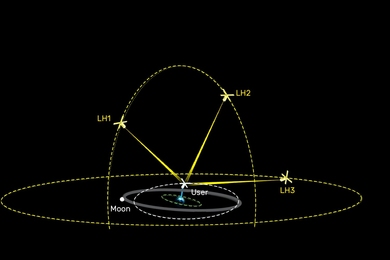
Acting as cooperative optical beacons, the satellites could provide GPS-like navigation and communications support for spacecraft operating across cislunar space.
Members of the laboratory community reflect on technology impacts that shaped the United States and the world over the past 75 years.
The 1967 Outer Space Treaty bans nuclear weapons in space, but there’s currently no way to verify that satellites aren’t carrying them.
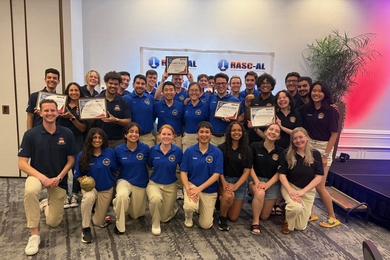
Three MIT teams took five top awards in the 2026 NASA RASC-AL Competition for designing critical elements for the moon base and future missions to Mars.
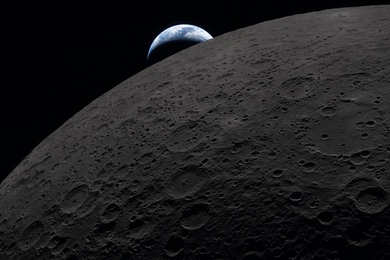
This first use of laser communications on a crewed mission at lunar distance was a foundational step to establishing a high-speed internet in deep space.
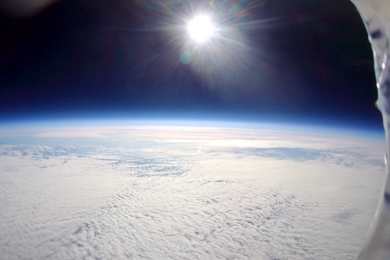
MIT students see the Earth's curvature in reborn AeroAstro intro course.
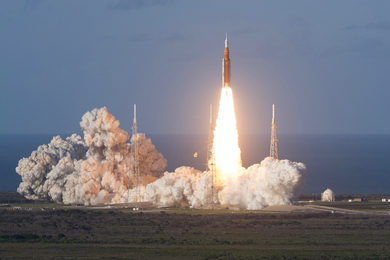
High-definition video and data sent from the lunar vicinity to Earth will demonstrate the first use of laser communications on a crewed mission.

Using boron nitride nanotubes, mechanical engineering doctoral student Palak Patel develops materials for space that block dangerous ionizing radiation.

Master's student Taylor Hampson is modeling the behavior of an unconventional rocket engine that will heat propellant using nuclear energy.
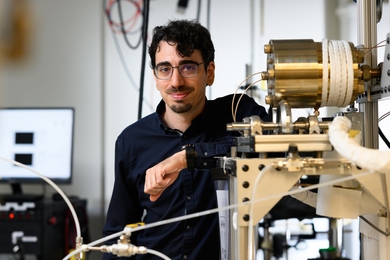
Marco Graffiedi, a doctoral student in nuclear science and engineering, is researching quenching processes to help cool nuclear cores, and NASA craft the next generation of space vehicles.
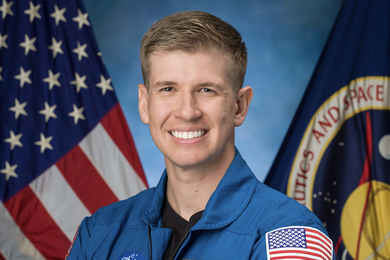
The AeroAstro alumnus, who participated in Air Force ROTC and the Gordon Engineering Leadership Program at MIT, is a test pilot and one of 10 new astronaut candidates selected from around the nation.

MIT students and faculty designed and fabricated a control room for a unique lunar landing mission — an achievement in design and engineering.
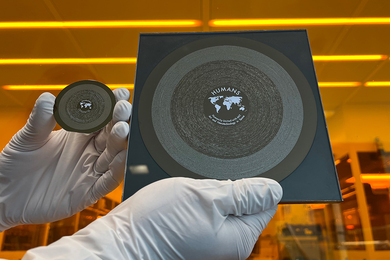
Professor Craig Carter’s precision design for a student-led project now on the moon encodes messages from around the world on a silicon wafer.
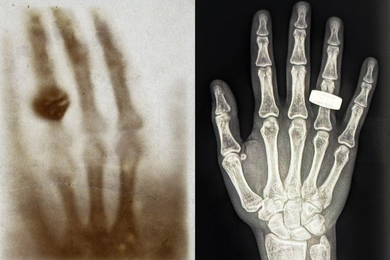
Performed in microgravity, 200 miles above the Earth’s surface, the imaging procedure could help keep astronauts safe and healthy on long-term missions.