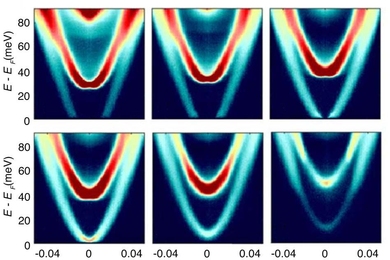
A new window into electron behavior
Scientists invent technique to map energy and momentum of electrons beneath a material’s surface.
Scientists invent technique to map energy and momentum of electrons beneath a material’s surface.
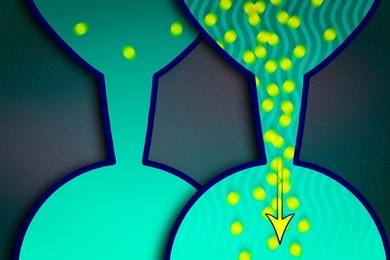
Behaving like particles in a viscous fluid can help bunches of electrons squeeze through a tight space.
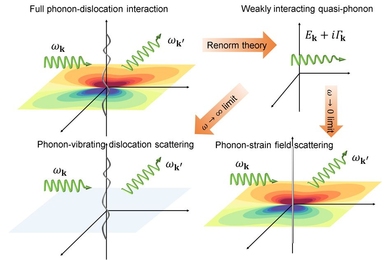
Study sheds light on interactions that change the way heat and electricity move through microchips.

Newly discovered phenomenon accelerates electrons as they enter a viscous state.

Physicists address loophole in tests of Bell’s inequality, using 600-year-old starlight.

A quest to understand superconductivity leads MIT theoretical physicist Senthil Todadri to discoveries about new magnetic materials called quantum spin liquids.
New observations confirm an 80-year-old quantum theory.

Longtime MIT professor was a trailblazer in the fields of laser technology and quantum electronics.
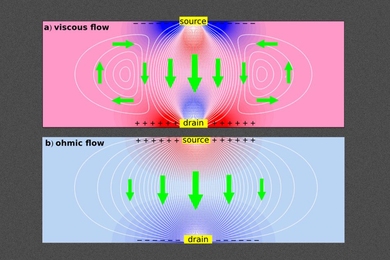
Analysis predicts exotic behaviors such as “negative resistance,” based on fluid-like effects.
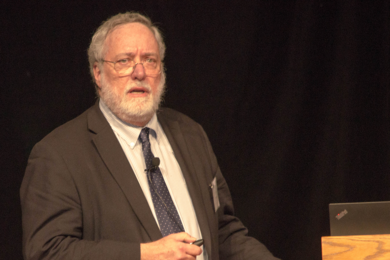
Diamond spintronics and graphene-based infrared detectors are among leading-edge technologies reported at annual Materials Day Symposium at MIT.
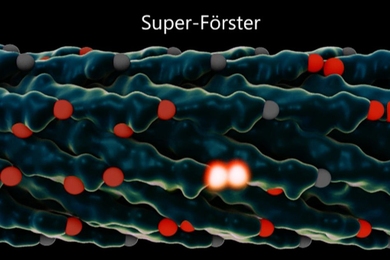
Researchers use engineered viruses to provide quantum-based enhancement of energy transport.
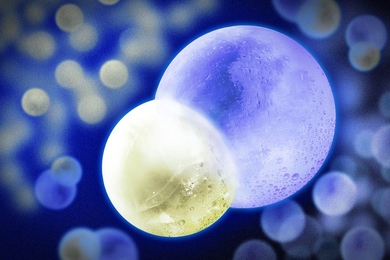
At near absolute zero, molecules may start to exhibit exotic states of matter.

New math explains dynamics of fluid systems that mimic many peculiarities of quantum mechanics.

MIT physicist explains how new results bolster his 1980 theory of cosmic inflation.
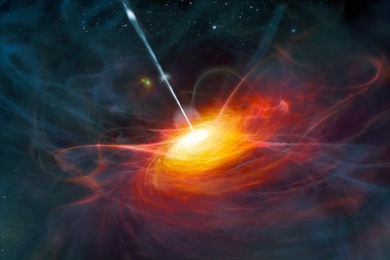
MIT researchers propose using distant quasars to test Bell’s theorem.