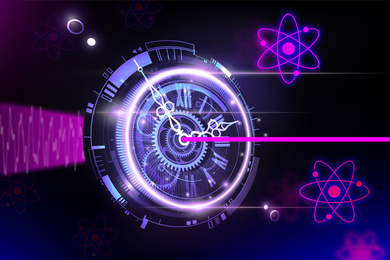
With a quantum “squeeze,” clocks could keep even more precise time, MIT researchers propose
More stable clocks could measure quantum phenomena, including the presence of dark matter.
More stable clocks could measure quantum phenomena, including the presence of dark matter.

The Nano Summit highlights nanoscale research across multiple disciplines at MIT.

The results open the door to exploring superconductivity and other exotic electronic states in three-dimensional materials.

Center for Ultracold Atoms gets funding boost to “punch through tough scientific barriers and see what's on the other side.”

A newly discovered type of electronic behavior could help with packing more data into magnetic memory devices.
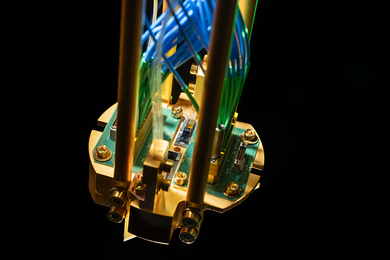
This technology for storing and transmitting quantum information over lossy links could provide the foundation for scalable quantum networking.

The advance brings quantum error correction a step closer to reality.
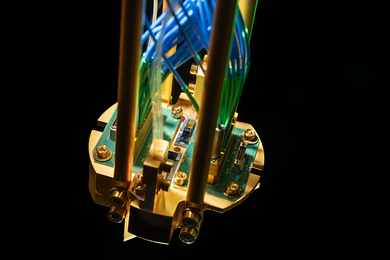
Inventions in medical imaging, aircrew scheduling, data security, and quantum networking are named among the year’s most innovative new products.
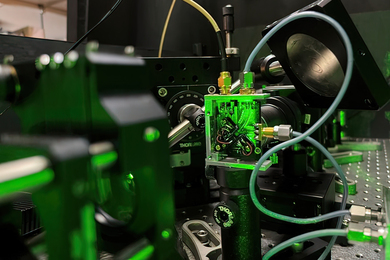
MIT researchers develop a protocol to extend the life of quantum coherence.
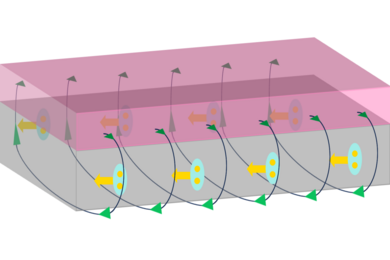
The ultrasmall “switch” could be easily scaled.

Professor of physics will use US Department of Defense fellowship to study quantum science with ultracold atoms.
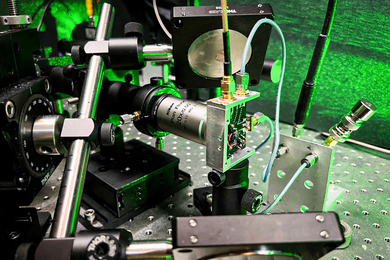
By fine-tuning the spin density in some materials, researchers may be able to develop new quantum sensors or quantum simulations.
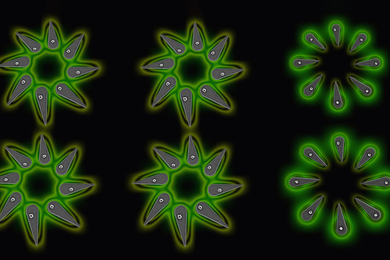
A new technique produces perovskite nanocrystals right where they’re needed, so the exceedingly delicate materials can be integrated into nanoscale devices.

The foundry gives the wider research community access to Lincoln Laboratory’s expertise in fabricating quantum circuits.

New research explores how Dyson maps are putting quantum computers to work in designing fusion energy devices.