
New qubit architecture enables faster, more accurate operations
This advance could be a big step toward developing a scalable, practical quantum computer.
This advance could be a big step toward developing a scalable, practical quantum computer.

MIT affiliates engage with the MIT-IBM Computing Research Lab to bring rigorous theory to production systems.

The Institute welcomes its first cohort of QMIT Fellows this fall to advance interdisciplinary quantum research.

A new, scalable technique could enable powerful radars and sensors based on quantum technology that works at room temperature.

A new technique produces wafer-scale samples, overcoming a major roadblock to using these materials in quantum technologies.
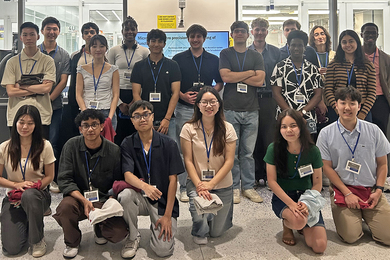
The 2026 NEMC Hub-sponsored externship gave students access to world-class research, advanced semiconductor manufacturing, and professionals driving innovation across the Northeast.

A new fabrication platform integrates molecules into electronic devices, opening the door to emerging computing technologies.

Initial research projects advance national priorities across natural resources, manufacturing, nuclear physics, and more.

“Scientific American” showcases the history and future of America’s scientific engine, highlighting promising young scientists and icons at MIT and beyond.

Leaders, faculty across MIT discuss fostering innovation and talent in Greater Boston in special series of articles published alongside the outlet's annual list of 'Tech Power Players'
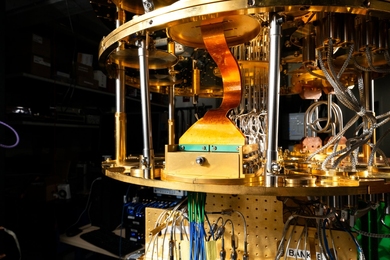
A prototype wiring system for dilution refrigerators could advance the realization of practical quantum computers.

Researchers establish key insights for reading and writing information for quantum sensing, communication, computing, and control.
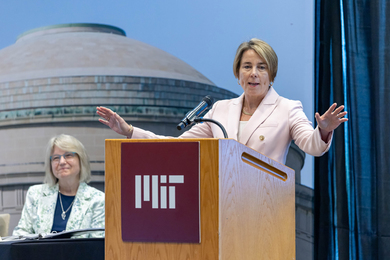
The Quantum Systems Laboratory will catalyze quantum innovation and be open to government, academic, and industry researchers.

With $25 million investment from the Commonwealth of Massachusetts, MIT to build a new shared-use facility to serve as a statewide quantum toolbox.

A new method for precisely moving columns of individual atoms within a material could give rise to exotic quantum properties.