
Waves that clear waste from the brain during sleep are impaired in older adults
Researchers now hope to investigate whether increasing the flow of cerebrospinal fluid during sleep could improve brain health.
Researchers now hope to investigate whether increasing the flow of cerebrospinal fluid during sleep could improve brain health.
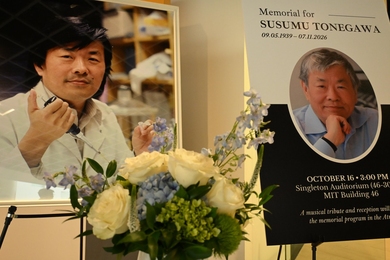
To remember the longtime professor, lab members, alumni, colleagues, and other well-wishers gathered with members of his family in MIT Building 46 and online.
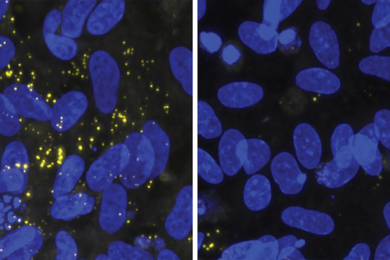
MIT researchers showed that the APOE4 gene variant suppresses molecular signaling needed for oligodendrocytes to myelinate neurons and also demonstrated a proof-of-concept fix.
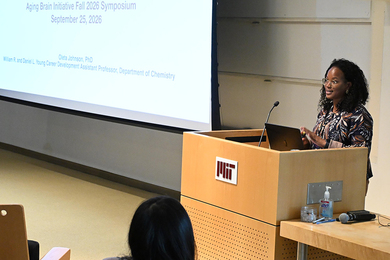
In six talks, researchers from across MIT described projects aimed at advancing the understanding of and interventions against neurodegenerative diseases such as Alzheimer’s, Parkinson’s, and ALS.
Making a decision requires juggling a set of options without getting them confused or losing track of them. A new MIT study shows how neurons encode information to maximize clarity throughout the process.
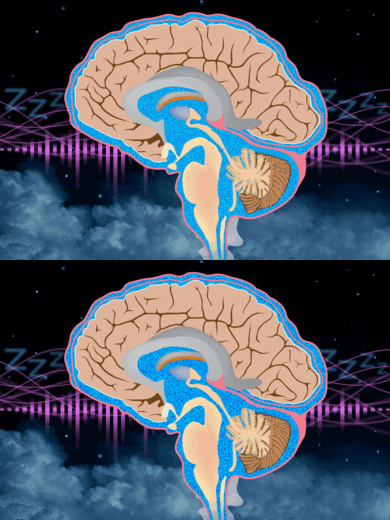
Delivered at just the right time, this type of auditory stimulus can strengthen the flow of cerebrospinal fluid, which clears debris from the brain and keeps it healthy.
The brain's ability to generate quick, nimble volitional thought — and a unified awareness of thought and experience — arises from analog computations, MIT neuroscientists argue in a new review.
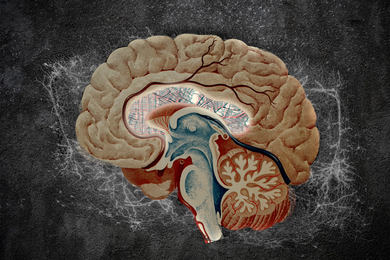
A new study reveals insights into populations of neurons affected by Huntington’s disease, schizophrenia, addiction, and other disorders.
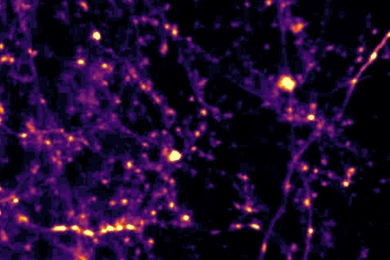
To keep track of what’s going on in front of it, the brain relies not only on what it sees, but also a comparison with what it just saw. A new study pinpoints the circuit that provides that service.
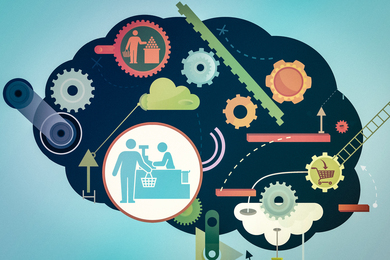
Neuroscientists have discovered circuits in the prefrontal cortex that can be repurposed to store different types of information.
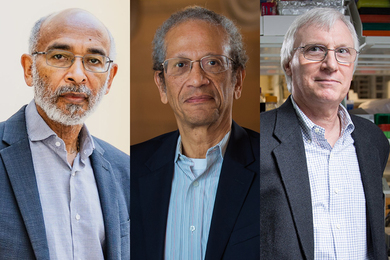
Longtime professors and experts in the fields of anesthesiology, aerospace engineering, and biological engineering, respectively, receive MIT’s highest faculty honor.
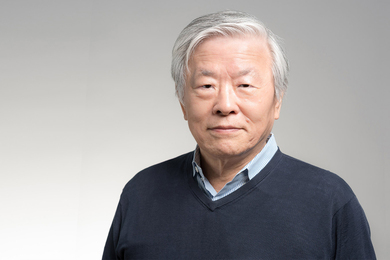
Tonegawa made landmark discoveries about how the immune system generates antibody diversity and how the brain forms memories.
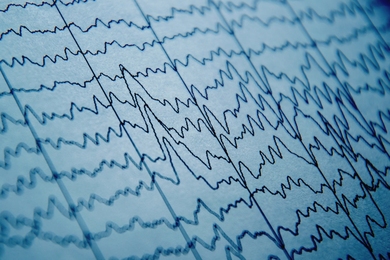
A new study adds evidence that electric fields in the brain help to organize and shape underlying neural activity via “ephaptic coupling.”
“Scientific American” showcases the history and future of America’s scientific engine, highlighting promising young scientists and icons at MIT and beyond.
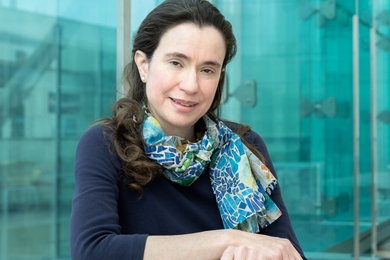
Heiman, who studies neurodegenerative diseases such as Huntington’s and Parkinson’s, will lead the institute beginning July 1.