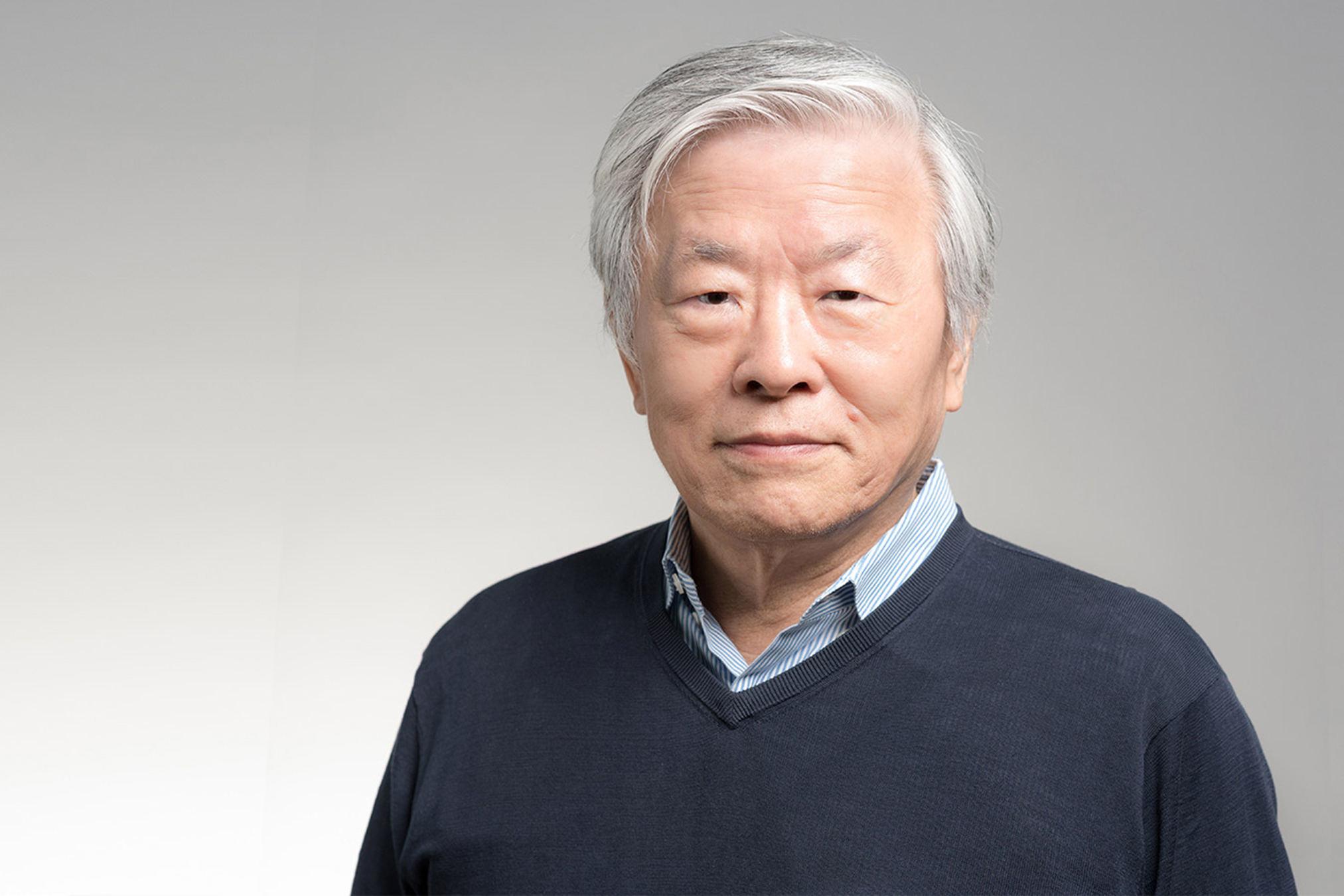
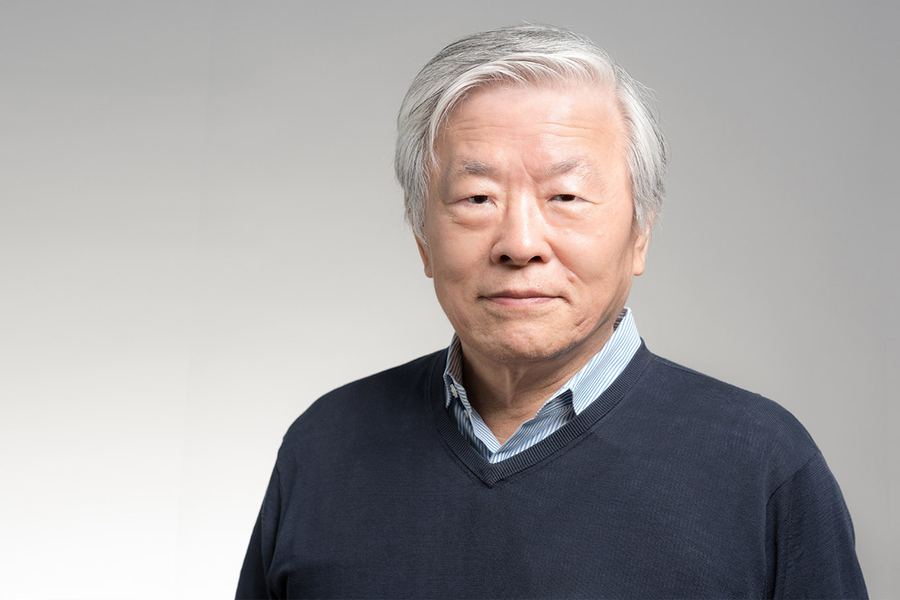
Susumu Tonegawa, the Picower Professor of Biology and Neuroscience at MIT and a Nobel laureate, died July 11 at the age of 86.
Tonegawa was a renowned molecular biologist who wielded his keen insight in a variety of fields, including immunology and neuroscience. In the early 1980s, Tonegawa discovered how the immune system generates its incredible diversity of antibodies — a breakthrough that earned him the Nobel Prize in Physiology or Medicine in 1987.
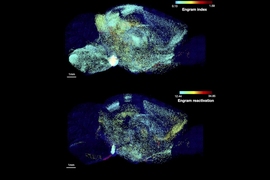
Following that landmark achievement, he turned his attention to neuroscience, where his work has helped to reveal how the brain stores memories as traces called “engrams.”
An MIT faculty member for more than 40 years, Tonegawa also served as the founding director of MIT’s Picower Institute for Learning and Memory and director of the RIKEN Brain Science Institute of Japan, and was a Howard Hughes Medical Institute Investigator.
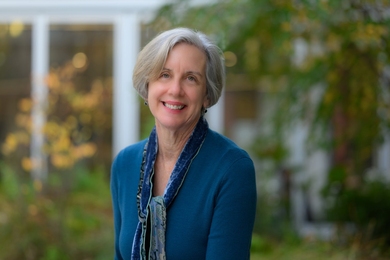
“Few scientists have reshaped our understanding of biology as profoundly as Susumu Tonegawa,” says Myriam Heiman, director of the Picower Institute. “His intellectual fearlessness, extraordinary creativity, and relentless pursuit of fundamental questions opened entirely new frontiers in both immunology and neuroscience. His influence on science and on the people who had the privilege of working alongside him is immeasurable.”
Drawn to molecular biology
Born in Nagoya, Japan, Tonegawa spent his early years moving between rural towns, due to his father’s job as an engineer for a textile company. When it was time for him to go to high school, his parents sent him to a school in Tokyo, where he became interested in chemistry.
He was admitted to the University of Kyoto to study chemistry, and while there, he was drawn to the nascent field of molecular biology. He began his graduate studies at the Institute for Virus Research at the University of Kyoto, but after only a couple of months, his advisor, Professor Itaru Watanabe, suggested that he apply to a school in the United States, which had more advanced molecular biology programs.
Tonegawa took that advice and was accepted at the University of California at San Diego, where he studied how a virus called phage lambda controls gene transcription. After earning his PhD in 1968, he went on to a postdoc in a lab at the Salk Institute.
In that lab, Tonegawa began studying gene expression of a virus known as SV40. However, his U.S. visa was set to expire at the end of 1970, so he soon headed for a position at the newly established Basel Institute for Immunology in Switzerland.
At the time, Tonegawa had little background in immunology, but he soon became fascinated by the 100-year-old question of “antibody diversity” — how the body’s immune system is able to generate hundreds of millions of antibodies from a relatively small set of genes. (The entire human genome contains about 20,000 genes.) That antibody diversity is what allows the immune system to recognize so many pathogens, including those it has never seen before.
With colleagues in Basel, Tonegawa discovered that each antibody protein is not encoded by its own gene — instead, genes for different components of the antibody can be randomly recombined to generate limitless combinations.
In 1987, Tonegawa was a solo recipient of the Nobel Prize for discovering that process, known as V(D)J gene rearrangement. In announcing the award, the Nobel committee noted that Tonegawa’s discoveries “explain the genetic background allowing the enormous richness of variation amongst antibodies. Beyond deeper knowledge of the basic structure of the immune system these discoveries will have importance in improving immunological therapy of different kinds, such as for instance the enforcement of vaccinations and inhibition of reactions during transplantation.”
From antibodies to engrams
In the early 1980s, after his groundbreaking antibody discoveries, Tonegawa began to feel the urge to turn to new research directions. He also wanted to return to the United States, so in 1981, he accepted the offer of a professorship at MIT’s Center for Cancer Research (today known as the Koch Institute for Integrative Cancer Research). There, he began working on T cells and contributed to scientists’ understanding of how T cells are able to generate a large diversity of T-cell receptors.
While at the CCR, he also began to study questions in neuroscience. As he told an interviewer from the Picower Institute in 2022, he was always in search of new scientific endeavors to keep him interested in his work.
“When I decided to become a scientist, my criteria of what to do was whether the scientific problem I got to solve was interesting or not. Whether I’m curious our not. I didn’t think about other things like, Could it be too risky? Can I really develop my career by venturing into the field I am not familiar with? That never occurred to me. I just followed my curiosity and instinct,” Tonegawa said in an interview published in the summer 2022 Picower Institute newsletter.
In 1994, he was chosen as the founding director for MIT’s Center for Learning and Memory, which became the Picower Institute for Learning and Memory in 2002. Tonegawa continued to serve as the center’s director until the end of 2006.
Professor Li-Huei Tsai, who succeeded Tonegawa as the Picower Institute’s director, calls working alongside Tonegawa “one of the greatest honors of my career.”
“His passion, boundless energy, and unwavering pursuit of the fundamental mechanisms underlying memory were contagious, inspiring generations of neuroscientists to join and advance the field. Today, we lost a giant. His scientific legacy will continue to shape neuroscience for years to come, and he will be deeply missed by all of us,” she says.

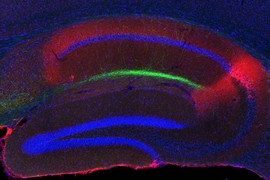
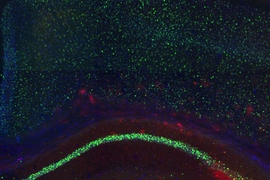
Over the past two decades, Tonegawa’s lab has made significant discoveries in the field of memory research. In 2013, he and his colleagues reported that they had identified “engrams” in the brain’s hippocampus. These engrams consist of episodic memories — memories of experiences — that are stored in specific groups of hippocampal cells. Engrams encode elements including objects, space, and time, linked to a specific experience.
At that time, the researchers also found that it was possible to implant “false memories” in mice by using optogenetics to reactivate an existing engram while the animals formed a new memory. This prompted the mice to associate a new location with the memory of an event that had actually happened in a different location.
Later work from Tonegawa’s lab showed that engrams extend beyond the hippocampus and are stored across a widely distributed complex that spans many brain circuits. More recently, he had been working on engrams of “knowledge memory” to decipher the fundamental mechanism of abstract memory. His recent work also delved into how the emotional associations of memories are encoded, and how the brain maintains a timeline of chronological events.
In addition to the Nobel Prize, Tonegawa received many other awards, including the Albert and Mary Lasker Award for Basic Research in 1987, the Bristol-Myers Award for Distinguished Achievement in Cancer Research in 1986, and the David M. Bonner Lifetime Achievement Award from the University of California at San Diego in 2010. He was also known for training many scientists who are now leaders in the field of neuroscience.
Tonegawa was a longtime fan of the Boston Red Sox, and in May 2004, he had the opportunity to throw out the ceremonial first pitch at Fenway Park, as part of the team’s tribute to the Boston area’s scientific and medical communities.
He is survived by his wife, Mayumi Tonegawa ’92, two children, Hidde Tonegawa ’09 and Hanna Tonegawa, and two grandchildren. He was predeceased by a son, Satto Tonegawa.
Following a private funeral, his ashes will be buried in Kyoto, Japan.
Gifts may be made in Tonegawa's memory to the Susumu Tonegawa Memorial Fund, established by MIT to honor his legacy by supporting basic research in The Picower Institute for Learning and Memory.