
Waves hit different on other planets
From lazy ripples to towering breakers, waves should vary widely from one planet to another, according to a new model.
From lazy ripples to towering breakers, waves should vary widely from one planet to another, according to a new model.
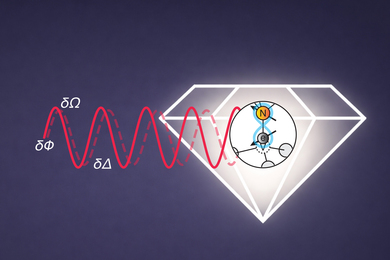
The devices represent a key step toward practical quantum sensing, with applications in biomedical sensing, materials characterization, and more.

Researchers developed a system that intelligently balances workloads to improve the efficiency of flash storage hardware in a data center.
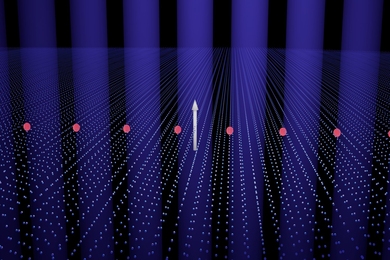
MIT physicists have discovered 3D “moiré crystals” that simulate four-dimensional quantum materials to a T.
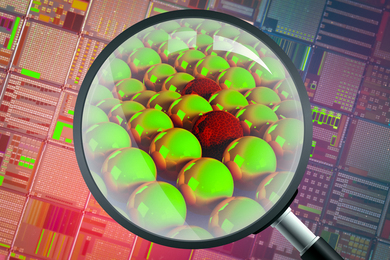
A new model measures defects that can be leveraged to improve materials’ mechanical strength, heat transfer, and energy-conversion efficiency.
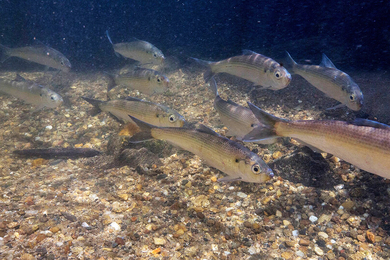
MIT Sea Grant works with the Woodwell Climate Research Center and other collaborators to demonstrate a deep learning-based system for fish monitoring.
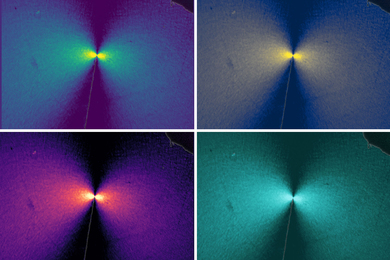
New insights into metallic cracks that harm battery performance could advance the longstanding quest to develop energy-dense solid-state batteries.
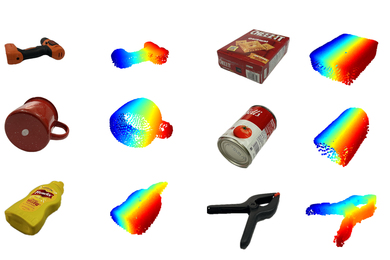
With this new technique, a robot could more accurately detect hidden objects or understand an indoor scene using reflected Wi-Fi signals.
The newly created role will shape the infrastructure needed to nurture the school’s growing research goals.
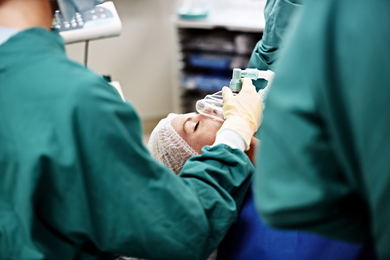
Discovering this common mechanism could lead to a universal anesthesia-delivery system to monitor patients more effectively.
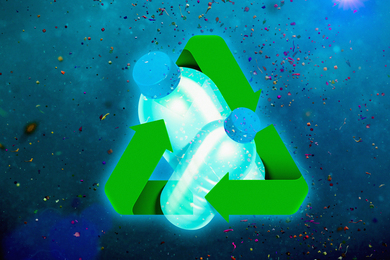
MIT researchers uncovered the roles of bacterial species from the environment as they consume biodegradable plastic.

Professor Jesse Thaler describes a vision for a two-way bridge between artificial intelligence and the mathematical and physical sciences — one that promises to advance both.
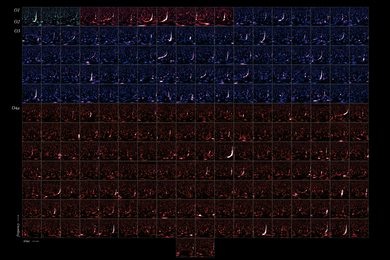
The latest crop of space-time wobbles includes a variety of heavy, fast-spinning, and lopsided colliding black holes.
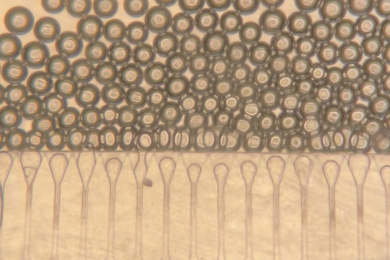
The engineered tissue grafts could take on the liver’s function and help thousands of people with liver failure.
By leveraging idle computing time, researchers can double the speed of model training while preserving accuracy.