
Study reveals a universal travel pattern across four continents
Globally, people follow a “visitation law” — an inverse relationship between distance and frequency of visits.
Globally, people follow a “visitation law” — an inverse relationship between distance and frequency of visits.

Atomically thin materials are a promising alternative to silicon-based transistors; now researchers can connect them more efficiently to other chip elements.

Study finds Earth’s frozen surfaces became less susceptible to thawing, potentially locking in more carbon than expected.
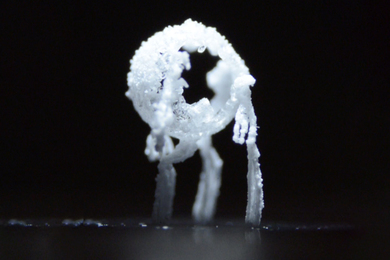
Crystallizing salts can grow “legs,” then tip over and fall away, potentially helping to prevent fouling of metal surfaces, researchers find.
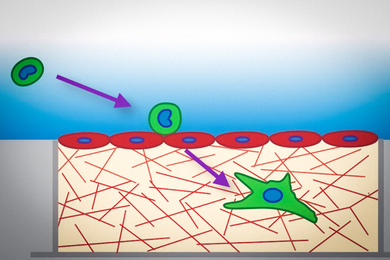
Developing drugs that prevent this softening might impede tumors’ ability to spread.

Certain ultralight bosons would be expected to put the brakes on black holes, but new results show no such slowdown.

Encapsulating modified bacteria in tough hydrogel spheres prevents them from spreading genes to other microbes.
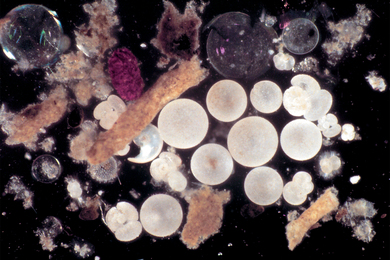
Climate projections could be off by five years, researchers find.
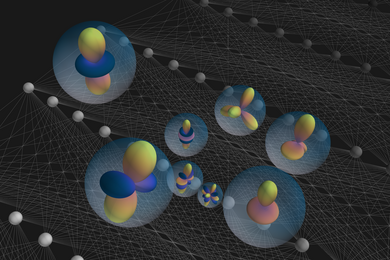
MIT research team finds machine learning techniques offer big advantages over standard experimental and theoretical approaches.
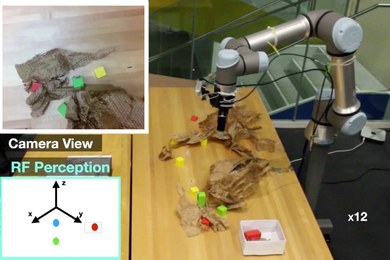
System uses penetrative radio frequency to pinpoint items, even when they’re hidden from view.

An MIT team has created polymers that replicate the structure of mucins, the molecules that give mucus its unique antimicrobial properties.

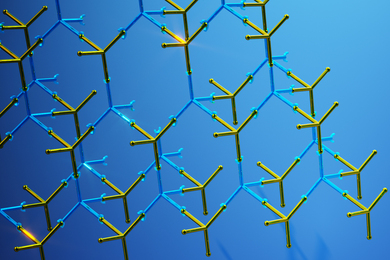
A new approach to identifying useful formulations could help solve the degradation issue for these promising new lightweight photovoltaics.
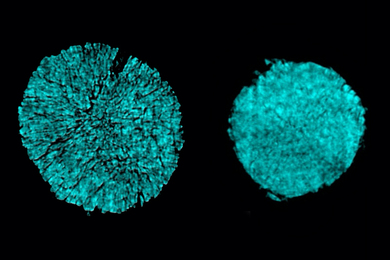
Using an ordinary light microscope, researchers can now obtain images with unprecedented accuracy.
Use of a novel electrolyte could allow advanced metal electrodes and higher voltages, boosting capacity and cycle life.
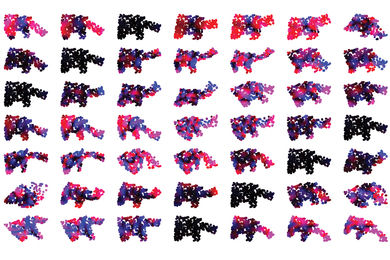
Deep-learning technique optimizes the arrangement of sensors on a robot’s body to ensure efficient operation.