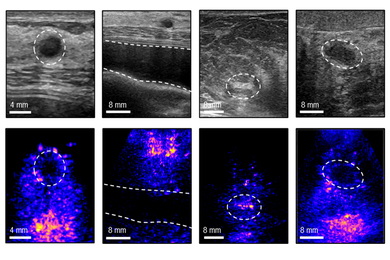
A portable ultrasound system could make reliable breast imaging more accessible
The new technology, which generates high-resolution, 3D images of breast tissue, requires no expertise to operate and could be used at home.
The new technology, which generates high-resolution, 3D images of breast tissue, requires no expertise to operate and could be used at home.

The FUTUR-IC research program integrates electronics and photonics in microchip systems.

Using modern tools, they also determined that carbon tetrachloride, used as a dry-cleaning and degreasing agent as early as the 1930s, was at the root of early ozone loss.
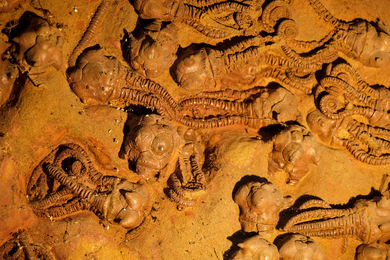
A new model links Earth’s mass extinctions to mismatches between rates of environmental change and biological adaptation.
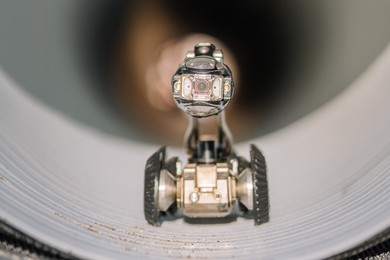
Researchers combined an efficient algorithm with dedicated hardware to rapidly generate 3D maps for navigation using minimal memory and power.
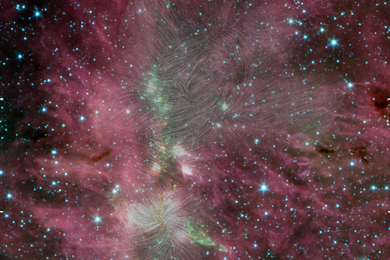
MIT Haystack Observatory researchers use SOFIA observations to reveal how magnetic fields guide the assembly of one of our galaxy's most active high-mass star-forming regions.

A new kernel called Fractal gives researchers a cleaner view of what’s happening inside a processor, and has already surfaced previously unknown behavior in Apple’s M1.
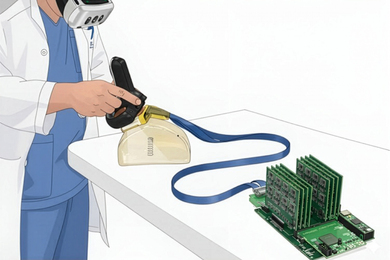
MIT researchers have designed an ultrasound system that creates a real-time 3D representation of the object being imaged.

IAIFI enters its second phase with increased funding, broader ambitions, and a growing community at the frontier of AI and fundamental physics.

MIT researchers use the classic game as a test bed for AI agents, finding a small AI model can outperform the biggest ones at 1 percent of the cost.

Study shows the tradeoff between conservation and growth is less stark with a locally adjusted policy featuring both tradeable offsets and taxes.

The low-temperature process could unlock cleaner lithium from America’s abundant hard rock while minimizing waste.
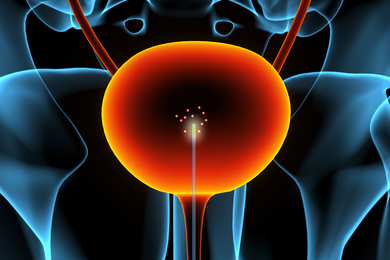
Using a catheter coated with carbon nanotubes, researchers can detect biomarkers produced by cancer cells in the bladder.
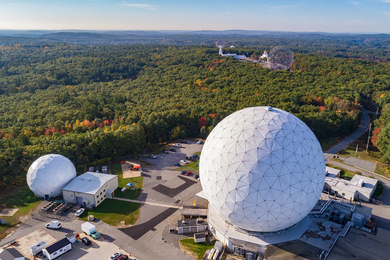
The legendary radio astronomy telescope returns to its science and educational mission at MIT Haystack Observatory.
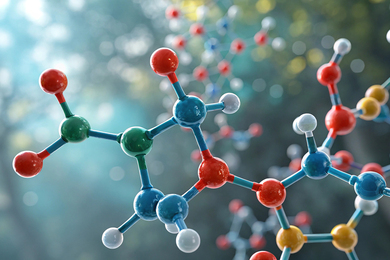
The discovery of dioxaborirane could expand the chemistry of boron-based reagents, providing new tools for oxidation reactions in synthesis and materials science.