New chip could help tiny robots traverse complex environments
Researchers combined an efficient algorithm with dedicated hardware to rapidly generate 3D maps for navigation using minimal memory and power.
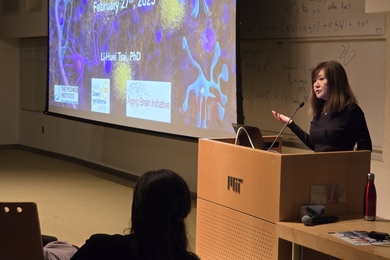
Speakers at MIT’s Aging Brain Initiative symposium described how immune system factors during aging contribute to Alzheimer’s, Parkinson’s and other conditions. The field is leveraging that knowledge to develop new therapies.
A new device concept opens the door to compact, high-performance transistors with built-in memory.
Study of 3.5 million cells from more than 100 human brains finds Alzheimer’s progression — and resilience to disease — depends on preserving epigenomic stability.
MIT researchers developed a new model of memory that includes critical contributions from astrocytes, a class of brain cells.
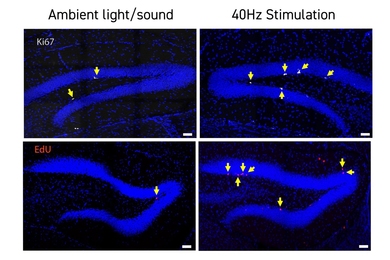
New evidence suggests sensory stimulation of gamma-frequency brain rhythm may promote broad-based restorative neurological health response.
Study shows how a dopamine circuit enables mice to extinguish fear after a peril has passed, opening new avenues for understanding and potentially treating fear-related disorders.
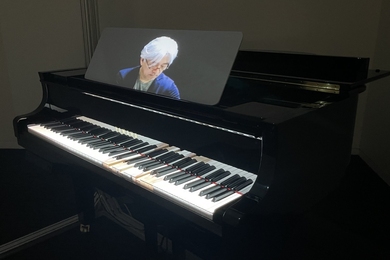
MIT researchers lay out design principles behind the TeleAbsence vision, how it could help people cope with loss and plan for how they might be remembered.
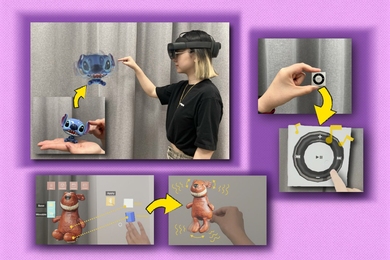
“InteRecon” enables users to capture items in a mobile app and reconstruct their interactive features in mixed reality. The tool could assist in education, medical environments, museums, and more.
A decade of studies provide a growing evidence base that increasing the power of the brain’s gamma rhythms could help fight Alzheimer’s, and perhaps other neurological diseases.
New research adds evidence that learning a successful strategy for approaching a task doesn’t prevent further exploration, even if doing so reduces performance.
Place cells are known to encode individual locations, but research finds stitching together a “cognitive map” of a whole environment requires a broader ensemble of cells, aided by sleep, over several days.
For the MIT Visiting Artist Chloé Bensahel, fabric itself tells the story.
A new framework describes how thought arises from the coordination of neural activity driven by oscillating electric fields — a.k.a. brain “waves” or “rhythms.”
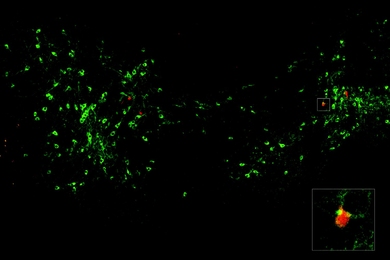
Study finds stimulating a key brain rhythm with light and sound increases peptide release from interneurons, driving clearance of an Alzheimer’s protein.