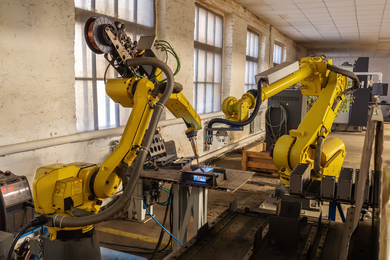
Giving robots social skills
A new machine-learning system helps robots understand and perform certain social interactions.
A new machine-learning system helps robots understand and perform certain social interactions.

Reducing the complexity of a powerful machine-learning model may help level the playing field for automatic speech-recognition around the world.

A new method forces a machine learning model to focus on more data when learning a task, which leads to more reliable predictions.
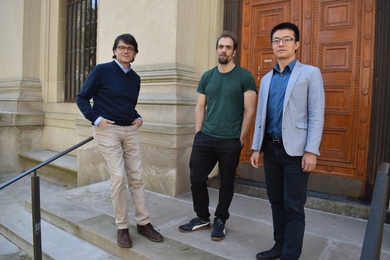
A National Science Foundation-funded team will use artificial intelligence to speed up discoveries in physics, astronomy, and neuroscience.
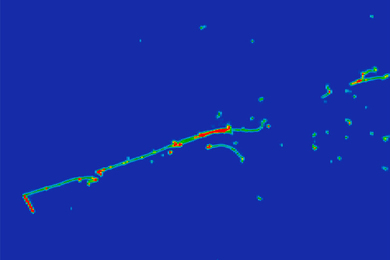
Graduate student Nicholas Kamp describes the MicroBooNE experiment and its implications for our understanding of fundamental particles.

A visual analytics tool helps child welfare specialists understand machine learning predictions that can assist them in screening cases.


PhD candidate Charlene Xia is developing a low-cost system to monitor the microbiome of seaweed farms and identify diseases before they spread.
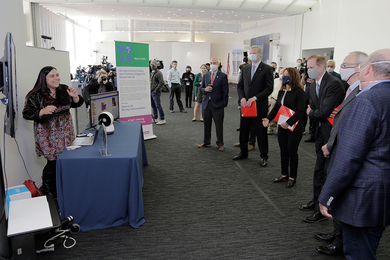
Artificial intelligence is top-of-mind as Governor Baker, President Reif encourage students to “see yourself in STEM.”
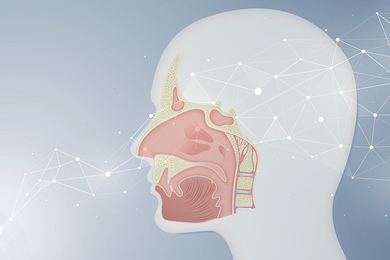
When asked to classify odors, artificial neural networks adopt a structure that closely resembles that of the brain’s olfactory circuitry.
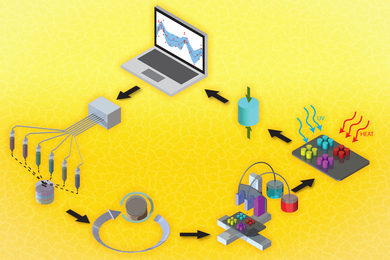
A new machine-learning system costs less, generates less waste, and can be more innovative than manual discovery methods.

A certain type of artificial intelligence agent can learn the cause-and-effect basis of a navigation task during training.

Wise Systems has grown from an MIT class project to a company helping multinationals improve last-mile logistics.
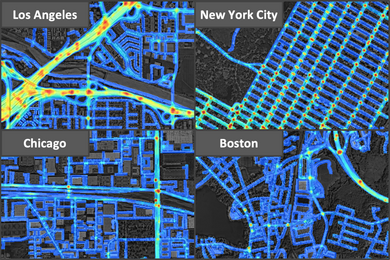
A deep model was trained on historical crash data, road maps, satellite imagery, and GPS to enable high-resolution crash maps that could lead to safer roads.

Researchers hope more user-friendly machine-learning systems will enable nonexperts to analyze big data — but can such systems ever be completely autonomous?