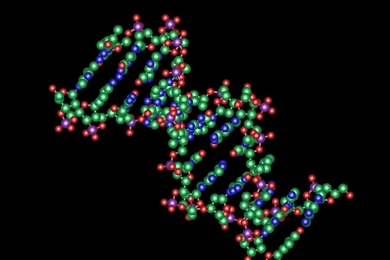
Controlling genes with light
New technique can rapidly turn genes on and off, helping scientists better understand their function.
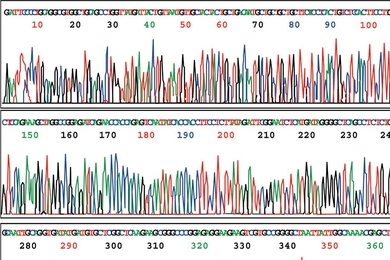
Research update: Genome editing becomes more accurate
Improved technique makes it easier to add or delete genes in living cells, with less risk of off-target DNA damage.

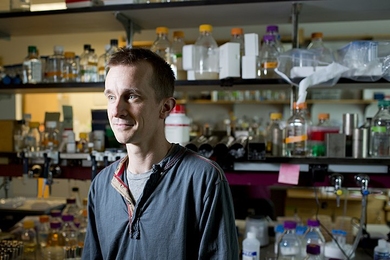
Unraveling bacterial behavior
Michael Laub studies the complex interactions that underlie cells’ responses to their environment.

Newly discovered flux in the Earth may solve missing-mantle mystery
Research points to large reservoirs of material deep in the mantle that may help to explain Earth’s origins.
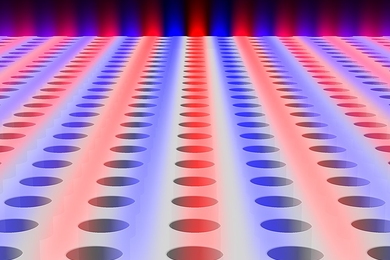
A new way to trap light
MIT researchers discover a new phenomenon that could lead to new types of lasers and sensors.

Detecting DNA in space
Researchers, in a step toward analyzing Mars for signs of life, find that gene-sequencing chip can survive space radiation.

Bigger storms ahead
With global warming, a study finds, tropical cyclones may become more frequent and intense.

Researchers build an all-optical transistor
An optical switch that can be turned on by a single photon could point toward new designs for both classical and quantum computers.
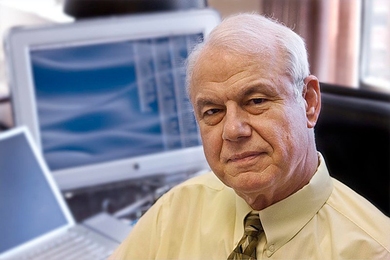
Miklos Porkolab receives Hannes Alfvén Prize
Professor cited for contributions to fusion energy development and the physics of plasma waves
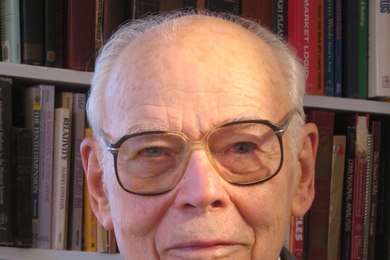
Robert Meservey, pioneering MIT physicist, dies at 92
Buckley Prize winner was member of the Institute community for more than 50 years.

Breaking habits before they start
Turning off cells in a habit-associated brain region prevents rats from learning to run a maze on autopilot.
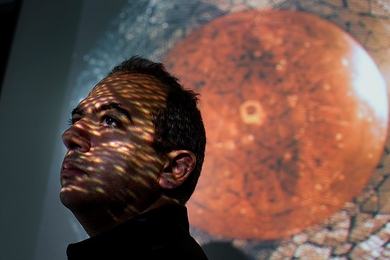
On the hunt for neutrinos
Physicist Joseph Formaggio seeks new ways to detect and measure the elusive particles.
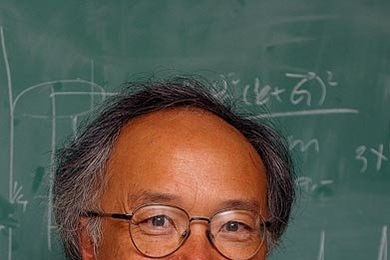
Patrick Lee named co-winner of 2013 Eugene Feenberg Memorial Medal
Award is designated for work demonstrated to have significantly advanced the field of many-body physics.