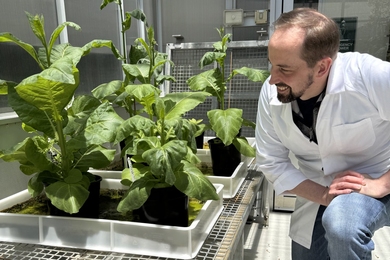
Q&A: From seed funding to scientific breakthroughs
How the MIT Global Seed Funds helped Professor Matt Shoulders and his team build international collaborations that continue to shape his research more than a decade later.
How the MIT Global Seed Funds helped Professor Matt Shoulders and his team build international collaborations that continue to shape his research more than a decade later.
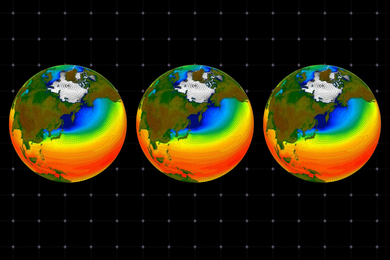
MIT scientists developed a training method to generate models that simulate the effects of human activities on climate much more quickly than other approaches.
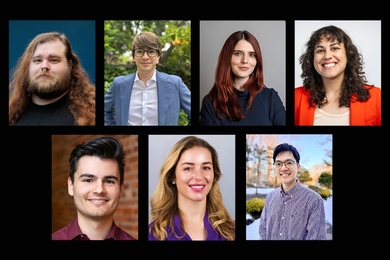
Faculty members serve in core computing and shared roles, bringing a wide range of experiences and areas of expertise to the MIT community.
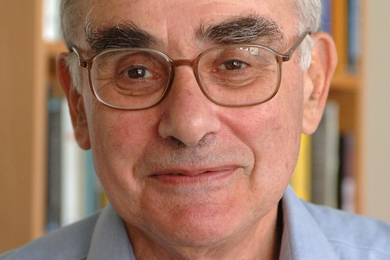
An MIT faculty member for nearly half a century, Goldstone was a “theoretical physicist of rare talent and impact” who made fundamental contributions to multiple disciplines.
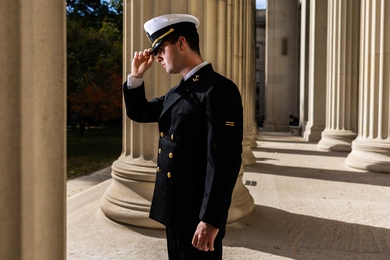
Through leadership roles in ROTC and Camp Kesem, plus navigating an academic pivot, senior Andrew Voelsing has learned to face new challenges with enthusiasm.
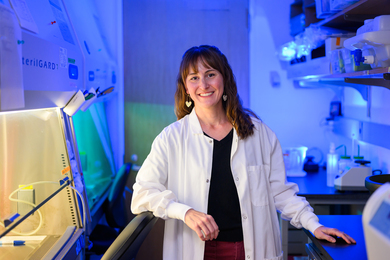
By exploring how bacteria hijack cell functions, Associate Professor Rebecca Lamason hopes to learn more about how host cells carry out those functions.
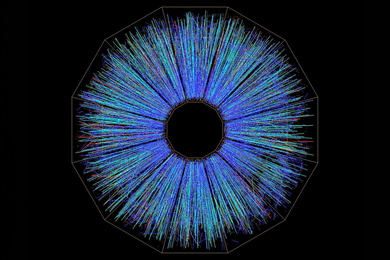
A new method picks up where Einstein left off, to predict how particles move through fluid under extreme conditions.
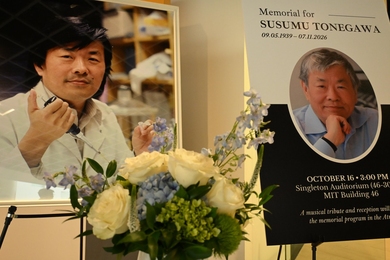
To remember the longtime professor, lab members, alumni, colleagues, and other well-wishers gathered with members of his family in MIT Building 46 and online.
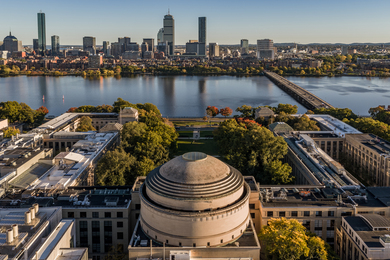
Awarded up to $38 million from ARPA-H, the team aims to create a low-power, noninvasive sensor patch that measures heart failure and sepsis biomarkers in real-time.

Elsa Olivetti, co-director of the MIT Minerals Stewardship Consortium, discusses how research and collaborations can strengthen mineral supply chains.
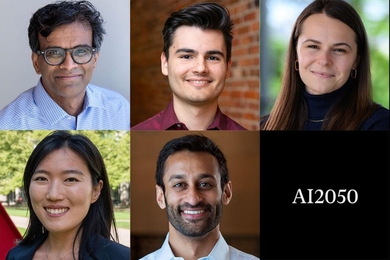
Five MIT faculty members and two additional alumni are honored with fellowships to advance research on beneficial AI.
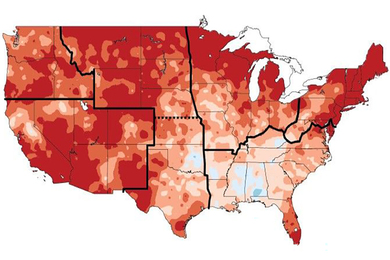
The findings indicate where adaptive measures are needed most around the United States.
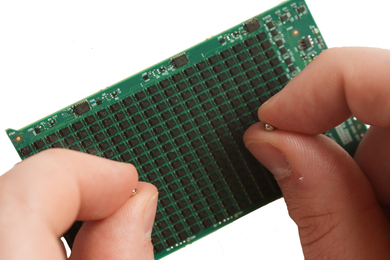
Researchers hope to use these sensors to help people with amputation achieve more natural movements with their prosthetic limbs.
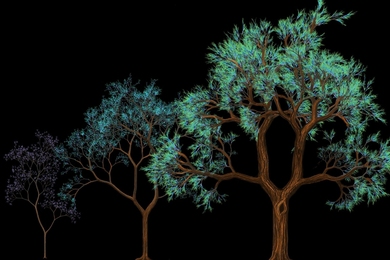
By tracking over 1 million cells, researchers created a detailed map of embryonic development in mice. It could provide development and disease insights.
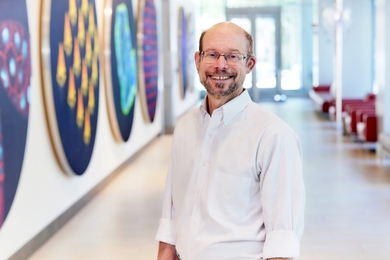
Professor Michael Yaffe and six MIT alumni are honored for their outstanding professional achievement and commitment to service.