
New formulation helps RNA vaccines withstand high temperatures
MIT engineers have found a way to stabilize the lipid nanoparticles used to deliver RNA vaccines, which could allow the vaccines to be more widely distributed.
MIT engineers have found a way to stabilize the lipid nanoparticles used to deliver RNA vaccines, which could allow the vaccines to be more widely distributed.
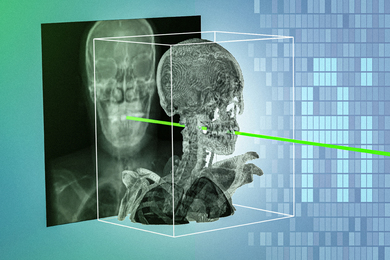
This patient-specific method, called xvr, helps doctors use X-rays for surgical navigation in fields such as orthopedics and neurosurgery.

The senior from Atlanta is majoring in AI and decision making, serves as a leader in several campus groups, and has a soft spot for car improvement projects.

MIT affiliates engage with the MIT-IBM Computing Research Lab to bring rigorous theory to production systems.

A new method, called CW-Net, translates the reasoning process of an autonomous vehicle’s AI system into understandable concepts that explain its behavior.
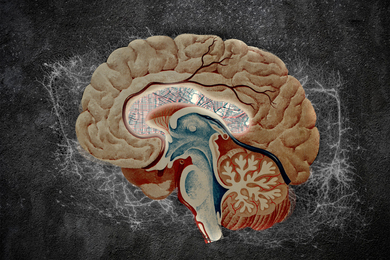
A new study reveals insights into populations of neurons affected by Huntington’s disease, schizophrenia, addiction, and other disorders.

With millions of users across the world, Julia has been used to conduct cutting-edge research and to design new drugs, jet engines, heat pumps, and more.

MIT CSAIL researchers found a way to exploit a split-second gap in chip security — and used it to acquire a Linux system’s password file.
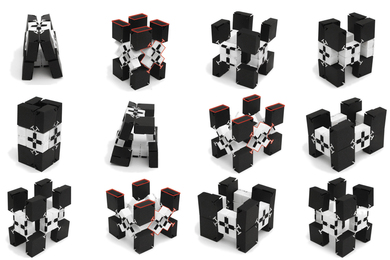
Dubbed “bifur-circuits,” these interactive building blocks could be used to develop reconfigurable robotic grippers or customized assistive devices.

A new method for surgically removing training examples from a model reveals that as datasets grow, the link between what a model learns and what it produces dissolves.
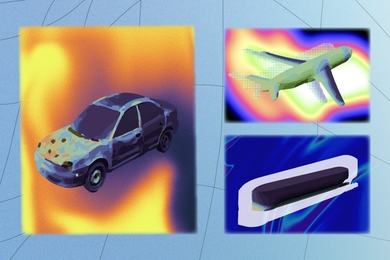
“GeoPT” helps AI models understand the basics of physics so they can simulate how objects respond to things like wind and water more efficiently and accurately.
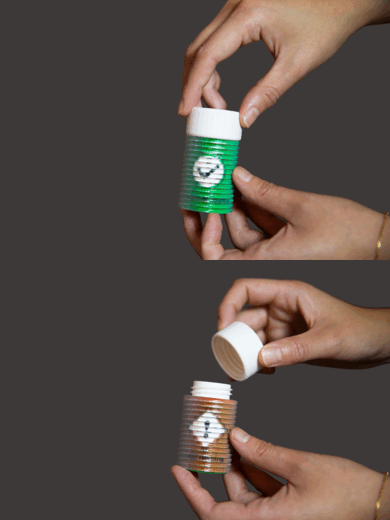
The “ShiftLens” design and fabrication system creates objects that change their surface appearance based on user interactions, without any electronics.

Director of CSAIL and MIT professor honored for her contributions to robotics, artificial intelligence, and autonomous systems.
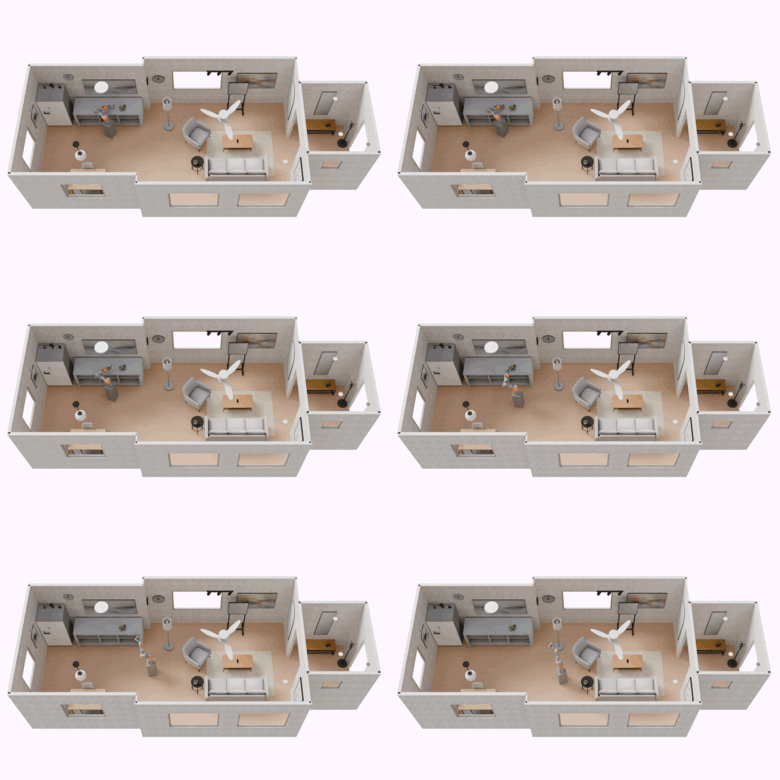
“SceneSmith” system uses collaborative AI agents to create realistic 3D environments of places like kitchens, hotels, and living rooms, where robots can simulate everyday chores.
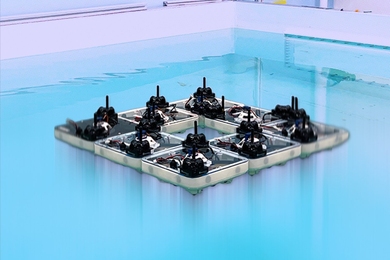
MIT researchers developed FloatForm, a swarm of small aquatic robots that snap together like ants forming a raft, assembling into reconfigurable structures on the water.