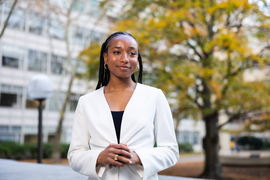

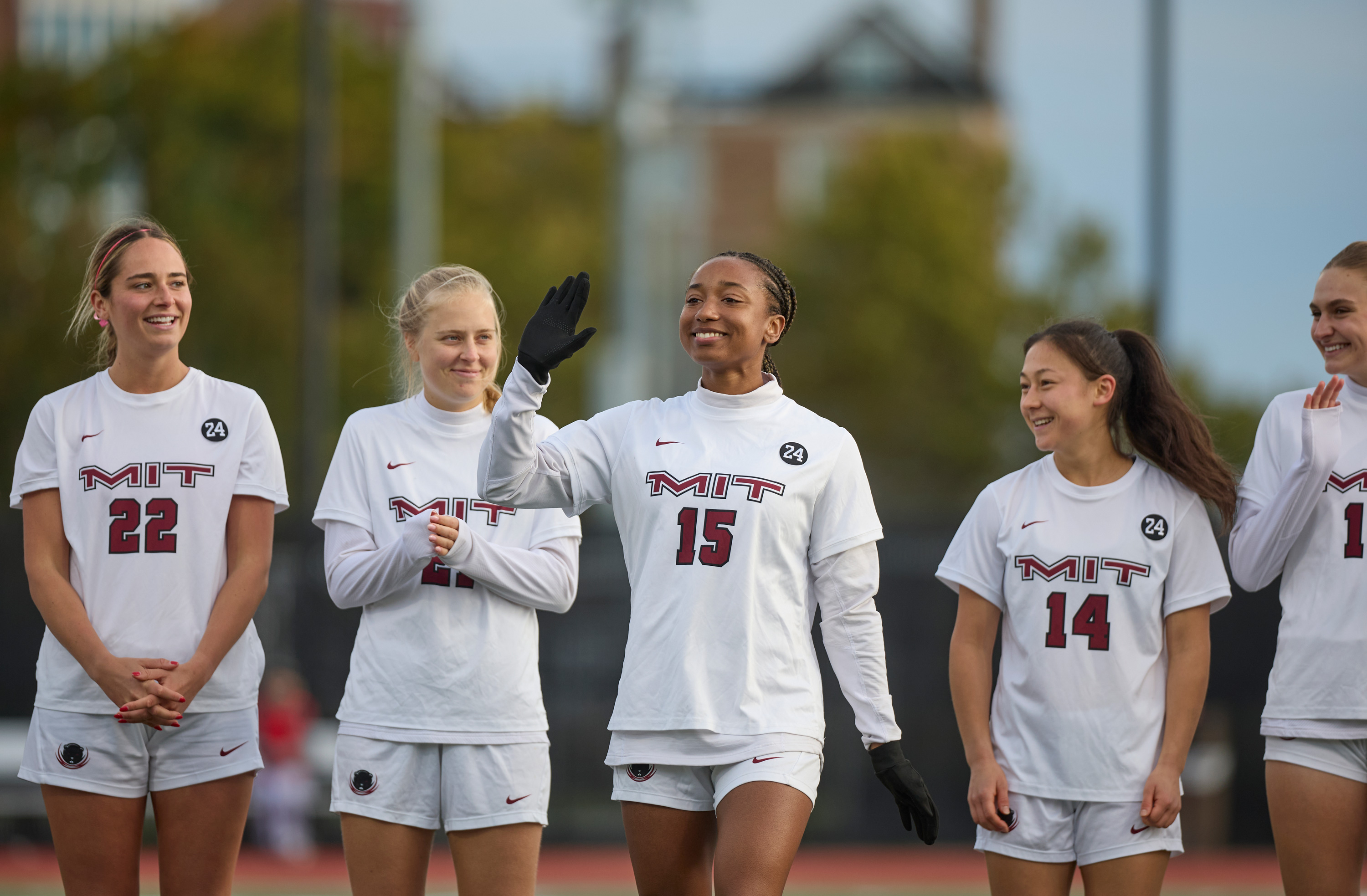

Growing up in Houston, Arianna Doss lived just minutes from the Texas Medical Center, the largest medical complex in the world. But in her experience, proximity to medical innovation did not necessarily mean access to quality care for members of her community.
The contrast, which she witnessed as a resident of the city’s historically Black Third Ward, shaped how Doss came to understand health care in the United States: as a system deeply influenced by social and political factors.
Now a senior at MIT studying biological engineering and political science, Doss hopes to address those disparities from several angles. She plans to become a physician, potentially specializing in obstetrics and gynecology or emergency medicine, while also pursuing a career in health policy and public service. Recently selected for a Rhodes Scholarship, Doss will pursue a master’s degree in comparative social policy, followed by a master’s in global health science and epidemiology, at Oxford University next fall.
At MIT, her interests have taken her from a public health course in South Africa to Capitol Hill, where she worked on federal maternal health legislation. Along the way, she has found ways to bring together her interests in science, politics, and social justice.

During her first year at MIT, Doss applied on a whim to an Independent Activities Period class called “Evolution of an Epidemic,” led by Professor Bruce Walker, director of the Ragon Institute. The course took students to Johannesburg and Durban, South Africa, for two and a half weeks to study the HIV epidemic. The experience helped Doss recognize that she could pursue medicine without abandoning her interest in the broader systems shaping public health.
“It really unlocked something in me,” she says. “It helped me realize that I can go into medicine and be patient-facing, while also working in public health to make a larger, more policy and population-wide impact as well.”
That intersection became especially clear during her work on Capitol Hill.
Through the MIT Washington program, which provides funding for students pursuing policy-related internships in Washington, Doss secured a position as a maternal health intern for U.S. Representative Lauren Underwood.
The experience gave Doss an opportunity to see how policy decisions could influence the health of patients well before they entered a hospital. Doss has explored that closer to home through her involvement with Link Health, a nonprofit that partners with community health organizations to help patients enroll in public benefits. As a patient navigator, she helps clients with processes that can be difficult to navigate, particularly for people facing language barriers or unfamiliarity with government systems.
Outside the classroom, Doss has found another way to bring her advocacy interests together, through soccer.
A lifelong soccer player and three-year starter on MIT’s women’s varsity team, she chose the Institute, in part, because she wanted to continue competing at a high level while pursuing an engineering education. She was drawn to the prospect of playing alongside students who shared her interest in science and engineering.
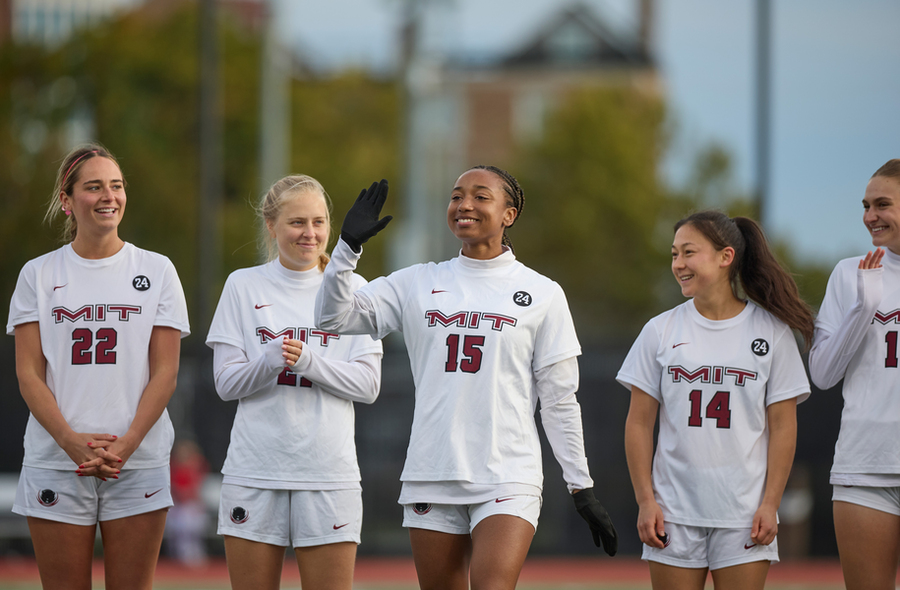
“I wanted to be on a soccer team that also had people who were going to be in STEM,” she says. “I didn’t want to be the only engineer on the team.”
For Doss, soccer has provided a welcome counterbalance to the demands of MIT, not least because of the team’s winning record. For every one of her four years on the team, the Engineers have won the NEWMAC tournament title and played in the NCAA Championship Tournament.
“Life at MIT is difficult. It’s rough. It would be a lot rougher if I didn’t have soccer as an outlet,” says Doss, who was recently named NEWMAC player of the year.
But her experience as a student-athlete has also raised some questions of belonging. She had anticipated finding a larger community of Black athletes at MIT, and that left her wondering where she would find that sense of connection.
Doss and several friends began discussing ways to bring Black athletes together across MIT’s varsity teams. In April, they launched the MIT Alliance for the Advancement of Black Athletes, with Doss serving as president. The organization, which is open to all, aims to build connections among Black student-athletes and create a stronger sense of community across teams.
Looking ahead, Doss plans to attend medical school after her master’s work at Oxford. Ultimately, she hopes to practice medicine while continuing to influence public health policies, especially those that can be implemented on the community level. Her interests include mitigating racial health disparities in areas such as maternal health and chronic disease, as well advancing public health through better access to high-quality education, housing, and safety-net programs.
“A physician who understands our complex political systems is a more effective advocate, while a policymaker with clinical experience is a more impactful public servant,” she said. “I plan to be both.”