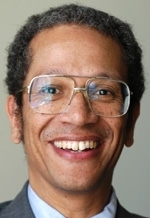
Daniel Hastings, professor of aeronautics and astronautics and of engineering systems, has been named co-director of the Engineering Systems Division after serving as associate director for the past two years and as acting director during the sabbatical of director Daniel Roos.
As associate director of ESD, Hastings has had primary responsibility for its educational programs. He spearheaded the development of ESD's new master's degree and Ph.D. programs that were approved by the faculty last year, noted Dean of Engineering Thomas Magnanti in a letter to colleagues announcing the appointment.
Hastings, who is also director of the ESD Technology and Policy Program, earned the S.M. (1978) and Ph.D. (1980) in aero/astro from MIT after receiving his bachelor's degree in mathematics from Oxford University. He was named an assistant professor in 1985, associate professor in 1988 and professor in 1993. He was director of the Space Grant Program from 1990-93, the aero/astro associate department head for research from 1993-96 and director of the Space Engineering Research Center from 1996-97. He served as the chief scientist of the Air Force from 1997-99.
"Daniel's appointment as co-director reflects both the need to address the full plate facing ESD in the year ahead, especially as it pursues the initiatives suggested by the ESD Visiting Committee, as well as the excellent job that Daniel has been doing as associate and acting director," Magnanti said. "I have greatly enjoyed collaborating with Daniel Hastings on many ESD and Institute-related matters and look forward to continuing to interact with both him and Dan Roos (who will continue his leadership of ESD, now as co-director) on behalf of the division."
"I'm looking forward to the challenge of continuing to help ESD develop its intellectual agenda," Hastings said. "ESD is important to the School of Engineering as one of it's strategic thrusts and I appreciate the support of the dean."
A version of this article appeared in MIT Tech Talk on May 14, 2003.