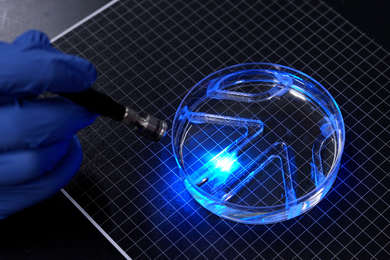
Polypyrrole, a plastic capable of conducting electricity, may provide a breakthrough in nerve cell attachment and growth as well as offer an alternative to nerve grafts, according to researchers in the MIT Department of Chemical Engineering and at Children's Hospital of Harvard University.
By using nerve guidance channels to bridge the gap between severed nerves, scientists have hoped to replace nerve grafts, which can require multiple surgeries and cause loss of function at the site from which donor nerves have been removed. Researchers selected polypyrrole for its electrical conductivity, since electrical stimulation has been shown to enhance nerve cell outgrowth, and for its flexibility and ease of preparation.
Using cells derived from rat neurons and from sciatic nerve tissue from chick embryos, they demonstrated that polypyrrole films facilitate nerve cell attachment and extension significantly better than conventional materials. They discovered that electrical stimulation increased cell growth and that adult rat tissue tolerated implants of polypyrrole with little adverse response.
The MIT researchers are postdoctoral associate Prasad Shastri, Christine Schmidt (now at the University of Texas at Austin) and Professor Robert Langer, all of the Department of Chemical Engineering. The researcher from Children's Hospital is Joseph Vacanti. The work, which was reported in the August 19 Proceedings of the National Academy of Sciences, was supported by the National Science Foundation and the National Institutes of Health.
A version of this article appeared in MIT Tech Talk on September 10, 1997.