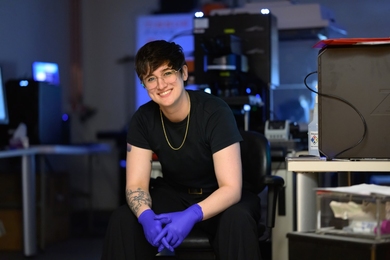
Tackling rare genetic disorders with patient-focused science
Shannon Knight, a brain and cognitive sciences PhD candidate and McGovern Institute researcher, focuses on developing a novel gene therapy.
Shannon Knight, a brain and cognitive sciences PhD candidate and McGovern Institute researcher, focuses on developing a novel gene therapy.

A study of worms finds a protein that helps shape the structure of the genome is critical for establishing the identity of some neurons.

Neuroscientists have discovered circuits in the prefrontal cortex that can be repurposed to store different types of information.
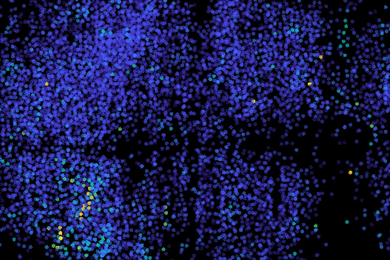
The new technique could help scientists learn how the entire brain works to generate decisions and emotions.
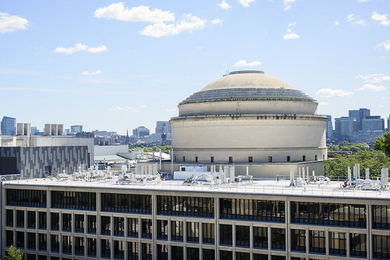
The Materials Research Science and Engineering Center unites researchers across disciplines to develop technologies for medical imaging, sustainable metals production, and next-generation electronics.

The mashup of a black hole and an enormous star has never been seen before and could explain the mysterious little red dots often found in deep-space images.
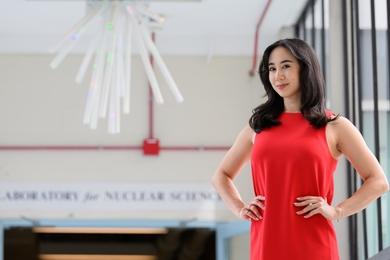
From Broadway to MIT’s Laboratory for Nuclear Science, PhD student Jessica Fry doesn’t do anything halfway. Now she’s hunting for the universe’s most elusive particle.

The study could help scientists understand how superconductivity and other more complex phenomena emerge in quantum materials.
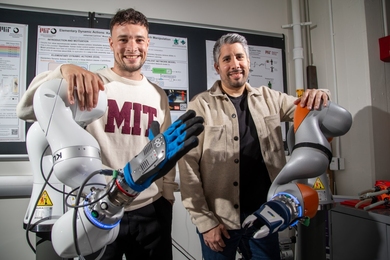
MIT engineers introduce an adaptive physical therapy system that uses generative AI to learn from physical therapists and interactively support stroke patients.
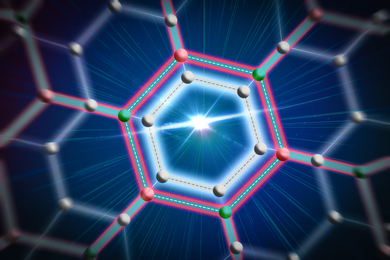
A new technique produces wafer-scale samples, overcoming a major roadblock to using these materials in quantum technologies.

An expert in machine learning, statistics, and computation, Rakhlin succeeds Professor Ankur Moitra.

A new fabrication platform integrates molecules into electronic devices, opening the door to emerging computing technologies.
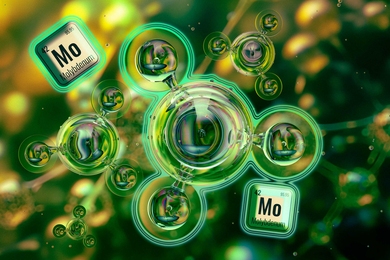
New findings could help researchers design synthetic catalysts that convert nitrogen gas to ammonia, a key step in fertilizer production.
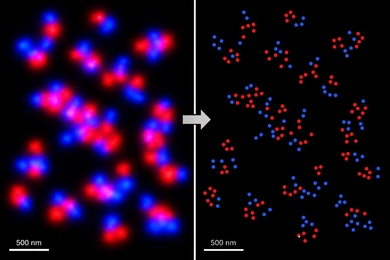
New U-STORM imaging technology lets scientists view molecular structures in subatomic detail — about 1,000 times clearer than traditional dyes — while making the microscope process much simpler.

MIT-trained mathematicians earn the honor, one of the most prestigious in the field, for their significant achievements.