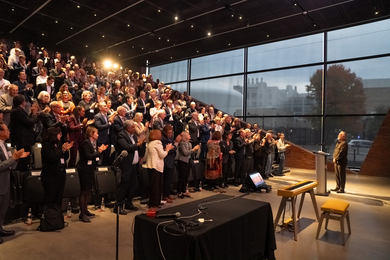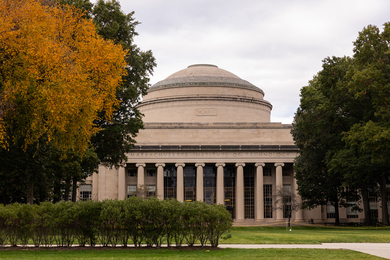
QS World University Rankings has unveiled its lineup of the world's top universities for 2016, by subject. MIT was honored with 12 No. 1 subject rankings, and 19 total top rankings (No. 5 or higher) out of 42 subjects.
MIT subject areas, as defined by QS, earning No. 1 rankings include: Architecture, Chemical Engineering, Chemistry, Civil and Structural Engineering, Computer Science and Information Systems, Economics, Electrical Engineering, Linguistics, Materials Science, Mechanical/Aeronautical/Manufacturing Engineering, Physics and Astronomy, and Statistics and Operational Research.
Additional high-ranking MIT subjects include: Accounting and Finance (No. 2), Art and Design (No. 2), Mineral and Mining Engineering (No. 2), Mathematics (No. 3), Environmental Science (No. 3), and Earth and Marine Sciences (No. 4).
Published annually by Quacquarelli Symonds Limited, the subject rankings are designed to help prospective students find the leading schools in their field of interest. QS rankings are based on academic reputation, employer reputation, and research accomplishments.
This past September, MIT was named the No. 1 university in the world by the QS World University Rankings. This marked the fourth straight year MIT has held the top spot.