
MIT School of Engineering faculty and staff receive awards in spring 2026
Faculty members and researchers were honored in recognition of their scholarship, service, and overall excellence.
Faculty members and researchers were honored in recognition of their scholarship, service, and overall excellence.

A new device uses reconfigurable motion to mimic the firing behavior of a neuron, which could lead to more efficient computing.

Atlas Building Composites is commercializing MIT research to turn plastic waste into parts for buildings and other infrastructure.

Colleagues remember Rose as an enthusiastic and gracious friend who had recently started a promising research track at MIT.

The Institute welcomes its first cohort of QMIT Fellows this fall to advance interdisciplinary quantum research.
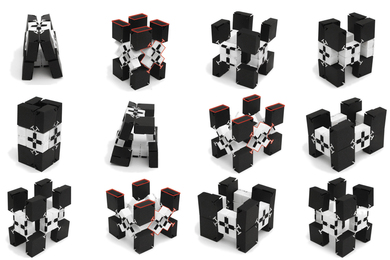
Dubbed “bifur-circuits,” these interactive building blocks could be used to develop reconfigurable robotic grippers or customized assistive devices.

The “CrysVCD” tool developed at MIT could cut the huge amounts of time and money spent on screening out chemically unstable designs.

New MIT research could lead to better materials for a fossil-fuel-free process for making the chemical that's essential to fertilizer and other products.

Dmat is commercializing findings from the lab of Associate Professor Admir Masic to make concrete longer-lasting and more sustainable.

The new framework could streamline the design process of robotic grippers or aerospace components that exhibit complex behaviors found in nature.
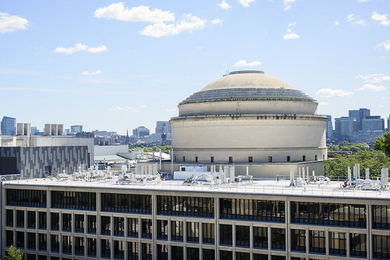
The Materials Research Science and Engineering Center unites researchers across disciplines to develop technologies for medical imaging, sustainable metals production, and next-generation electronics.

The study could help scientists understand how superconductivity and other more complex phenomena emerge in quantum materials.

MIT researchers can now precisely measure how heat moves through multilayered materials like computer chips.
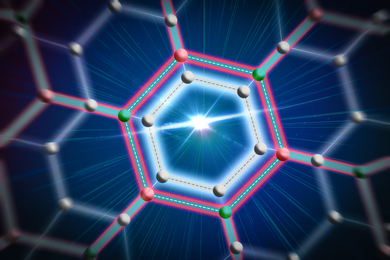
A new technique produces wafer-scale samples, overcoming a major roadblock to using these materials in quantum technologies.
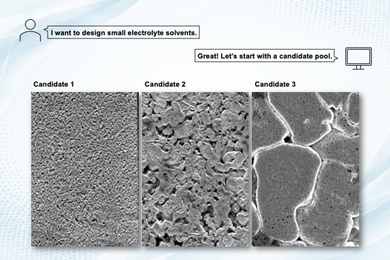
By focusing on electrolytes, MIT scientists are making sodium-metal batteries a more practical energy storage option.