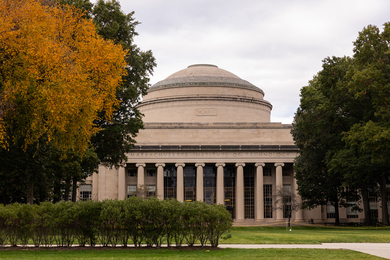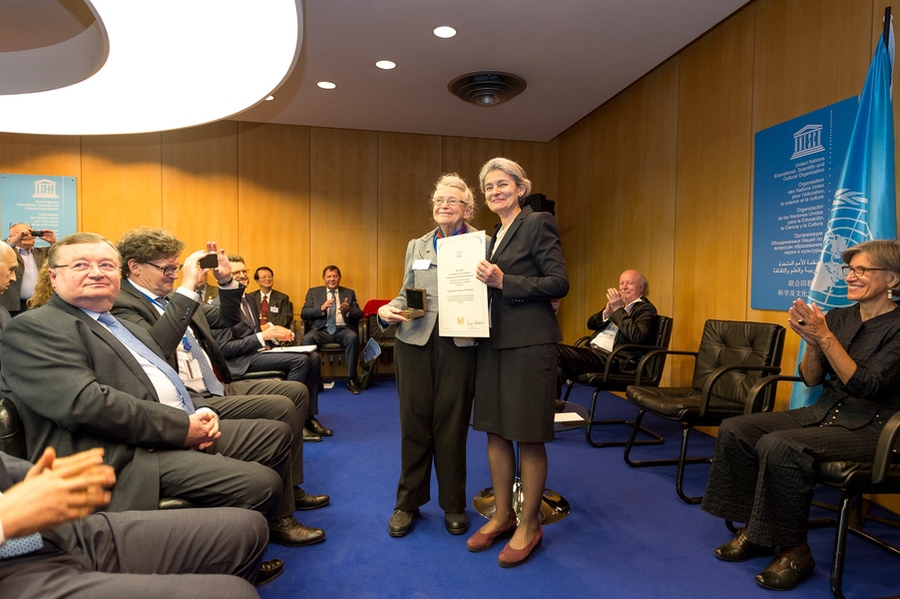
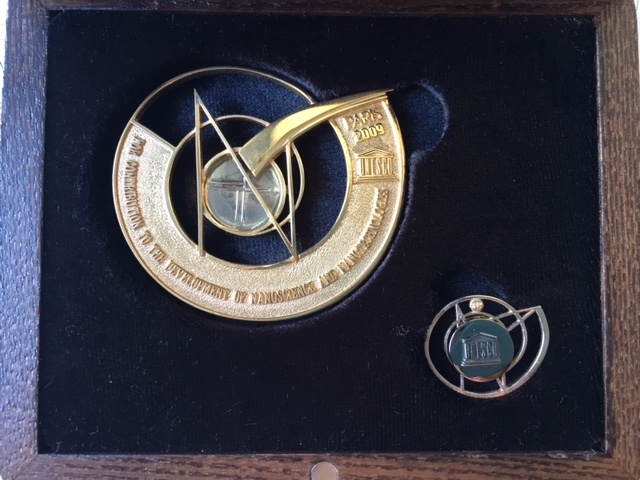
MIT has been honored with the UNESCO Medal for contributions to the development of nanoscience and nanotechnologies by the United Nations Educational, Scientific and Cultural Organization (UNESCO).
Established in 2010, the UNESCO Medal has awarded over 30 prominent scientists and public figures for their individual contributions to advancing the fields of nanoscience and nanotechnologies. This year MIT shares the distinction, along with St. Petersburg State University of Information Technologies in Russia, of being the first organization to be recognized. In addition to the two universities, four eminent scientists from Korea, the United Arab Emirates, Ukraine, and the United Kingdom, were recipients of the medal.
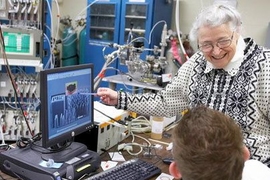
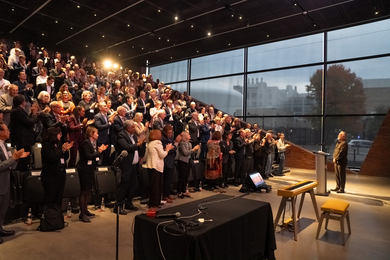
An awards ceremony was held on Oct. 11 at the UNESCO headquarters in Paris, France. Institute Professor Mildred (Millie) Dresselhaus, a nanoscience pioneer who herself has won many recognitions including the U.S. Presidential Medal of Freedom and the L'Oreal-UNESCO Award for Women in Science, made the trip at the invitation of President Rafael Reif to accept the medal on behalf of MIT.
“Using science and technology as a way to bring people together is something MIT has learned to do really well,” says Dresselhaus. “Our faculty, staff, and students come together from countries all over the world with diverse technical backgrounds to work across the many academic departments and laboratories on campus. This culture of interdisciplinary collaboration enables us to work for common goals, so it made sense to me that MIT was recognized as an institution. This should serve as encouragement to move forward as rapidly as possible to complete MIT.nano and to achieve some exceptionally great outcomes through this initiative as it comes to fruition.”
The award will eventually be displayed within the public spaces of MIT.nano — the 214,000-square-foot center for nanoscience and nanotechnology that is currently under construction in the heart of the MIT campus — after the building opening in June 2018, says Vladimir Bulović, faculty lead of the project.
The UNESCO Medal is an initiative of the International Commission responsible for developing the Encyclopedia of Life Support Systems theme on nanoscience and nanotechnologies. Each year, the medal recognizes those making significant contributions in the field in an effort to showcase the tremendous benefits of progress being made. MIT joins a distinguished group of scientists who have received the medal thus far, including Nobel Prize-winners in physics Zhores Alferov and Isamu Akasaki.