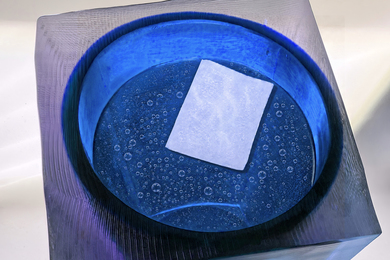
MIT engineers whip up a more breathable hydrogel
The new aerated material could enable longer-lasting bandages, implants, and wearable sensors.
The new aerated material could enable longer-lasting bandages, implants, and wearable sensors.

New research could help prevent the formation of tiny seeds of lithium metal within the electrolyte, enabling batteries that charge faster and last longer.

The FUTUR-IC research program integrates electronics and photonics in microchip systems.

MIT researchers’ approach captures subtle atomic patterns, improving predictions of material properties.
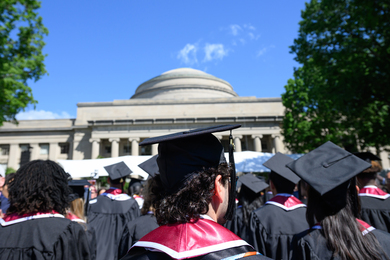
Ranking at the top for the 15th year in a row, the Institute also places first in 12 subject areas.

Low-cost personal cooling and emissions-free air conditioning among ideas studied with MIT’s Climate Project seed funding.

IAIFI enters its second phase with increased funding, broader ambitions, and a growing community at the frontier of AI and fundamental physics.

Introducing weaker bonds into polystyrene and rubber helps these materials dissipate energy, making them more resistant to destructive forces.
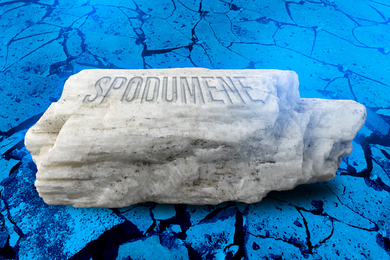
The low-temperature process could unlock cleaner lithium from America’s abundant hard rock while minimizing waste.

MIT senior Nik Sandu bridges scientific research with a strong commitment to teaching and community.
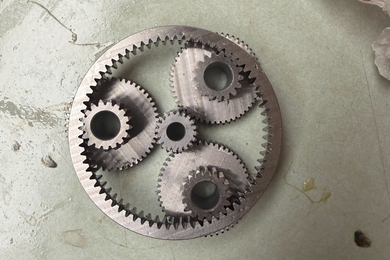
Ferrium C61 was designed with the aid of computers in a field pioneered at the Institute.

The MIT Marble Center for Cancer Nanomedicine looks back at 10 years of turning big ideas about nanotechnology into transformative advances for cancer patients.

A new method for precisely moving columns of individual atoms within a material could give rise to exotic quantum properties.
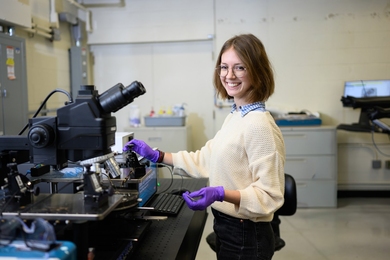
Camille Cunin PhD ’26 is transforming rigid circuitry into stretchable, signal-amplifying devices built for real-world biomedical use.
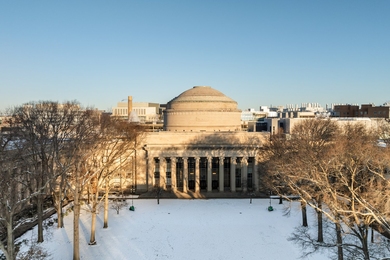
Faculty members and researchers were honored in recognition of their scholarship, service, and overall excellence.