
Learning on the edge
A new technique enables AI models to continually learn from new data on intelligent edge devices like smartphones and sensors, reducing energy costs and privacy risks.
A new technique enables AI models to continually learn from new data on intelligent edge devices like smartphones and sensors, reducing energy costs and privacy risks.

Guy Bresler builds mathematical models to understand multifaceted, interdisciplinary engineering problems that have far-reaching applications.

The MIT-Pillar AI Collective will cultivate prospective entrepreneurs and drive innovation.

Aleksander Madry, Asu Ozdaglar, and Luis Videgaray, co-chairs of the AI Policy Forum, discuss key issues facing the AI policy landscape today.

The device could help scientists explore unknown regions of the ocean, track pollution, or monitor the effects of climate change.

Researchers created a system that lets robots effectively use grasped tools with the correct amount of force.
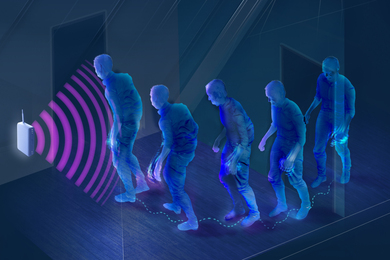
By continuously monitoring a patient’s gait speed, the system can assess the condition’s severity between visits to the doctor’s office.

Throughout his career, Professor Hal Abelson has worked to make information technology more accessible to people of all ages.

The MIT Schwarzman College of Computing welcomes four new faculty members engaged in research and teaching that address climate risks and other environmental issues.

Researchers develop a new method that uses multiple models to create more complex images with better understanding.

Researchers increase the accuracy and efficiency of a machine-learning method that safeguards user data.

Students are part of large team that achieved fusion ignition for the first time in a laboratory.

On its own, a new machine-learning model discovers linguistic rules that often match up with those created by human experts.
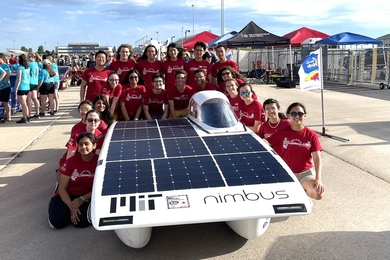
The team credits strategy and team building for keeping the lead in a tight race.
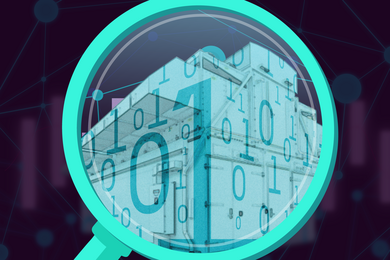
Lincoln Laboratory Supercomputing Center dataset aims to accelerate AI research into managing and optimizing high-performance computing systems.