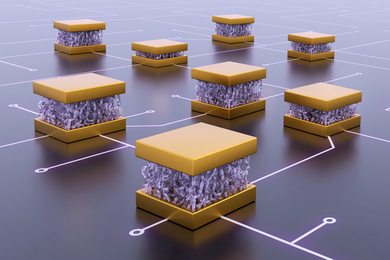
Turning molecules into reliable electronic devices
A new fabrication platform integrates molecules into electronic devices, opening the door to emerging computing technologies.
New findings could help researchers design synthetic catalysts that convert nitrogen gas to ammonia, a key step in fertilizer production.
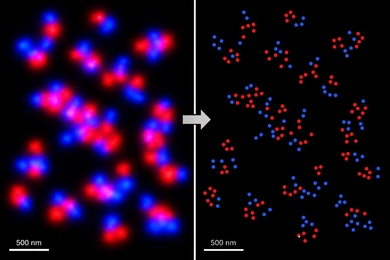
New U-STORM imaging technology lets scientists view molecular structures in subatomic detail — about 1,000 times clearer than traditional dyes — while making the microscope process much simpler.
Researchers found a simple solution for extending the lifespans of LEDs made from glowing microscopic particles called quantum dots.
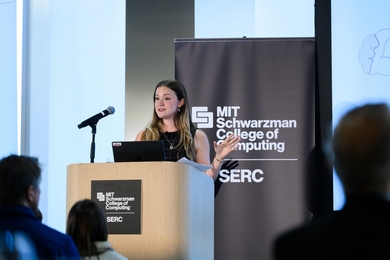
PhD student Rachel Sava, winner of the Envisioning the Future of Computing Prize, explores transformative improvements and dystopian risks of neural technology.
Ranking at the top for the 15th year in a row, the Institute also places first in 12 subject areas.
The MIT professor’s groundbreaking work on atmospheric chemistry helped lay steps towards recovery of the ozone layer and demonstrated the lasting impacts of carbon emissions on Earth’s climate.
The fellowships in applied sciences, engineering, and mathematics recognize doctoral students who are pursuing solutions to the most pressing challenges in science and technology.
MIT researchers present a promising new approach to efficient, flexible carbon capture and removal.
IAIFI enters its second phase with increased funding, broader ambitions, and a growing community at the frontier of AI and fundamental physics.
Introducing weaker bonds into polystyrene and rubber helps these materials dissipate energy, making them more resistant to destructive forces.
Six MIT faculty, along with 10 additional alumni, are recognized by their peers for their outstanding contributions to research in the natural and social sciences.
The legendary radio astronomy telescope returns to its science and educational mission at MIT Haystack Observatory.
Researchers can now use custom-built microscopy and nanotechnology to tag and follow the activity of individual proteins in real-time.
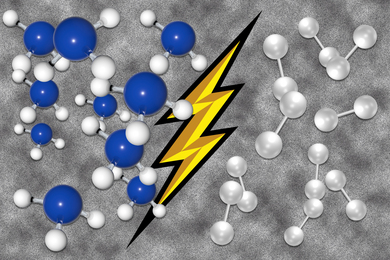
The discovery of dioxaborirane could expand the chemistry of boron-based reagents, providing new tools for oxidation reactions in synthesis and materials science.